Acquistando tramite i link, sostieni nostro sito senza alcun costo aggiuntivo per te. Per saperne di più >

Mitsubishi A6M Rei-sen / Zero: libri illustrati di storia e guide

Un libro sul caccia Mitsubishi A6M Rei-sen / Zero? Qui trovi i migliori libri sulla storia e l'impiego dei caccia Mitsubishi.

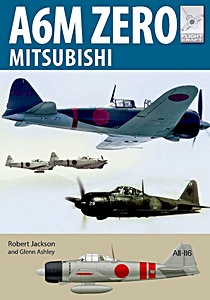
Mitsubishi A6M Zero (Flight Craft)

Il Mitsubishi A6M Zero effettuò il suo primo volo il 1° aprile 1939 e si dimostrò ben presto superiore ai primi caccia alleati impiegati nel Pacifico. Leggero, robusto e altamente manovrabile, era armato con due cannoni da 20 mm e due mitragliatrici da 7.7 mm.
La sua struttura era insolita per l'epoca: il motore, la cabina di pilotaggio, la parte anteriore della fusoliera e le ali formavano un'unica sezione rigida, unita alla parte posteriore della fusoliera e alla coda tramite 80 bulloni.

Nel 1942 gli americani diedero all'A6M il nome in codice Zeke, ma il nome Zero divenne di uso comune. Durante i primi mesi della guerra del Pacifico, l'aereo ottenne risultati notevoli. Nella battaglia di Giava, conclusasi l'8 marzo 1942, i piloti dello Zero distrussero circa 550 aerei alleati.

Con il proseguire della guerra, lo Zero venne progressivamente superato in prestazioni da caccia americani più moderni come l'F6F Wildcat e il Corsair. Nella fase finale del conflitto, molti Zero furono equipaggiati con bombe per gli attacchi kamikaze.

Questo libro offre una chiara panoramica della progettazione e della storia operativa dello Zero. Spiega perché l'aereo fu creato, come si comportò in combattimento, come si confrontava con i suoi avversari e chi lo progettò e lo pilotò. Dati tecnici, foto e profili a colori completano il volume.

Dettagli del libro

Autore:Robert Jackson
Formato:96 pagine, 30.5 x 21.5 x 0.6 cm, brossura
Illustrazioni:200 foto in B&N e in colori
Lingua:inglese
Editore:Pen & Sword Books Ltd (GB, 2021)
Collana:Flight Craft (22)
ISBN:9781526759948
Copertina del libro: Mitsubishi A6M Zero | Flight Craft (22) | Pen & Sword

Mitsubishi A6M Zero

Lingua: inglese

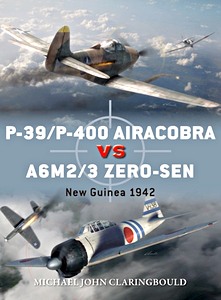
P-39 / P-400 Airacobras vs A6M2/3 Zero-sen : New Guinea 1942 (Osprey)

Dopo gli enormi progressi compiuti nei primi mesi della guerra del Pacifico, fu nella remota Nuova Guinea che l'avanzata dei caccia A6M Zero-sen dell'aviazione navale imperiale giapponese (IJNAF) venne arrestata per la prima volta a causa di una serie di battaglie aeree offensive e difensive che si svolsero a quote comprese tra le cime degli alberi e i 30.000 piedi.

Inizialmente, l'aviazione imperiale giapponese (IJNAF) combatté contro i Kittyhawk australiani, ma nel maggio del 1942 si autodistrusse a causa delle battaglie, venendo sostituita dai P-39 e P-400 Airacobra dell'USAAF. Gli scontri si svolsero su un territorio montuoso, in condizioni meteorologiche tropicali insidiose.
Né i piloti dell'aeronautica militare giapponese (IJNAF) né quelli dell'aeronautica militare statunitense (USAAF) erano stati addestrati per condizioni così estreme, subendo numerose perdite aggiuntive oltre a quelle registrate in combattimento.

Avvalendosi di illustrazioni realizzate appositamente, fotografie dell'epoca e testimonianze, questo affascinante studio spiega come, nonostante l'iniziale carenza di esperienza e attrezzature, gli Airacobras riuscirono a recuperare terreno e a difendere la Nuova Guinea.

Dettagli del libro

Autore:Jim Laurier, Gareth Hector
Formato:80 pagine, 25 x 18.5 x 0.7 cm, brossura
Illustrazioni:50 foto in B&N e 13 in colori
Lingua:inglese
Editore:Osprey Publishing (GB, 2018)
Collana:Duel (87)
ISBN:9781472823663
Copertina del libro: P-39 / P-400 Airacobras vs A6M2/3 Zero-sen : New Guinea 1942 | Duel (87) | Osprey

P-39 / P-400 Airacobras vs A6M2/3 Zero-sen : New Guinea 1942

Lingua: inglese

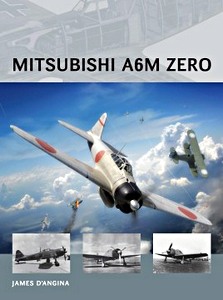
Mitsubishi A6M Zero (Osprey)

Indubbiamente il caccia giapponese più iconico della Seconda Guerra Mondiale, il Mitsubishi A6M Rei-Sen, o caccia Tipo Zero, fu impiegato dall'attacco iniziale a Pearl Harbor fino agli attacchi kamikaze alla fine della guerra.
In competizione con aerei del calibro del Wildcat, del Corsair e persino dello Spitfire, lo Zero si guadagnò una reputazione leggendaria tra i piloti alleati grazie alla sua incredibile manovrabilità.

Un'analisi dettagliata delle sue qualità tecniche mostra perché lo Zero fosse così temuto, ma individua anche i punti deboli che alla fine ne avrebbero causato la rovina, quando i piloti alleati impararono a contrastarlo.
Una selezione di fotografie storiche e opere d'arte uniche accompagnano l'analisi, mentre James D'Angina approfondisce la storia del principale caccia dell'Asse nel teatro del Pacifico, esplorando il design e l'efficacia in combattimento dello Zero, nonché le tattiche sviluppate dai piloti alleati per contrastarlo.

Dettagli del libro

Autore:James D'Angina, Adam Tooby
Formato:64 pagine, 25 x 18.5 x 0.7 cm, brossura
Illustrazioni:35 foto in B&N e 12 in colori
Lingua:inglese
Editore:Osprey Publishing (GB, 2016)
Collana:Air Vanguard (19)
ISBN:9781472808219
Copertina del libro: Mitsubishi A6M Zero | Air Vanguard (19) | Osprey

Mitsubishi A6M Zero

Lingua: inglese

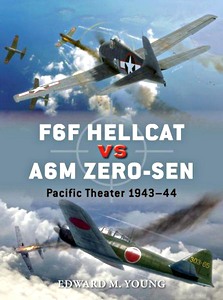
F6F Hellcat vs A6M Zero-Sen - Pacific Theater 1943-44 (Osprey)

Il Grumman F6F Hellcat e il Mitsubishi A6M Zero-sen furono i due principali caccia contrapposti nei brutali scontri aerei della guerra del Pacifico a partire dal 1943. Simile al precedente F4F Wildcat, l'F6F Hellcat fu progettato specificamente per contrastare il precedente A6M2 Zero-sen, i cui punti di forza e di debolezza furono pienamente compresi dai progettisti statunitensi dopo il ritrovamento di un esemplare intatto nelle Isole Aleutine. Il potente Hellcat vantava un'impressionante velocità massima, un'ottima velocità di salita e un armamento considerevole, e manteneva l'incredibile robustezza del suo predecessore.
Anche l'A6M5 Zero-sen nacque da un modello precedente, ma era concepito solo come soluzione temporanea in attesa che venissero prodotti caccia giapponesi più moderni in grado di ripristinare la parità prestazionale con gli aerei alleati. Le condizioni caotiche dell'industria aeronautica giapponese e l'economia di guerra impedirono la costruzione di nuovi modelli.

Questo volume, arricchito da illustrazioni dettagliate che mostrano le specifiche tecniche di questi due tipi di aerei e i drammatici scontri che li videro protagonisti, si concentra sulla nascita di questi iconici caccia e sul loro comportamento durante i duelli aerei nei cieli del Pacifico durante la Seconda Guerra Mondiale.

Indice: Introduzione - Cronologia - Progettazione e sviluppo - Specifiche tecniche - La situazione strategica - I combattenti - Combattimento - Statistiche e analisi - Conseguenze - Per approfondire - Indice analitico.

Dettagli del libro

Autore:Edward M. Young
Formato:80 pagine, 25 x 18.5 x 0.8 cm, brossura
Illustrazioni:riccamente illustrato con foto e disegni (in B&N e in colori)
Lingua:inglese
Editore:Osprey Publishing (GB, 2014)
Collana:Duel (62)
ISBN:9781782008132
Copertina del libro: F6F Hellcat vs A6M Zero-Sen - Pacific Theater 1943-44 | Duel (62) | Osprey

F6F Hellcat vs A6M Zero-Sen - Pacific Theater 1943-44

Lingua: inglese

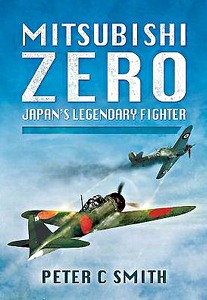
Mitsubishi Zero - Japan's Legendary Fighter

Engineered with manoeuvrability in mind, the light-weight, stripped-back Mitsubishi Zero had a performance that left her opponents totally outclassed. The dogfights she engaged in with the Chinese, British, Dutch and American warplanes in the 1941-42 period are the stuff of aviation legend.
All aircraft designs are a compromise of course, and the Zero had faults as well as strengths, two of which were to finally doom her; one was her lack of armour protection and the other was the inability of the Japanese to match the overwhelming production strength and innovation of Allied aircraft construction. Even so, she remained a potent threat until the end of the war, not least in her final role, that of a Kamikaze aircraft, in which she created as much havoc on the sea as she had done earlier in the air.

Peter C. Smith takes the reader on a journey from inspired inception to the blazing termination of this unique aircraft, the first Naval fighter to be superior to land-based aircraft. It describes in detail the many victories that punctuated the early days of its operational career as well as the desperate dying days of the Second World War which witnessed her final demise. Smith also lists the preserved Zero aircraft on display today. This is a fast-paced and fascinating history of a fighter aircraft like no other.

Dettagli del libro

Autore:Peter C Smith
Formato:240 pagine, 23.5 x 15.5 cm, copertina rigida
Illustrazioni:16 pagine foto in B&N
Lingua:inglese
Editore:Pen & Sword Books Ltd (GB, 2014)
ISBN:9781781593196
Copertina del libro: Mitsubishi Zero - Japan's Legendary Fighter | Pen & Sword

Mitsubishi Zero - Japan's Legendary Fighter

Lingua: inglese

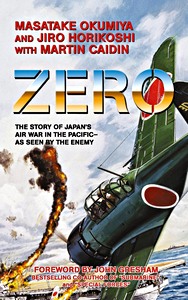
Zero - The Story of Japan's Air War in the Pacific - As seen by the Enemy

This is the thrilling saga of war in the air in the Pacific Theater of Operations during World War II told from the Japanese point of view. It is the story of the men who created, led, and fought in the deadly Zero fighter plane.

In their own words, Jiro Horikoshi (who designed the Zero), Masatake Okumiya (leader of many Zero squadrons), and Saburo Sakai (Japan's leading surviving fighter ace) as well as many other men, tell the inside story of developing the Zero and Japan's air force.

They tell what it felt like to bomb American ships and to shoot down American airplanes - and then of their own shock when the myth of invincibility was shattered by the new Lightning, Hellcat, and Corsair fighters.
They tell of the fight against the growing strength of a remorseless American enemy; and how, in desperation, the Japanese High Command ordered the ceration of deadly suicide squadrons, the Kamikaze. And finally, they reveal their reaction to the dropping of the atomic bombs on Hiroshima and Nagasaki.

Dettagli del libro

Autore:Masatake Okumiya, Jiro Horikoshi, Martin Caidin
Formato:364 pagine, 23 x 15 x 2.1 cm, copertina rigida
Illustrazioni:foto in B&N
Lingua:inglese
Editore:ibooks (USA, 2014)
ISBN:9781596874510
Copertina del libro: Zero - The Story of Japan's Air War in the Pacific - As seen by the Enemy | ibooks

Zero - The Story of Japan's Air War in the Pacific - As seen by the Enemy

Lingua: inglese

F4F Wildcat vs A6M Zero-Sen - Pacific, 1942 (Osprey)

The Grumman F4F Wildcat and the Mitsubishi A6M Zero-sen were contemporaries, although designed to very different requirements. The Wildcat, ruggedly built to survive the rigors of carrier operations, was the best carrier fighter the US Navy had available when the USA entered World War II, and it remained the principal fighter for the US Navy and the US Marine Corps until 1942-43.

With a speed greater than 300mph, exceptional manoeuvrability, long range, and an impressive armament the slick Zero-sen could out-perform any Allied fighter in 1941-42.

The battles between the Wildcat and the Zero-sen during 1942 represent a classic duel in which pilots flying a nominally inferior fighter successfully developed air-combat tactics that negated the strengths of their opponent.

Contents: Introduction - Chronology - Design and Development - Technical Specifications - The Strategic Situation - The Combatants - Combat - Statistics and Analysis - Aftermath - Bibliography - Index.

Dettagli del libro

Autore:Edward M. Young
Formato:80 pagine, 24.5 x 18.5 x 0.7 cm, brossura
Illustrazioni:riccamente illustrato con foto e disegni (in B&N e in colori)
Lingua:inglese
Editore:Osprey Publishing (GB, 2013)
Collana:Duel (54)
ISBN:9781780963228
Copertina del libro: F4F Wildcat vs A6M Zero-Sen - Pacific, 1942 | Duel (54) | Osprey

F4F Wildcat vs A6M Zero-Sen - Pacific, 1942

Lingua: inglese

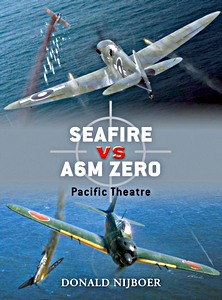
Seafire F III vs A6M Zero - Pacific Theatre (Osprey)

Products of vastly different design philosophies, the Seafire F III and the A6M Zero were never intended to meet in combat, and never should have.
The Zero, extremely nimble at low speeds was purpose-built as a shipboard fighter. In contrast, the Spitfire was intended to operate from established airfields, and needed to be adapted as a carrier fighter.

The book examines these two iconic fighters and their two very different histories, using fantastic artwork and first hand accounts to illustrate the last aerial duel of World War II, as the British Seafire overcame its critics to emerge victorious over the Japanese Zero.

Contents: Introduction - Chronology - Design and Development - The Strategic Situation - Technical Specifications - The Combatants - Combat - Statistics and analysis - Aftermath - conclusion - Bibliography - Further Reading - Glossary.

Dettagli del libro

Autore:Donald Nijboer, Jim Laurier
Formato:80 pagine, 24.5 x 18.5 x 0.7 cm, brossura
Illustrazioni:riccamente illustrato con foto e disegni (in B&N e in colori)
Lingua:inglese
Editore:Osprey Publishing (GB, 2009)
Collana:Duel (16)
ISBN:9781846034336
Copertina del libro: Seafire F III vs A6M Zero - Pacific Theatre | Duel (16) | Osprey

Seafire F III vs A6M Zero - Pacific Theatre

Lingua: inglese

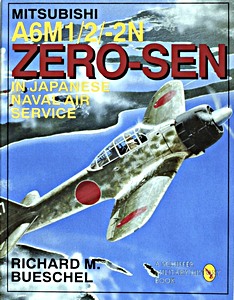
Mitsubishi A6M 1 / 2 / -2N Zero-Sen of the Japanese Naval Air Service

Reknowned Japanese aircraft historian Richard Bueschel revises and updates his classic series of books on Japanese Naval and Army Air Force aircraft of World War II. The A6M-1/2/-2N ZERO-SEN is the first volume. All variations and markings are covered in this the first of a projected multi-volume series.

Dettagli del libro

Autore:Richard M. Bueschel
Formato:64 pagine, 28 x 21.5 x 0.6 cm, brossura
Illustrazioni:più di 60 foto
Lingua:inglese
Editore:Schiffer Publishing Ltd (USA, 2004)
ISBN:9780887407543
Copertina del libro: Mitsubishi A6M 1 / 2 / -2N Zero-Sen of the Japanese Naval Air Service | Schiffer

Mitsubishi A6M 1 / 2 / -2N Zero-Sen of the Japanese Naval Air Service

Lingua: inglese

Altri titoli su Mitsubishi:

Copertina del libro: Japanese Submarine Aircraft

NUOVO

Japanese Submarine Aircraft

Ryusuke Ishiguro, Tadeusz Januszewski, Dariusz Karnas | inglese | copertina rigida | 200 p. | 2025

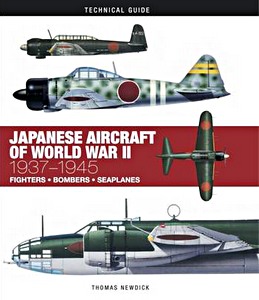
Copertina del libro: Japanese Aircraft of World War II : 1937-1945 - Fighters, Bombers, Seaplanes

Japanese Aircraft of World War II : 1937-1945 - Fighters, Bombers, Seaplanes

Thomas Newdick | inglese | copertina rigida | 128 p. | 2017

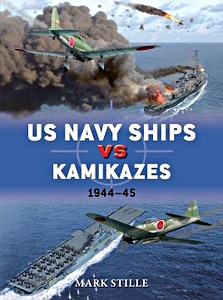
Copertina del libro: US Navy Ships vs Kamikazes 1944-45 | Duel (76)

US Navy Ships vs Kamikazes 1944-45

Mark Stille | inglese | brossura | 80 p. | 2016

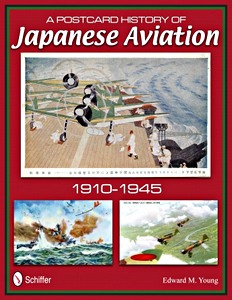
Copertina del libro: A Postcard History of Japanese Aviation - 1910-1945

A Postcard History of Japanese Aviation - 1910-1945

Edward M. Young | inglese | copertina rigida | 160 p. | 2012

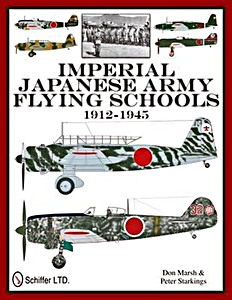
Copertina del libro: Imperial Japanese Army Flying Schools 1912-1945

Imperial Japanese Army Flying Schools 1912-1945

Don Marsh | inglese | copertina rigida | 288 p. | 2011

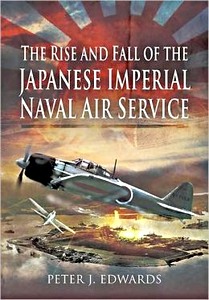
Copertina del libro: The Rise and Fall of the Japanese Imperial Naval Air Service

The Rise and Fall of the Japanese Imperial Naval Air Service

Peter J. Edwards | inglese | copertina rigida | 346 p. | 2010

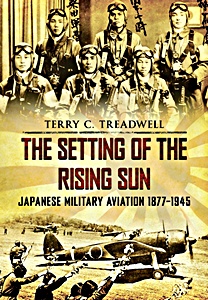
Copertina del libro: The Setting of the Rising Sun - Japanese Military Aviation 1877-1945

The Setting of the Rising Sun - Japanese Military Aviation 1877-1945

Terry C. Treadwell | inglese | brossura | 192 p. | 2010

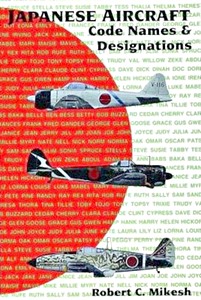
Copertina del libro: Japanese Aircraft - Code Names and Designations

Japanese Aircraft - Code Names and Designations

Robert C. Mikesh | inglese | brossura | 192 p. | 2004