BAC aircraft books - history, types and construction
A book on BAC aircraft? Explore here illustrated books on the history, types and construction of BAC aircraft.
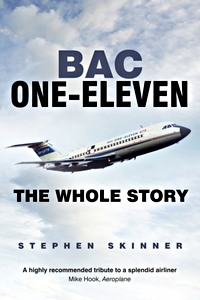
BAC One-Eleven - The Whole Story
In August 1963, the BAC One-Eleven made its first flight. With sixty aircraft on order - more than half from the United States - it achieved a level of international interest that no British civil aircraft had seen before. As the first major programme of the newly created British Aircraft Corporation, the One-Eleven was fully designed and built in-house and remained in production for the entire seventeen-year existence of BAC, performing reliably even in periods of limited profitability.
The type completed its final European commercial flight in March 2002. This revised edition marks fifty years since its maiden flight and presents a clear and detailed review of its history. Stephen Skinner combines new research with an extensive selection of black-and-white and colour photographs and comprehensive appendices to examine the aircraft's development, service record, and long-term significance. The result is a thorough assessment of the role the One-Eleven holds in British aviation.
Product details
Author:
Stephen Skinner
Details:
256 pages, 23.5 x 16 x 1.7 cm / 9.25 x 6.3 x 0.67 in, paperback
Illustrations:
150 b&w and 20 colour photos, 8 drawings in colour
When the One-Eleven first flew, BAC appeared to be well ahead of its American competitors. It preceded the DC-9 and long before Boeing launched the 737. Yet Douglas ultimately sold more than 1.000 DC-9s, followed by the MD-80 and later the Boeing 717, while BAC produced only 244 One-Elevens. This contrast is one element of the aircraft's complex and compelling history.
The book presents the complete story of the One-Eleven's concept and development, set against a period of significant industrial consolidation. It also follows the aircraft into service, where its strong and durable construction allowed it to remain in operation into the 21st century. A few aircraft are still airworthy today.
Although the One-Eleven stands as a notable British achievement, its history leaves the impression of a missed opportunity. This book examines the reasons behind that outcome.
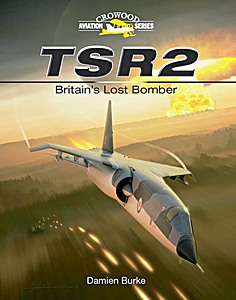
More than forty years after its cancellation, the BAC TSR2 is still a controversial aircraft. Years ahead of its time, it was abruptly cancelled by a new government when flight testing had ony just begun. Built to a demanding RAF requirement , the BAC TSR2 was a revolutionary low-level strike aircraft able to deliver a tactical nuclear weapon at supersonic speed and low altitude to evade enemy radar. This fascinating book describes in detail the aircraft, its history and the events of its cancellation. Many hitherto unseen photographs and diagrams support the detailed text, which benefits from extensive research in the BAC archives and access to newly rediscovered material.
Topics covered: Background to the requirement, and competing designs - Development and production - The flight-testing programme - The full story of the cancellation and its aftermath - Unbuilt variants - Detailed specifications.
Product details
Author:
Damien Burke
Details:
336 pages, 29 x 23 x 2.8 cm / 11.4 x 9.1 x 1.1 in, hardback
This is a welcome revised and enhanced second edition of this comprehensive, accurate and honest account of the fascinating TSR2 story, tracing the project's development from its origins in the 1950's. Aimed at aviation historians and those interested in the history of military technology, the book examines the TSR2 project in detail, eliminating the many myths and misconceptions that have surrounded the aircraft for decades.
Although much has been written about the TSR2's history, a great deal of misinformation has been published on this subject which this book dismisses presenting the reader with a complete and realistic overview of the entire project. This book deals with the facts and not the emotion, speculation and fantasy which has plagued the subject for so long. It presents a detailed, factual and very readable account of the development and subsequent demise of TSR2 project.
For this new edition an additional chapter concerning the F-111K, extracts from the TSR2 Crew Manual and other declassified technical TSR2 documentation, has been provided by Tony Buttler, the author of the respected Crecy British Secret Projects series who has researched this era of British military aviation for many years.
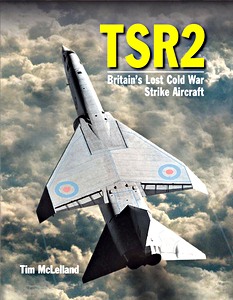
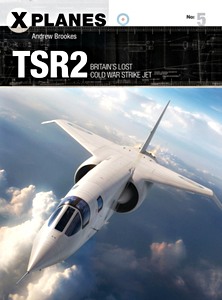
TSR2 : Britain's lost Cold War strike jet (Osprey)
The TSR2 is one of the greatest 'what-if' aircraft of the Cold War, whose cancellation still generates anger and controversy among aviation fans. It was a magnificent, cutting-edge aircraft, one of the most striking of the Cold War, but fell victim to cost overruns, overambitious requirements, and politics. Its scrapping marked the point when Britain's aerospace industry could no longer build world-class aircraft independently. After the demise of TSR2 the RAF's future jets would be modified US aircraft like the Phantom and pan-European collaborations like Tornado and Typhoon.
In this book the eminent air power analyst and ex-Vulcan bomber pilot Andrew Brookes takes a fresh, hard-headed look at the TSR2 project, telling the story of its development, short career and cancellation, and evaluating how it would have performed in Cold War strike roles as well as in the recent wars in the Middle East.
Product details
Author:
Andrew Brookes
Details:
80 pages, 25 x 19.5 x 0.7 cm / 9.8 x 7.7 x 0.28 in, paperback
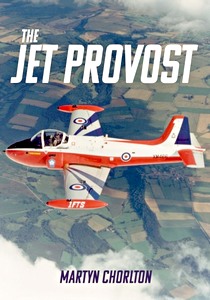
Martyn Chorlton | English | paperback | 96 p. | 2019
This website use cookies and similar technologies to enhance your browser experience. By clicking "Allow all", you agree to the use of these technologies.
Click "Decline" to disable non-essential tracking. More information >