En achetant via ces liens, vous soutenez notre site sans frais supplémentaires pour vous. En savoir plus >

Transport routier - Grande Bretagne : livres - véhicules et histoire

Un livre sur le transport routier ? Découvrez ici des beaux livres sur les véhicules et l'histoire du transport routier de Grande-Bretagne.

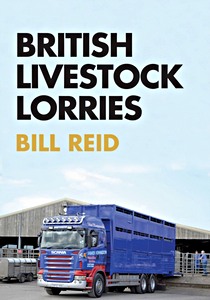
British Livestock Lorries

Long before motorised transport, movement of animals was by means of walking individual beasts, or by herding or droving. Much of the road system around Britain evolved from the routes taken by the drovers and their herds. With the coming of the railways, animals for market went by train.
This type of traffic was a good income for the railways, with their mass or bulk transport facility.

In the early twentieth century, livestock haulage was slow in starting, mainly because the lorries of the time were small and couldn't compete with the railways. However, by the 1930s larger and stronger lorries were available and local livestock haulage became a viable proposition, eventually taking over from the railways entirely.
Livestock road haulage was usually done with a basic platform lorry and a demountable livestock container. These could be anything from home-built to coachbuilt types by specialist builders. The construction was usually in hardwood, until the advent of steel and aluminium.
In more recent times, much larger and more powerful vehicles have evolved to cater for animal welfare and driving time.

With the diverse range of appearances and colour schemes seen on these vehicles over the years, Bill Reid's terrific array of photographs will fascinate lorry enthusiasts and agriculture enthusiasts alike.

Caractéristiques

Auteur :Bill Reid
Présentation :96 pages, 23.5 x 16.5 x 1.1 cm, broché
Illustration :180 photos en N&B et en couleurs
Langue :anglais
Editeur :Amberley Publishing (GB, 2018)
ISBN :9781445672229
Couverture du livre : British Livestock Lorries | Amberley

British Livestock Lorries

Langue : anglais

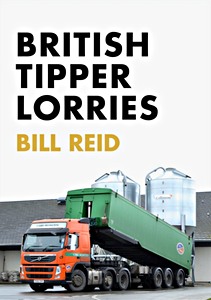
British Tipper Lorries

Tipper lorries have been part and parcel of road transport since the beginnings of the age of motor vehicles. In fact their roots are in horse-drawn carts, which were built to tip by balance and gravity.
For many years, and probably still today, the tipper lorry was seen as a dirty, well-worn, poorly maintained and overloaded example of road haulage, not particularly beloved by the general public.

As they are used in all forms from lightweight four-wheelers to maximum capacity artics, carrying almost any commodity that could be loaded in bulk, tipper lorries could be said to be the backbone of British industrial requirements.
All makes of lorries have been used as tippers, with no exceptions, providing a great variety for the road transport enthusiast. Many endure short, hard-worked lives, while others soldier on to greater longevity, perhaps engaged in long-distance work.

As time has passed, lorries have been allowed to carry more weight and become larger and, as a consequence, more powerful. For the transport enthusiast this brought an even bigger variety of types, up to 44 tonnes gross weight, which Bill Reid, with nearly 200 unpublished images, shows in this fascinating book.

Caractéristiques

Auteur :Bill Reid
Présentation :96 pages, 23.5 x 16.5 x 0.8 cm, broché
Illustration :180 photos en N&B et en couleurs
Langue :anglais
Editeur :Amberley Publishing (GB, 2019)
ISBN :9781445672960
Couverture du livre : British Tipper Lorries | Amberley

British Tipper Lorries

Langue : anglais

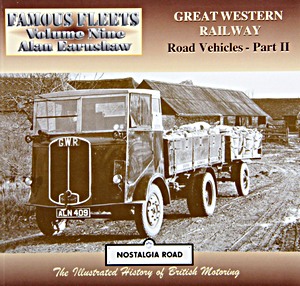
Great Western Railway Road Vehicles (2) (Nostalgia Road)

On the GWR, standardisation was seen as the key to success, and all departments of the company were subjected to the policy in a drive to return the railways to overall profitability. Nowhere was this policy more keenly seen than in the Road Motor Department, with its head office at Paddington and workshops in Slough.
By the early-1920s, the GWR had foreseen that the railways were facing a terrible threat from the private road-hauliers, so they snapped into action to try and beat the interlopers at their own game. In his second book on the subject, Alan Earnshaw continues the pictorial examination of the fleet with hitherto unpublished pictures supplemented by a fleet list of the vehicles concerned.

Caractéristiques

Auteur :Alan Earnshaw
Présentation :52 pages, 14.5 x 20.5 x 0.6 cm, broché
Illustration :90 photos en N&B et 11 en couleurs
Langue :anglais
Editeur :Crecy Publishing (GB, 2007)
Série :Nostalgia Road
ISBN :9781903016664
Couverture du livre : Great Western Railway Road Vehicles (2) | Nostalgia Road | Crecy

Great Western Railway Road Vehicles (2)

Langue : anglais

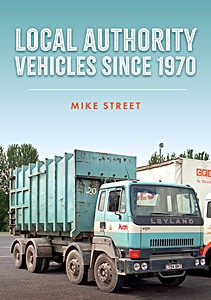
Local Authority Vehicles since the 1970s

Depuis le début des années 1970, l'administration locale en Grande-Bretagne a connu d'importantes réformes. En 1974, les county boroughs, urban districts et rural districts ont été remplacés par des district ou borough councils placés sous l'autorité des comtés. Ces organismes ont pris en charge de nombreux services publics, tels que la construction et l'entretien des routes, le nettoyage des rues, la collecte et le traitement des déchets, les parcs, les installations sportives, l'éducation et l'action sociale.

Dans les années 1980, la mise en concurrence a conduit à l'externalisation de nombreux services vers des entreprises privées ou des équipes internes. Une nouvelle réorganisation en 1996 a créé des autorités unitaires responsables de l'ensemble des services locaux, à l'image des anciens county boroughs.

Pour ces tâches, une grande variété de véhicules a été utilisée, des balayeuses manuelles aux ensembles articulés. Cet ouvrage illustré présente les véhicules employés par les autorités locales à travers la Grande-Bretagne depuis les années 1970, du Devon à l'Écosse.

Caractéristiques

Auteur :Mike Street
Présentation :96 pages, 23.5 x 16.5 cm, broché
Illustration :180 photos en couleurs
Langue :anglais
Editeur :Amberley Publishing (GB, 2023)
ISBN :9781398108585
Couverture du livre : Local Authority Vehicles since the 1970s | Amberley

Local Authority Vehicles since the 1970s

Langue : anglais
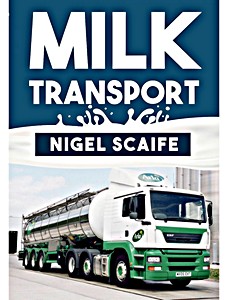
Milk Transport

Distribution of milk started from cow houses in the city, or farms using horses and carts. Later, milk was collected in milk churns, which the farmer left on a milk stand at the farm gate and which were collected by a lorry for delivery to the dairy. Milk also used to be moved on the railways, from sidings to dairies around the country.
The Milk Marketing Board (MMB) was formed in 1933 and sold the milk to the dairies on behalf of the farmers. In the early years, the milk industry also saw some big names including Co-Op, Express, Unigate and United Dairies, who all had their own transport.

In 1993 the government ordered the abolishment of the MMB to allow free competition in the milk industry. This gave the dairies a chance to have their own transport to move bulk milk. At the same time the company Milk Marque was formed, which had the job of moving all the milk which wasn't supplied directly to the dairy companies.

Using 180 rare and previously unpublished images, Nigel Scaife tells the story of transport and milk.

Caractéristiques

Auteur :Nigel Scaife
Présentation :96 pages, 24 x 16.5 x 2.5 cm, broché
Illustration :abondamment illustré de photos en N&B et en couleurs
Langue :anglais
Editeur :Amberley Publishing (GB, 2019)
ISBN :9781445688268

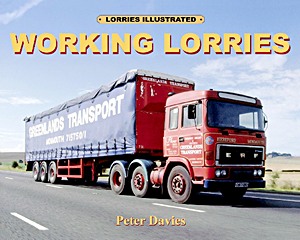
Working lorries (Lorries illustrated)

This collection of over 100 images records a snapshot of the British road haulage scene of the 1990s when models such as Foden, ERF and Seddon Atkinson were widely to be seen alongside still-common marques including Scania, DAF and Volvo. Detailed captions provide vehicle, haulier, livery and cargo information.

Caractéristiques

Auteur :Peter Davies
Présentation :112 pages, 19 x 24 cm, relié
Illustration :100 photos en couleurs
Langue :anglais
Editeur :Roundoak Publishing (GB, 2013)
ISBN :9781871565591
Couverture du livre : Working lorries (Lorries illustrated) | Roundoak

Working lorries (Lorries illustrated)

Langue : anglais

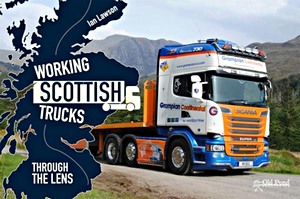
Working Scottish Trucks : Through the Lens

A photographic book bringing together 262 images of commercial vehicles spotted across some of the most scenic parts of Scotland. The beautiful landscapes offer a fantastic backdrop to the large range of haulage companies based in this rural, rugged and often difficult area.

With just one picture per page, this book reproduces Ian Lawson's perfectly captured shots to maximum effect.
The images have been taken over 30 years of dedicated viewing and focus on 10 types of vehicles - bulk transport, curtainsiders, fridges and food, general haulage, hay and stray, heavy haulage, livestock transporters, renewable energy transport, round timber haulage and tankers.
Each photo is captioned with the date, location, make and model of vehicle and details of owner and types of work undertaken.

Caractéristiques

Auteur :Ian Lawson
Présentation :272 pages, 22 x 27.5 x 1.9 cm, relié
Illustration :262 photos en N&B et en couleurs
Langue :anglais
Editeur :Old Pond Publishing Ltd (GB, 2017)
ISBN :9781910456972
Couverture du livre : Working Scottish Trucks : Through the Lens | Old Pond

Working Scottish Trucks : Through the Lens

Langue : anglais

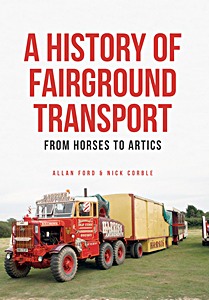
A History of Fairground Transport - From Horses to Artics

Travelling fairs hold a special place in English history and traditions. Once or twice a year local towns and villages are overwhelmed with a cacophony of sounds, sights and smells, bringing magic and excitement into peoples' lives before, all too quickly, moving on.
The transient nature of travelling fairs is part of their magic, and an integral part of that magic is the transport that carries the people and the rides. More than just vehicles however, fairground transport is often an integral part of the show, acting as homes for the showmen, a way of generating power and even converting into parts of the rides themselves. In short, they are part of the way of life.

This book looks at the history of the travelling fair through its transport, beginning with how it has evolved from what a performer could carry on their back and simple horse-drawn caravans, through to steam-powered traction engines and war surplus petrol and electric vehicles, finally bringing the story up to date with today's mega lorries and cranes.

Caractéristiques

Auteur :Allan Ford, Nick Corble
Présentation :96 pages, 23.5 x 17 x 0.9 cm, broché
Illustration :180 photos en N&B et en couleurs
Langue :anglais
Editeur :Amberley Publishing (GB, 2016)
ISBN :9781445661407
Couverture du livre : A History of Fairground Transport - From Horses to Artics | Amberley

A History of Fairground Transport - From Horses to Artics

Langue : anglais

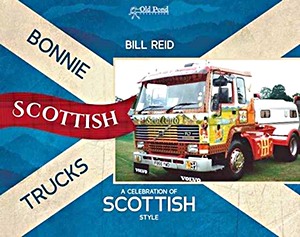
Bonnie Scottish Trucks - A Celebration of Scottish Style

This book brings together 231 high quality photos of trucks operated by past and present Scottish companies, small firms and owner drivers who have used their vehicles as a means of attracting the eye of potential customers and as a matter of pride in the presentation of their business.

To emphasise the ownership and purpose of the vehicle, the user's name is emblazoned on the front and sides in shade lettering leaving the onlooker in no doubt. Although not exclusive to Scotland, this treatment seems to have been more prolific and has stood the test of time in Scotland.

The beautiful vehicles featured in this book were spotted by author, Bill Reid around the country, in towns, in cattle markets, on the road, and anywhere else trucks or lorries can be found.

Caractéristiques

Auteur :Bill Reid
Présentation :128 pages, 22 x 36.5 x 1.4 cm, relié
Illustration :231 photos en N&B et en couleurs
Langue :anglais
Editeur :Old Pond Publishing Ltd (GB, 2016)
ISBN :9781910456491
Couverture du livre : Bonnie Scottish Trucks - A Celebration of Scottish Style | Old Pond

Bonnie Scottish Trucks - A Celebration of Scottish Style

Langue : anglais

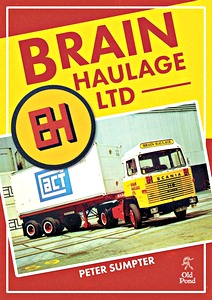
Brain Haulage Ltd : A Company History 1950-1992

Brain Haulage was formed by Charles Edward Brain in 1950 and played a major role in the container revolution in the UK, completely changing the way goods were transported over the world.
Peter Sumpter was a driver with Brain Haulage until it closed in 1992 and is an unofficial archivist of the brand, having taken hundreds of photographs and chronicling his adventures in a diary for over 20 years.

"Brain Haulage Ltd" tells the history of Brain and the container revolution as well as the story of Charles Brain; from his early years working for the L.M.S. Railway at Camden Town, to his time in the R.A.F. during the second world war, to eventually starting his own haulage company.
The rest of the story is from Peter's own diary and the many ex-drivers and Brains staff he worked with over the years.
Including over 300 previously unpublished photographs "Brain Haulage Ltd" is a unique book, ideal for anyone interested in containers and their revolution, as well as road transport and haulage trade enthusiasts.

Caractéristiques

Auteur :Peter Sumpter
Présentation :144 pages, 30.5 x 21.5 x 1.5 cm, relié
Illustration :300+ photos en N&B et en couleurs
Langue :anglais
Editeur :Old Pond Publishing Ltd (GB, 2018)
ISBN :9781912158164
Couverture du livre : Brain Haulage Ltd : A Company History 1950-1992 | Old Pond

Brain Haulage Ltd : A Company History 1950-1992

Langue : anglais

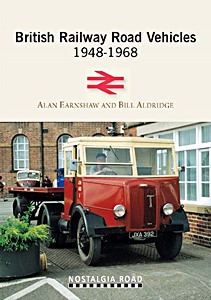
British Railway Road Vehicles 1948-1968 (Nostalgia Road)

Following the nationalisation of Britain's railway network on 1st January 1948, one of the major areas of competition facing the Railway Executive was the fast growing number of privately owned road haulage vehicles.
As part of the first post-war Labour government's strategy for an integrated national transport system, British Railways were strongly encouraged to expand the road delivery services operated by its constituent companies, the LMS, GWR, LNER and the Southern Railway.

British Railway's road delivery fleet is perhaps best remembered by the three-wheel Scammell 'mechanical horses", but the railway motor vehicle fleet was both diverse and extensive.
The authors examine the varied vehicle types and their operations including wagon-load traffic and Express Parcels Services.

Caractéristiques

Auteur :Alan Earnshaw, Bill Aldridge
Présentation :64 pages, 21 x 15 x 0.8 cm, broché
Illustration :80+ N&B et photos en couleurs
Langue :anglais
Editeur :Crecy Publishing (GB, 2014)
Série :Nostalgia Road
ISBN :9781908347152
Couverture du livre : British Railway Road Vehicles 1948-1968 | Nostalgia Road | Crecy

British Railway Road Vehicles 1948-1968

Langue : anglais

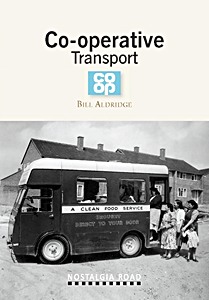
Co-operative Transport (Nostalgia Road)

With its roots in the 1840s, the Co-operative Movement grew to become a major retailing force before the Second World War. A 1950s slump in retail sales led to re-organisation and entrenchment until the Society was recently revisited to face the rigours of the new millennium.
Initially importing competitively priced quality foods from abroad including Irish butter, Danish bacon, Indian tea and American wheat, the Wholesale Society foresaw the need to become manufacturers of many basic products which were demanded by the working classes including boots and shoes, clothing for work and leisure, soap and furniture along with foods such as biscuits, pickles and jams.

Distribution was the key to success and as railway companies, along with their associated road based delivery vehicles were the major carriers of goods across the country at the end of the nineteenth century, full use was made of these connections by despatching goods direct to the customer. Indeed, by 1919 a census showed that 550 societies were operating 6,000 horse drawn vehicles, 316 motor cars and 689 motor lorries.
To deliver the goods the Co-operative operated around 35,000 vehicles varying over the years from horse drawn vans to full size articulated lorries, even building its own lorry chassis and bodies.

From funeral services, milk tankers and milk floats, coal and coke deliveries, and mobile shops this book tells the story of the wide variety of vehicles which make up Co-operative transport. It details the history of the transport operation, from their horse drawn van beginnings to full size articulated lorries. Also included are descriptions of the Co-operative's own chassis and body building workshops.

Caractéristiques

Auteur :Bill Aldridge
Présentation :64 pages, 21 x 15.5 x 0.4 cm, broché
Illustration :80+ N&B et photos en couleurs
Langue :anglais
Editeur :Crecy Publishing (GB, 2012)
Série :Nostalgia Road
ISBN :9781908347107
Couverture du livre : Co-operative Transport | Nostalgia Road | Crecy

Co-operative Transport

Langue : anglais

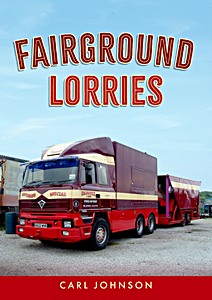
Fairground Lorries

The era of steam traction engines at the fairground has faded, replaced by internal combustion engine vehicles, including lorries powered by petrol and diesel. Over time, these vehicles evolved to modern high-powered lorries, some articulated, meeting the rising demands of trailer-mounted loads and longer travel distances.

Carl Johnson presents a captivating visual documentation of fairground lorries, featuring a plethora of rare and unpublished images.

Caractéristiques

Auteur :Carl Johnson
Présentation :96 pages, 23.5 x 16.5 cm, broché
Illustration :180 photos en N&B et en couleurs
Langue :anglais
Editeur :Amberley Publishing (GB, 2022)
ISBN :9781398100848

LMS Railway Road Vehicles (Nostalgia Road)

Chronicling the development of the LMS road vehicle fleet, this book covers a fascinating variety of vehicle types and operations. Using a large selection of official company photographs and recalling the personal experiences of staff involved in the operation, it is a truly unique account.

Caractéristiques

Auteur :Alan Earnshaw, Bill Aldridge
Présentation :52 pages, 20 x 21 x 0.4 cm, broché
Illustration :112 photos en N&B et 2 en couleurs
Langue :anglais
Editeur :Crecy Publishing (GB, 2000)
Série :Nostalgia Road
ISBN :9781903016114
Couverture du livre : LMS Railway Road Vehicles | Nostalgia Road | Crecy

LMS Railway Road Vehicles

Langue : anglais

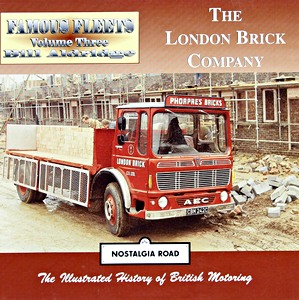
The London Brick Company (Famous Fleets) (Nostalgia Road)

Famous for its 'Fletton Brick', London Brick distributed throughout the country using its well kept fleet of AEC lorries. In addition to describing the transport operation, the book takes a look at brick making and the company's eventual diversification into refuse disposal and landfill.

Caractéristiques

Auteur :Bill Aldridge
Présentation :52 pages, 20 x 19.5 x 0.6 cm, broché
Illustration :87 photos en N&B et 11 en couleurs
Langue :anglais
Editeur :Crecy Publishing (GB, 2005)
Série :Nostalgia Road
ISBN :9781903016374
Couverture du livre : The London Brick Company (Famous Fleets) | Nostalgia Road | Crecy

The London Brick Company (Famous Fleets)

Langue : anglais

Autres livres dans cette catégorie :

Couverture du livre : London's Emergency Service Vehicles

London's Emergency Service Vehicles

Dave Boulter | anglais | broché | 96 p. | 2017

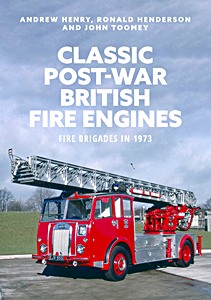
Couverture du livre : Classic Post-war British Fire Engines

Classic Post-war British Fire Engines

Andrew Henry, Ronald Henderson, John Toomey | anglais | broché | 96 p. | 2022

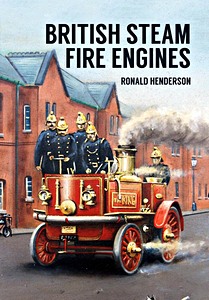
Couverture du livre : British Steam Fire Engines

British Steam Fire Engines

Ronald Henderson | anglais | broché | 128 p. | 2016

Couverture du livre : Fire-fighting Vehicles in Preservation

NOUVEAU

Fire-fighting Vehicles in Preservation

Malcolm Batten | anglais | broché | 96 p. | 2025

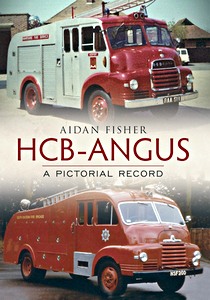
Couverture du livre : HCB-Angus Fire Engines - A Pictorial Record

HCB-Angus Fire Engines - A Pictorial Record

Aidan Fisher | anglais | broché | 96 p. | 2013