Acquistando tramite i link, sostieni nostro sito senza alcun costo aggiuntivo per te. Per saperne di più >

Programma Mercury della NASA (1958-1963): libri illustrati di storia e guide

Un libro su questo programma spaziale Mercury della NASA, tra cui la capsula Mercury e i vari veicoli di lancio.

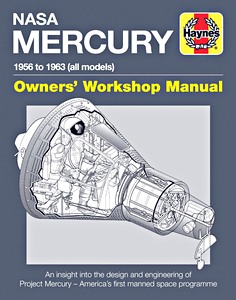
NASA Mercury Manual (1956-1963): An insight into the design and engineering (Haynes Space Manual)

Il programma Mercury della NASA ha colmato il divario tra l'ipersonico X-15 e la navicella spaziale Gemini con equipaggio di due persone, che a sua volta ha portato alla navicella spaziale Apollo. Il programma Mercury iniziò nel 1958 con l'obiettivo di portare un uomo in orbita terrestre e riportarlo sano e salvo sulla Terra, idealmente prima della caduta dell'Unione Sovietica.
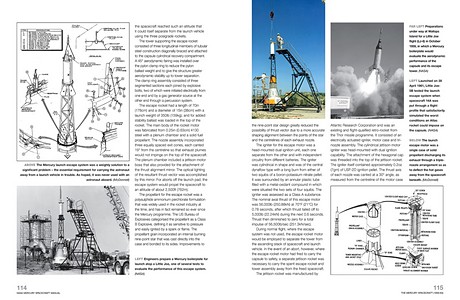
Pagine del libro NASA Mercury Manual (1956-1963) (1)

Pagine del libro "NASA Mercury Manual (1956-1963): An insight into the design and engineering"

Sette astronauti furono selezionati per l'addestramento ai voli spaziali del programma Mercury e divennero noti come i Mercury Seven. Prima del primo volo con equipaggio, un volo suborbitale nel maggio del 1961 che portò nello spazio l'astronauta statunitense Alan Shepard, furono effettuati diversi voli senza equipaggio, prima che John Glenn diventasse il primo americano a raggiungere l'orbita terrestre nel febbraio del 1962.

Il Manuale d'officina per i proprietari del programma Mercury della NASA offre approfondimenti ingegneristici dettagliati e racconta la storia dell'hardware, delle missioni e degli uomini che hanno lavorato al Progetto Mercury.
Il dottor David Baker ha lavorato con la NASA ai programmi Gemini, Apollo e Shuttle tra il 1965 e il 1990. Ha scritto più di 80 libri sulla tecnologia del volo spaziale.
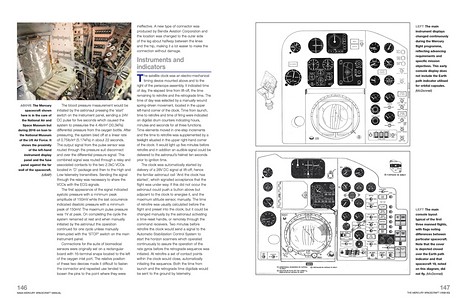
Pagine del libro NASA Mercury Manual (1956-1963) (2)

Dettagli del libro

Autore:David Baker
Formato:208 pagine, 27.5 x 22 x 1.5 cm, copertina rigida
Illustrazioni:riccamente illustrato con foto in B&N e in colori
Lingua:inglese (un dizionario tecnico inglese-italiano è disponibile gratuitamente per il download qui)
Editore:Haynes Publishing (GB, 2017)
Collana:Haynes Space Manual
ISBN:9781785210648
Copertina del libro: NASA Mercury Manual (1956-1963): An insight into the design and engineering | Haynes Space Manual | Haynes (GB)

NASA Mercury Manual (1956-1963): An insight into the design and engineering

Lingua: inglese
Aurora 7 : The Mercury Spaceflight of M. Scott Carpenter

To a nation enthralled by the heroic exploits of the Mercury astronauts, the launch of Lt. Cmdr. Scott Carpenter on NASA's second orbital space flight was a renewed cause for pride, jubilation and celebration.
Within hours, that excitement had given way to stunned disbelief and anxiety as shaken broadcasters began preparing the American public for the very real possibility that an American astronaut and his spacecraft may have been lost at sea.

In fact, it had been a very close call. Completely out of fuel and forced to manually guide Aurora 7 through the frightening inferno of re-entry, Carpenter brought the Mercury spacecraft down to a safe splashdown in the ocean.
In doing so, he controversially overshot the intended landing zone. Despite his efforts, Carpenter's performance on the MA-7 mission was later derided by powerful figures within NASA. He would never fly into space again.

Taking temporary leave of NASA, Carpenter participated in the U.S. Navy's pioneering Sealab program. For a record 30 days he lived and worked aboard a pressurized habitat resting on the floor of the ocean, becoming the nation's first astronaut/aquanaut explorer.

Following extensive research conducted by noted spaceflight historian Colin Burgess, the drama-filled flight of Aurora 7 is faithfully recounted in this engrossing book, along with the personal recollections of Scott Carpenter and those closest to the actual events.

Dettagli del libro

Autore:Colin Burgess
Formato:239 pagine, 24.5 x 17.5 x 1.6 cm, brossura
Illustrazioni:141 foto in B&N e 40 in colori
Lingua:inglese
Editore:Springer International Publishing AG (CH, 2015)
ISBN:9783319204383
Copertina del libro: Aurora 7 : The Mercury Spaceflight of M. Scott Carpenter | Springer

Aurora 7 : The Mercury Spaceflight of M. Scott Carpenter

Lingua: inglese

Liberty Bell 7 : The Suborbital Mercury Flight of Virgil I. Grissom

NASA's Mercury astronauts were seven highly skilled professional test pilots. Each of them seemed to possess the strength of character and commitment necessary to overcome apparently insurmountable obstacles as the United States entered into a Cold War space race with the Soviet Union.

This was never more evident than on the epic suborbital MR-4 flight of Liberty Bell 7 with astronaut Virgil ('Gus') Grissom piloting the spacecraft to a successful splashdown, followed by the premature blowing of the craft's explosive hatch.
After a hurried exit and struggling to stay afloat, he could only watch helplessly as the recovery helicopter pilot valiantly fought a losing battle to save the sinking capsule.
That day NASA not only lost a spacecraft but came perilously close to losing one of its Mercury astronauts, a decorated Korean fighter pilot from Indiana who might one day have soared to the highest goal of them all, as the first person to set foot on the Moon.

For the first time, many of those closest to the flight of Liberty Bell 7 and astronaut Gus Grissom offer their stories and opinions on the dramatic events of July 21, 1961, and his later pioneering Gemini mission. They also tell of an often controversial life cut tragically and horrifically short in a launch pad fire that shocked the nation.

Contents:
1. Creating a Mercury capsule
2. An astronaut named Gus
3. Preparing for launch
4. The flight of Liberty Bell 7
5. An astronaut in peril
6. One program ends, another begins
7. A tale of two hatches
8. Epilogue: From the depths of the ocean

Dettagli del libro

Autore:Colin Burgess
Formato:300 pagine, 24 x 17 cm, brossura
Illustrazioni:191 foto in B&N
Lingua:inglese
Editore:Springer International Publishing AG (CH, 2014)
ISBN:9783319043906
Copertina del libro: Liberty Bell 7 : The Suborbital Mercury Flight of Virgil I. Grissom | Springer

Liberty Bell 7 : The Suborbital Mercury Flight of Virgil I. Grissom

Lingua: inglese

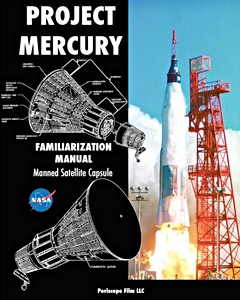
Project Mercury - Familiarization Manual - Manned Satellite Capsule

Il 4 ottobre 1957 alle 10: 28 ora di Mosca, un razzo con a bordo il primo satellite orbitante al mondo si lanciò nello spazio, segnando una nuova era nella storia dell'umanità e l'inizio della cosiddetta "space race" - un'epica rivalità che contrapponeva il know-how tecnologico dell'Unione Sovietica a quello degli Stati Uniti.
Nonostante alcuni fallimenti ampiamente pubblicizzati, gli Stati Uniti riuscirono a rispondere ai russi con il lancio di successo dell'Explorer 1 nel gennaio del 1958. Il successivo traguardo importante sarebbe stato quello di portare un uomo in orbita, un obiettivo che definì il Progetto Mercury statunitense.

Dopo una lunga serie di lanci di prova, tra cui un volo suborbitale con a bordo lo scimpanzé Ham, l'astronauta del programma Mercury Alan Shepard divenne il primo americano nello spazio. Il 5 maggio 1961, Shepard partì a bordo di un razzo Redstone per un volo suborbitale della durata inferiore a 16 minuti.
Nove mesi dopo, la capsula Friendship 7 di John Glenn fu lanciata nello spazio a bordo di un razzo vettore Atlas, e Glenn divenne il primo americano a orbitare attorno alla Terra. Glenn rimase nello spazio per quasi cinque ore e compì tre giri intorno al pianeta. Sebbene questi voli rappresentassero enormi conquiste, nessuno dei due fu una vera e propria vittoria nella corsa allo spazio: il volo orbitale del cosmonauta Yuri Gagarin del 12 aprile 1961 gli valse il titolo di primo uomo nello spazio e di primo uomo a orbitare attorno alla Terra.

Progettata dal brillante ingegnere Max Faget e da un team della NASA, la capsula spaziale Mercury rappresentava una classe di veicoli completamente nuova. Abbastanza grande per un solo astronauta, la battuta sulla capsula angusta era che fosse "worn, not ridden". Nonostante le notizie contrarie, la capsula poteva essere, ed era effettivamente, pilotata da astronauti che avevano a disposizione propulsori per il controllo dell'assetto e un finestrino per l'osservazione. La capsula vantava anche comandi manuali per il rientro.

Questo manuale di familiarizzazione, creato dalla NASA e dall'appaltatore McDonnell Aircraft, illustra tutti i sistemi a bordo della capsula spaziale Mercury, inclusi i comandi della cabina, i sistemi e i controlli ambientali e di stabilizzazione, le procedure di lancio e rientro, nonché le apparecchiature e le procedure di navigazione e comunicazione. Risalente al giugno del 1962, rappresenta una revisione tardiva dei documenti creati all'inizio del programma Mercury.

Originariamente riservato, questo manuale è stato declassificato e viene presentato nella sua interezza, per un totale di quasi 400 pagine.

Dettagli del libro

Autore:NASA
Formato:402 pagine, 25.5 x 20 x 2.1 cm, brossura
Illustrazioni:riccamente illustrato con foto e disegni
Lingua:inglese
Editore:Periscope Film (USA, 2011)
ISBN:9781935700685
Copertina del libro: Project Mercury - Familiarization Manual - Manned Satellite Capsule | Periscope

Project Mercury - Familiarization Manual - Manned Satellite Capsule

Lingua: inglese

Selecting the Mercury Seven

In January 1959, after an exhaustive search through military service records, a number of America's elite test pilots received orders to attend a series of top-secret briefings in Washington, D.C. These briefings were designed to assist in selecting a group of astronauts for the newly formed National Aeronautics and Space Administration (NASA) and its man-in-space program, Project Mercury.

Following in-depth medical and psychological screening, 32 finalists were chosen. They would be subjected to the most rigorous, exploratory, and even degrading medical and psychological stress tests ever imposed on the nation's service personnel.
NASA wanted the best of the best in its quest for the nation's first astronauts, and this is the story of that search for a group of near-supermen who were destined to become trailblazing pioneers of American space flight.

For the very first time, after extensive research and numerous interviews, the names and amazing stories of those 32 finalists are finally revealed in this book. Only seven of them would ultimately be selected as America's Mercury astronauts, but those responsible for choosing the seven openly concede that it was an incredibly difficult task.
They reveal that any of these courageous and superbly talented test pilots could so easily have been selected to fly into space, finding adventure, fame, and lasting renown as one of NASA's legendary Mercury astronauts.

Dettagli del libro

Autore:Colin Burgess
Formato:386 pagine, 23.5 x 15.5 x 2.1 cm, brossura
Illustrazioni:167 foto in B&N
Lingua:inglese
Editore:Springer-Verlag New York Inc. (USA, 2011)
ISBN:9781441984043
Copertina del libro: Selecting the Mercury Seven | Springer (USA)

Selecting the Mercury Seven

Lingua: inglese

Titoli correlati:

Copertina del libro: Skylab Saturn IB - Flight Manual

Skylab Saturn IB - Flight Manual

NASA | inglese | brossura | 282 p. | 2013

Copertina del libro: NASA Skylab - News Reference

NASA Skylab - News Reference

NASA | inglese | brossura | 500 p. | 2012

Copertina del libro: Skylab - a Guidebook

Skylab - a Guidebook

Leland F Belew, Ernst Stuhlinger | inglese | brossura | 178 p. | 2012

Anni coperti: 1958 1959 1960 1961 1962 1963