Hot rods (Vitesse)
Rodding began in the 1930s in California, USA. Aboard their old modified Ford Ts, young people, for fun, raced from one traffic light to another, on the dry lakes of southern California and on the beaches of Florida.
In 1932, Ford launched its "Model B", with a powerful engine, the first V8 offered on a popular vehicle and also equipped with stripped-down bodies (fenders and running boards removed), which presented itself as a great opportunity for pure speed enthusiasts, already reaching 200 km/h at that time.
The term "hot-rod" only appeared after the Second World War to describe these old used cars bought by young people and then modified by them to gain competitiveness. Over the years, we see the appearance of specialized magazines, but also high-performance kits which will follow the evolution of the technique and the structuring of races on dry lakes.
From the 1960s, several polyester replicas were created to deal with the shortage of pre-war sheet metal bodies. A multitude of specialized companies were born with the arrival of vehicles built solely to win trophies at shows (show cars).
The 1980-1990 period saw the emergence of a much more sober style: high-tech. In France, the Rod movement emanated from the Custom movement, which appeared in the 1980s and consisted of modifying old obsolete French cars to bring them up to date mechanically and aesthetically.
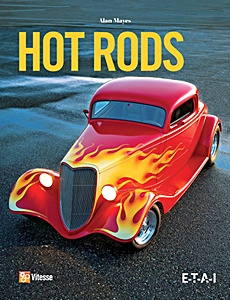
Through a superb collection of three hundred photos, the book "Hot Rods" exhibits more than forty cars covering all styles of hot rodding, ranging from traditional Rods, wild meetings or even extreme Rat Rods described through their technical characteristics, stories and anecdotes.
Dettagli del libro
| Autore: | Alan Mayes |
|---|
| Formato: | 240 pagine, 21 x 16.5 cm, brossura |
|---|
| Illustrazioni: | riccamente illustrato con foto in B&N e in colori |
|---|
| Lingua: | francese |
|---|
| Editore: | ETAI (F, 2013) |
|---|
| Collana: | Vitesse |
|---|
| ISBN: | 9782726897355 |
|---|