Original VW Bus - The Restorer's Guide to All Bus, Panel Van and Pick-up Models, 1950-1979
This book is a complete guide to the Volkswagen Split-screen (1950-1967) and Bay-window (1967-1979) models in their original factory condition.
Extensive research in Germany, the UK, and the USA located vehicles for photography, ensuring accurate details from examples preserved in original condition or carefully restored.
In addition to the standard passenger versions, rarer models are included, such as vans, pick-ups, and double-cab pick-ups.
With over 200 specially commissioned colour photographs of more than 25 vehicles, the book highlights the details that distinguish each model. It is an essential reference for owners, restorers, buyers, and enthusiasts.
Product details
| Author: | Laurence Meredith |
|---|---|
| Details: | 128 pages, 11.6 x 9.25 x 0.67 in (29.5 x 23.5 x 1.7 cm), hardback |
| Illustrations: | 265 color photos |
| Language: | English |
| Publisher: | Herridge & Sons Ltd (GB, 2011) |
| Series: | Original Restorer's Guide |
| ISBN: | 9781906133351 |
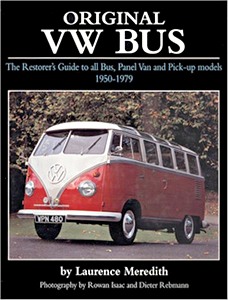
Original VW Bus - The Restorer's Guide to All Bus, Panel Van and Pick-up Models, 1950-1979
Language: English