En achetant via ces liens, vous soutenez notre site sans frais supplémentaires pour vous. En savoir plus >

Goederentreinen - Grande-Bretagne : livres - histoire

Beaux livres sur l'histoire des trains de marchandises et du matériel roulant en Grande-Bretagne.

MGR Coal Trains

Avec la généralisation de l'électricité pour alimenter et éclairer les villes britanniques, plusieurs municipalités ont construit leurs propres centrales électriques. Dans les premières années, celles-ci étaient inévitablement alimentées au charbon, dont le Royaume-Uni disposait en abondance.
Dans les années 1960 et au début des années 1970, le gouvernement a entrepris un programme de construction de nouvelles centrales électriques. La plupart d'entre elles étaient dotées d'installations de manutention du charbon directement reliées au réseau ferroviaire, donnant ainsi naissance au train de charbon Merry-Go-Round, ou MGR.

L'ouvrage présente un panorama du Royaume-Uni illustrant une grande variété de trains de charbon en mouvement, avec des images inédites prises sur plusieurs années et dans différents lieux.

Caractéristiques

Auteur :Mike Rhodes
Présentation :96 pages, 23.5 x 16.5 x 0.8 cm, broché
Illustration :180 photos en N&B et en couleurs
Langue :anglais
Editeur :Amberley Publishing (GB, 2023)
ISBN :9781398108882

Rail Freight - Yorkshire and North East England

Forty years ago, large areas of Yorkshire and the North East were criss-crossed by freight-only lines, many of them serving the heavy industries that had brought prosperity to the railways decades earlier. Classes 25 and 40 were enjoying their last few years of service in the early 1980s, while the unique Class 76s on the Woodhead route and Class 13 'master and slave' shunters at Tinsley lasted until 1981 and 1985 respectively.

The Class 37s still had plenty of life left in them, especially in the North East where they worked most coal trains and a share of other traffic, too. Often overlooked were the humble Class 08 shunters, busying themselves not just in marshalling yards but also sometimes on short main-line trips.

Today's rail freight scene may be less varied, but it still thrives where there are large tonnages to be moved regularly from A to B. As in most parts of Britain, rail freight haulage these days is dominated by the Class 66, but the uniformity is relieved by numerous livery styles, reflecting not only the different freight operators but also some of the customers that they serve.
Also, the Class 60s have made a comeback in some surprising areas, notably the GB Railfreight biomass trains out of Tyne Dock. Classes 70, 56 and, very occasionally, 68 all bring added interest. The wagon fleet, likewise, is more standardised, but arguably more colourful than it ever has been.

Illustrated with over 160 photographs, this book looks at Yorkshire and the North East's varied freight scene over the last 40 years.

Caractéristiques

Auteur :Paul Shannon
Présentation :96 pages, 24 x 17 x 1.3 cm, broché
Illustration :160+ photos en N&B et en couleurs
Langue :anglais
Editeur :Key Publishing Ltd (GB, 2023)
Série :Railways and Industry
ISBN :9781802823073
Couverture du livre : Rail Freight - Yorkshire and North East England | Railways and Industry | Key

Rail Freight - Yorkshire and North East England

Langue : anglais

Containers by Rail in the UK

L'importance du réseau ferroviaire dans le transport des conteneurs maritimes est capitale. Selon les statistiques du secteur, un conteneur sur quatre arrivant dans les ports britanniques est acheminé par voie ferrée. Ce phénomène est particulièrement préoccupant pour le secteur du fret ferroviaire, compte tenu de la forte baisse du trafic charbonnier ces dernières années.

Quatre des principaux acteurs du transport de marchandises au Royaume-Uni - Freightliner, DB Cargo, GB Railfreight et Direct Rail Services - acheminent d'importants volumes de conteneurs vers la quasi-totalité du territoire britannique.

Cet ouvrage analyse ces flux, depuis les grands ports de Felixstowe et Southampton jusqu'à des destinations aussi éloignées que Bristol et les Highlands écossaises.

John Jackson examine en détail la diversité des locomotives et des wagons porte-conteneurs utilisés sur ces services assurés par ces acteurs clés de notre réseau ferroviaire du XXIe siècle.

Caractéristiques

Auteur :John Jackson
Présentation :96 pages, 23.5 x 16.5 x 1.3 cm, broché
Illustration :180 photos en couleurs
Langue :anglais
Editeur :Amberley Publishing (GB, 2022)
ISBN :9781398108868

Heavy Freight Locomotives

Dans les années 1970, l'introduction des trains de charbon tournants a nécessité une locomotive bien plus puissante, ce qui a conduit à la construction de la Class 56 de 3 300 ch. Pour le transport de marchandises en général, la Class 60 a été développée. Ces deux types de locomotives ont connu des problèmes de fiabilité durant leurs premières années de service.

Plusieurs grandes entreprises de pierre du Somerset, exaspérées par les problèmes récurrents de locomotives rencontrés par British Rail, décidèrent de commander leurs propres machines, en choisissant General Motors aux États-Unis comme fournisseur. C'est ainsi que naquit la série 59, mise en service en 1986 et dont l'efficacité fut telle que d'autres opérateurs de fret ferroviaire suivirent son exemple et commandèrent ce qui allait devenir la série 66. Au final, plus de 400 locomotives furent mises en service.

Ce livre, composé pour la plupart de photographies en couleur inédites prises par George Woods entre 1966 et 2019, montre les locomotives tractant une variété de trains sur l'ensemble du réseau BR.

Caractéristiques

Auteur :George Woods
Présentation :96 pages, 23.5 x 16.5 x 1.4 cm, broché
Illustration :180 photos en couleurs
Langue :anglais
Editeur :Amberley Publishing (GB, 2022)
ISBN :9781398101999
Couverture du livre : Heavy Freight Locomotives | Amberley

Heavy Freight Locomotives

Langue : anglais

Rail Freight - Scotland

In the early 1980s, Ravenscraig steel works was the biggest source of rail freight north of the border, handling iron ore, coal, lime and scrap, as well as semi-finished and finished products. Opencast coal was thriving and would even lead to some lines re-opening later in the decade.
Wagonload freight was still providing a service on some rural lines, not least the Far North line where many intermediate stations still handled general freight, such as seed potatoes and fertiliser.

Today, Ravenscraig is a distant memory and coal is no longer carried by rail anywhere in Scotland. Wagonload freight has also disappeared, despite some attempts to revive the concept in the early 2000s.
However, in a few areas, rail freight has done well. The cement works at Oxwellmains is a big user of rail and Grangemouth refinery still produces three trainload flows. Intermodal traffic has grown substantially, with several regular Anglo-Scottish flows on the West and East Coast main lines as well as internal movements to Aberdeen and Inverness.

Illustrated with over 160 photographs, many of which are previously unpublished, this volume looks at the changing face of rail freight in Scotland. It details the changes in traction, rolling stock and railway infrastructure over four decades.

Caractéristiques

Auteur :Paul Shannon
Présentation :96 pages, 23.5 x 17.5 x 1.3 cm, broché
Illustration :160+ photos en N&B et en couleurs
Langue :anglais
Editeur :Key Publishing Ltd (GB, 2022)
Série :Railways and Industry
ISBN :9781802821659

Rail Freight - Wales and the Borders

The changes to rail freight in Wales and the Borders since the 1980s have been dramatic in many ways and have often been a knock-on effect of huge transformations in the industries that the railway serves, most notably, the coal-mining sector. These have led to a railway with a slimmed-down infrastructure and renewed traction and rolling-stock fleets.

Until the 1980s, coal was still the lifeblood of many railway lines in South Wales. However, one by one, the pits closed, leaving just a handful of surface operations still active in 2020.
The sight and sound of a Class 37 winding its way up a steep-sided valley is now a distant memory. Industrial decline has affected other traffics too, with the loss of the heavy iron ore trains to Llanwern and many other flows.
However, Welsh rail freight is far from dead. Class 60-hauled oil and steel trains still ply the South Wales main line, and there have even been small revivals such as cement from Penyffordd.

Illustrated with over 150 stunning photographs, many of which are previously unpublished, this volume looks at the changing face of rail freight in Wales and the Borders, detailing the changes in traction, rolling stock and railway infrastructure over four decades.

Caractéristiques

Auteur :Paul Shannon
Présentation :96 pages, 24 x 16.5 x 0.8 cm, broché
Illustration :160 photos en couleurs
Langue :anglais
Editeur :Key Publishing Ltd (GB, 2022)
Série :Railways and Industry
ISBN :9781913870218
Couverture du livre : Rail Freight - Wales and the Borders | Railways and Industry | Key

Rail Freight - Wales and the Borders

Langue : anglais

Freight Trains of the Western Region in the 1980s

From coal trains in South Wales to clay trains in Cornwall, there were still large numbers of unfitted and vacuum-braked wagons of various types in use across the Western Region at the start of the 1980s.
However changes were taking place, and by 1984 the traditional wagon-load freight network had disappeared, and with it many yards were closed or rationalised. The replacement Speedlink Network conveyed modern air-braked wagons, many of them privately owned. Company block trains also connected freight customers across the Region, hauled by a variety of loco classes.

Between 1980 and 1986 Kevin Redwood was working in the Area Freight Centre at Bristol with a particular interest in freight traffic. On his days off he frequently travelled across the region to photograph the changing scene. His journeys took him to busy mainline locations like Didcot, as well as more obscure locations in South Wales and the West Country.

Caractéristiques

Auteur :Kevin Redwood
Présentation :96 pages, 23.5 x 16.5 x 0.8 cm, broché
Illustration :180 photos en N&B et en couleurs
Langue :anglais
Editeur :Amberley Publishing (GB, 2021)
ISBN :9781398100503
Couverture du livre : Freight Trains of the Western Region in the 1980s | Amberley

Freight Trains of the Western Region in the 1980s

Langue : anglais

The Later Years of British Rail 1980-1995: Freight Special

1980 to 1995 was an extraordinary time for the railways of Britain, especially the freight sector. In 1980 there was a unified, monochrome railway. Freight traffic was still abundant, with marshalling yards active and many branch lines still operating. There were hundreds of collieries.
In the early 1980s, Sectorisation arrived. The freight division was separated from the passenger side and further sub-divided into different freight sectors. New locomotives were introduced, and the older types started to disappear.

As the eighties progressed, the freight sector was constantly changing. The mixed freight train became a thing of the past but new traffic flows developed, particularly in containers and aggregates. The coal sector steadily declined and branch lines became disused.
In the early nineties three new freight companies were created in anticipation of privatisation and then finally privatisation itself arrived, with all freight traffic being taken over by an American company.

It was a period of enormous change and adaptation, and the story is told here through the images of two photographers who were keen observers of the railway scene throughout the whole of this fascinating period.

Caractéristiques

Auteur :Patrick Bennett, Peter Lovell
Présentation :96 pages, 23.5 x 16.5 x 0.8 cm, broché
Illustration :180 photos en N&B et en couleurs
Langue :anglais
Editeur :Amberley Publishing (GB, 2021)
ISBN :9781398102934
Couverture du livre : The Later Years of British Rail 1980-1995: Freight Special | Amberley

The Later Years of British Rail 1980-1995: Freight Special

Langue : anglais

GB Railfreight

Formed in 1999, GB Railfreight was one of several new rail freight operators to appear after the privatisation and break-up of British Rail in the 1990s.
After winning a contract to operate infrastructure trains for Railtrack in 2000 the company enjoyed a long period of rapid growth to become one of the UK's principal rail freight companies, later expanding into passenger operations.

Today, with a fleet of over 100 locomotives, the company operates a wide and varied range of services across the UK. This book aims to take a look at the operations and fleet of this successful rail business.

Caractéristiques

Auteur :John Jackson
Présentation :96 pages, 23 x 16.5 x 0.8 cm, broché
Illustration :180 photos en couleurs
Langue :anglais
Editeur :Amberley Publishing (GB, 2020)
ISBN :9781445682112

Rail Freight - North West England

This book illustrates the changing face of rail freight in North West England over 40 years. During that time the traction and wagon fleets have been almost completely replaced, freight trains have become heavier and less frequent, the amount of shunting and trip working has been dramatically reduced, and most small freight terminals have closed.

Perhaps the most striking loss has been freight from the oil and chemicals complex around Ellesmere Port and Stanlow and the former ICI complex around Northwich has lost almost all its rail traffic.
On the Cumbrian coast, just nuclear traffic remains after the loss of coal, steel and chemicals traffic. However, not all the change has been negative: we now have biomass on rail, increased intermodal traffic and significant growth in stone traffic from the Buxton area.

Illustrated with over 150 stunning photographs, many of which are previously unpublished, this volume looks at the evolution of rail freight in specific localities, detailing the changes in traction, rolling stock and railway infrastructure over four decades.

Caractéristiques

Auteur :Paul Shannon
Présentation :96 pages, 24.5 x 17 x 0.9 cm, broché
Illustration :150 photos en N&B et en couleurs
Langue :anglais
Editeur :Key Publishing Ltd (GB, 2020)
ISBN :9781913295813
Couverture du livre : Rail Freight - North West England | Key

Rail Freight - North West England

Langue : anglais

Rail Freight - South West England

From the intricate china clay operations in Cornwall to the major limestone quarries of the Mendips, rail freight has maintained a vibrant presence across the counties of South West England. However, the changes in traffic patterns and day-to-day operations have been substantial.
In the early 1980s, china clay was still carried in elderly wooden-bodied wagons from about a dozen loading points, with much shunting and short-distance trip working. Gradually, the operation has been modernised and streamlined, although even the latest generation of rolling stock is now over 30 years old.
The Mendip quarries have a different story to tell, as here the railway has fully exploited its natural strength by moving ever-greater quantities of stone to terminals across southern England. Meanwhile, many small-scale freight flows have disappeared as the railway has moved to full trainload operation.

Illustrated with over 160 carefully chosen photographs, many of which are previously unpublished, this volume looks at the changing face of rail freight in South West England. It details the changes in traction, rolling stock and railway infrastructure over four decades.

Caractéristiques

Auteur :Paul Shannon
Présentation :96 pages, 24.5 x 17 x 1.2 cm, broché
Illustration :160 photos en N&B et en couleurs
Langue :anglais
Editeur :Key Publishing Ltd (GB, 2020)
Série :Railways and Industry
ISBN :9781913870911
Couverture du livre : Rail Freight - South West England | Railways and Industry | Key

Rail Freight - South West England

Langue : anglais

London Rail Freight Since 1985

London's rail freight traffic is dictated by the geography of the city. When railways first came to London, each line was built by a different company seeking to link their area to the capital. There was no through service from one side of London to the other, and indeed the railway companies were prevented from entering the central area of the City and West End.

In order to transfer freight traffic from one company to another, the various railway companies made links to the orbital North London Railway, which ran from Broad Street station in the east to Richmond in the south-west, and also had a route into the east London docks.

Traffic from north to south London was dictated by the River Thames and the need to maintain height for navigation to the upriver docks and wharves. Thus there were no bridges east of London Bridge until Tower Bridge (road) opened in 1894, and no others until the QE2 bridge at Dartford (also road) opened in 1991.
Most cross-river traffic, which these days includes traffic to and from the Channel Tunnel, used the route through Kensington Olympia and the river bridge at Chelsea.

This book takes the freight routes around London geographically, in an anti-clockwise direction, starting in east London north of the Thames and ending in south-east London. It covers the period since 1985 when BR blue gave way to corporate sectors with different liveries and on into privatisation, and shows the various types of locomotives used, and freight traffic carried over this period.

Caractéristiques

Auteur :Malcolm Batten
Présentation :96 pages, 23.5 x 16.5 x 0.8 cm, broché
Illustration :180 photos en couleurs
Langue :anglais
Editeur :Amberley Publishing (GB, 2019)
ISBN :9781445688985
Couverture du livre : London Rail Freight Since 1985 | Amberley

London Rail Freight Since 1985

Langue : anglais

DB Cargo Locomotives and Stock in the UK

DB Cargo est née de la privatisation du secteur du fret ferroviaire par l'État au milieu des années 1990. Depuis, elle a connu de nombreux changements de nom et d'image de marque.
Comme d'autres entreprises, elle a souffert du net recul du transport de charbon par voie ferrée et l'avenir s'annonce incertain. Elle affirme néanmoins toujours être le premier fournisseur de services de fret ferroviaire au Royaume-Uni, malgré la concurrence accrue des opérateurs routiers et ferroviaires.

Les locomotives diesel et électriques des séries 60, 66, 67, 90 et, occasionnellement, 92, sont toutes en service régulier aujourd'hui. Vingt ans plus tard, John Jackson examine à la fois l'important parc de locomotives dont dispose actuellement DB Cargo et la diversité du trafic qu'il continue de gérer.
Outre son rôle majeur dans le transport ferroviaire de marchandises, DB Cargo fournit également des locomotives pour le transport de passagers, notamment pour les trains de nuit écossais, les affrètements et le transport de la famille royale. L'ensemble de la gamme de locomotives DB Cargo est présenté dans cet ouvrage.

Caractéristiques

Auteur :John Jackson
Présentation :96 pages, 23.5 x 16.5 x 0.7 cm, broché
Illustration :180 photos en N&B et en couleurs
Langue :anglais
Editeur :Amberley Publishing (GB, 2018)
ISBN :9781445682969
Couverture du livre : DB Cargo Locomotives and Stock in the UK | Amberley

DB Cargo Locomotives and Stock in the UK

Langue : anglais

Freightliner Locomotives

Dating back to 1965, Freightliner is still going strong today; a great success for rail freight. It started life moving shipping containers from ports to inland terminals, where specialised cranes were used to tranship from rail to road. These trains serve no fewer than nineteen intermodal terminals across the UK.

With the privatisation of British Rail in 1996, Freightliner's assets were transferred to a new company called Freightliner 1995 Ltd, in readiness for sale. Then in 1999 Freightliner set up the Heavyhaul side of the business as a direct competitor to the bulk rail freight company English Welsh & Scottish Railway (EWS). Today there are major maintenance depots at Crewe Basford Hall, and Leeds Midland Road, while the main marshalling yard and stabling point is at Crewe Cheshire.

With a stunning collection of full-colour photography taken around the country, Dave Smith offers up a fantastic pictorial tribute to this icon of Britain's railways.

Caractéristiques

Auteur :Dave Smith
Présentation :96 pages, 23.5 x 16.5 cm, broché
Illustration :180 photos en N&B et en couleurs
Langue :anglais
Editeur :Amberley Publishing (GB, 2018)
ISBN :9781445673707

British Freight Trains

Against a backdrop of declining volumes, the competition between the various freight companies has never been so acute. The 'big five' freight haulage companies, DB Cargo, Freightliner, GB Railfreight, Direct Rail Services and Colas Rail, dominate the market.
It is no surprise that all five companies include the ubiquitous Class 66 within their fleets, with over 300 examples of the class operating across the country.

The observer could be forgiven for thinking that these are the only traction in use today. Of course they dominate the current UK freight scene but that is by no means the whole story.

Numerous other classes of both diesel and electric locomotives contribute to the mix of rail freight traction on display in the UK today. Class 37 diesels and a reducing number of AC electric locomotives have notched up half a century of freight haulage. They can be seen today working alongside newer examples such as the Class 68 and 70 locomotives.
With an array of rare and unpublished images, John Jackson offers a fascinating overview of the freight scene today.

Caractéristiques

Auteur :John Jackson
Présentation :96 pages, 23.5 x 16.5 x 0.8 cm, broché
Illustration :180 photos en couleurs
Langue :anglais
Editeur :Amberley Publishing (GB, 2017)
ISBN :9781445672687

British Freight Trains

Les infatigables trains de marchandises britanniques sont immortalisés dans des lieux variés, des paysages spectaculaires des collines de Cumbria aux sites industriels. Mettant en scène différents opérateurs de fret, les photographies de Paul Manley ont été prises dans diverses régions du pays, notamment en Cumbria, dans le Lancashire et le Cheshire, ainsi que plus au sud dans les Midlands, y compris le Staffordshire, le Warwickshire, le Northamptonshire et le Leicestershire - autant de régions où le trafic de marchandises et de conteneurs est intense.

Le Peak District, dans le Derbyshire, est dominé par les trains de pierres en provenance de Peak Forest et de Tunstead, tandis que Barnetby le Wold, dans le nord du Lincolnshire, est un autre point névralgique du fret, avec le port d'Immingham et les aciéries de Scunthorp à proximité.
À Teesside, le principal fret est constitué de charbon importé de Redcar et de trains transportant de l'acier à destination de l'usine de Lackenby.

Caractéristiques

Auteur :Paul Manley
Présentation :128 pages, 16.5 x 24.5 x 1.3 cm, broché
Illustration :200 photos en N&B et en couleurs
Langue :anglais
Editeur :Amberley Publishing (GB, 2014)
ISBN :9781445633435

Autres livres dans cette catégorie :

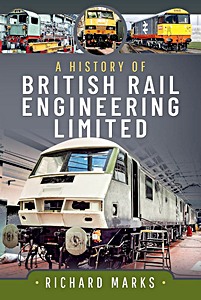
Couverture du livre : A History of British Rail Engineering Limited

A History of British Rail Engineering Limited

Richard Marks | anglais | relié | 254 p. | 2024

Couverture du livre : Hunslet Locomotives Preserved

Hunslet Locomotives Preserved

Oliver Edwards | anglais | broché | 64 p. | 2021

Couverture du livre : British Diesel and Electric Locomotives Abroad - A Second Life Overseas

British Diesel and Electric Locomotives Abroad - A Second Life Overseas

Anthony P Sayer | anglais | relié | 288 p. | 2020

Couverture du livre : English Electric Diesel Locomotives

English Electric Diesel Locomotives

George Woods | anglais | broché | 96 p. | 2020

Couverture du livre : Robinson Eight-coupled Locomotives

Robinson Eight-coupled Locomotives

Jeremy Clements | anglais | relié | 252 p. | 2020

Couverture du livre : Beyer, Peacock & Company

Beyer, Peacock & Company

Colin Alexander, Alon Siton | anglais | broché | 96 p. | 2019

Couverture du livre : Locomotive Builders of Leeds : E.B. Wilson and Manning Wardle

Locomotive Builders of Leeds : E.B. Wilson and Manning Wardle

Mark Smithers | anglais | relié | 200 p. | 2018

Couverture du livre : The North British Locomotive Company

The North British Locomotive Company

Colin Alexander, Alon Siton | anglais | broché | 96 p. | 2018

Couverture du livre : The Stephenson Railway Legacy

The Stephenson Railway Legacy

Colin Alexander, Alon Siton | anglais | broché | 96 p. | 2018

Couverture du livre : The Vulcan Foundry - 150 Years of Engineering

The Vulcan Foundry - 150 Years of Engineering

Colin Alexander | anglais | broché | 96 p. | 2017