Al comprar mediante los enlaces, apoyas este sitio sin coste adicional para usted. Más información >

Locomotoras eléctricas - Gran Bretaña: libros - historia y modelos

Libros ilustrados sobre la historia, tipos y tecnología de locomotoras eléctricas de British Rail y otras compañías ferroviarias de Gran Bretaña.

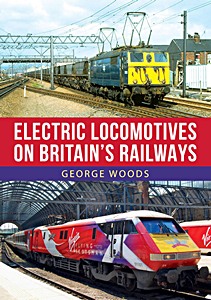
Electric Locomotives on British Railways

Prior to the completion of the West Coast Route electrification in 1966, electric locomotives were uncommon on Britain's railways, except for the Manchester to Sheffield service, which had been electrified since 1954. Although suburban systems around major cities and the south of England featured numerous EMUs, steam remained predominant.

The transformation began with British Rail's 1955 Modernisation Plan, targeting the replacement of steam locomotives with diesel and electric traction by approximately 1975. The plan aimed to electrify main lines and the busiest suburban services using a 25,000-volt overhead wire system, distinct from the third rail system on existing electrified routes.

In this book, George Woods presents predominantly unpublished color photographs showcasing various electric locomotive types deployed on the BR network since 1966 and the diverse trains they pulled.
The images capture the evolution following the electrification initiatives and the shift from steam to electric and diesel traction in line with BR's Modernisation Plan.

Detalle del libro

Autor:George Woods
Presentación:96 páginas, 25.5 x 18 x 2.1 cm, tapa blanda
Ilustración:180 fotos y color
Idioma:Inglés
Editorial:Amberley Publishing (GB, 2023)
ISBN:9781398102019
Portada del libro: Electric Locomotives on British Railways | Amberley

Electric Locomotives on British Railways

Idioma: Inglés

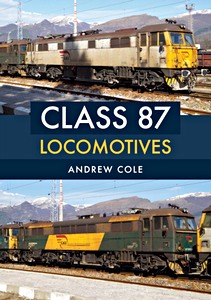
Class 87 Locomotives

Cuando British Rail decidió electrificar la línea principal de la costa oeste al norte de Crewe, en dirección a Escocia, se necesitaba una nueva clase de locomotora eléctrica para operar estos servicios. Treinta y seis unidades de la Clase 87 se construyeron en los talleres de Crewe a partir de 1973 y fueron un éxito inmediato.
Las primeras 35 locomotoras eran estándar. Sin embargo, la última fue equipada con un sistema de control de tiristores experimental y se reclasificó como Clase 87/1.

Los 36 trenes de esta clase recibieron nombres y fueron habituales en la costa oeste durante décadas. Inicialmente se utilizaron para el transporte de pasajeros, pero también se les podía encontrar en el transporte de mercancías, ya que venían equipados con diversos equipos de trabajo desde su fabricación.
Toda la clase permaneció trabajando en la línea de la Costa Oeste durante toda la era de British Rail y hasta la privatización, y todos los miembros, excepto el número 87101, pasaron a formar parte de Virgin Trains.

La única locomotora de la Clase 87/1 pasó al sector de transporte ferroviario de mercancías de BR y, finalmente, a manos de EWS. Fue desguazada en 2002. Cuando finalizó su servicio en la Costa Oeste, 21 locomotoras de esta clase se utilizaron posteriormente en Bulgaria, tres de las cuales se conservaron y el resto fueron desguazadas.
En este libro, Andrew Cole documenta las locomotoras de la Clase 87.

Detalle del libro

Autor:Andrew Cole
Presentación:96 páginas, 23.5 x 16.5 x 1.4 cm, tapa blanda
Ilustración:180 fotos en b/n y color
Idioma:Inglés
Editorial:Amberley Publishing (GB, 2018)
ISBN:9781445666921
Portada del libro: Class 87 Locomotives | Amberley

Class 87 Locomotives

Idioma: Inglés

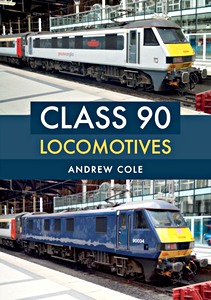
Class 90 Locomotives

En 1987, British Rail decidió que necesitaba una nueva clase de locomotora eléctrica de corriente alterna para su uso en la línea principal de la costa oeste. La idea era que esta clase ayudara a eliminar las locomotoras de la Clase 85 y que se utilizara tanto para el transporte de mercancías como de pasajeros.
En los talleres de Crewe se construyeron cincuenta locomotoras de esta clase, junto con las locomotoras de la Clase 91 que se construyeron para la línea principal de la costa este.

Las locomotoras de la Clase 90 fueron diseñadas para poder funcionar con un sistema DVT Mk 3, lo que también eliminó la necesidad de maniobrar en las estaciones terminales. Las primeras veinticinco unidades se entregaron con la librea InterCity Swallow, las once siguientes con la librea InterCity Mainline, lo que les permitía utilizarse tanto en servicios de pasajeros como de mercancías, y las catorce restantes, entregadas con la librea Railfreight Speedlink, eran predominantemente locomotoras de mercancías.

La mayoría de las locomotoras de esta clase siguen en servicio hoy en día. Quince continúan operando en servicios de pasajeros desde Norwich, mientras que el resto presta servicio en DB Cargo o Freightliner.

Este libro narra la historia de las locomotoras de la Clase 90.

Detalle del libro

Autor:Andrew Cole
Presentación:96 páginas, 23.5 x 16.5 x 1.2 cm, tapa blanda
Ilustración:180 fotos en b/n y color
Idioma:Inglés
Editorial:Amberley Publishing (GB, 2018)
ISBN:9781445666969
Portada del libro: Class 90 Locomotives | Amberley

Class 90 Locomotives

Idioma: Inglés

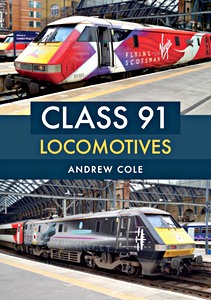
Class 91 Locomotives

British Rail introdujo treinta y una locomotoras de la Clase 91 a partir de 1989. Fueron construidas en los talleres de Crewe para su uso en los servicios de pasajeros de la línea principal de la costa este con salida desde la estación King's Cross de Londres. Su diseño presentaba una cabina estilizada en un extremo, mientras que el otro extremo tenía una cabina más robusta, ya que se preveía que transportarían paquetería y mercancías durante la noche, por lo que no requerirían alta velocidad.

Con una velocidad máxima de 225 km/h (140 mph), se las conoció como las InterCity 225, y la número 91110 ostenta actualmente el récord de velocidad para una locomotora británica. El fin de esta clase de locomotoras en la costa este se vislumbra con la introducción de las unidades Virgin Trains Class 800 Azuma, pero es de esperar que se les encuentre alguna utilidad a estas locomotoras eléctricas de aspecto y sonido tan característicos.

Los trenes de la Clase 91 han prestado servicio en la Costa Este durante casi treinta años, y este libro repasa su trayectoria desde sus inicios. Si bien han sufrido algunos accidentes e incidentes importantes, todos siguen en servicio hoy en día. Han tenido numerosos operadores, y este libro documenta las distintas libreas, incluyendo las libreas especiales que lucieron en ocasiones puntuales.

Detalle del libro

Autor:Andrew Cole
Presentación:96 páginas, 23.5 x 16.5 x 0.7 cm, tapa blanda
Ilustración:180 fotos en b/n y color
Idioma:Inglés
Editorial:Amberley Publishing (GB, 2018)
ISBN:9781445681375
Portada del libro: Class 91 Locomotives | Amberley

Class 91 Locomotives

Idioma: Inglés

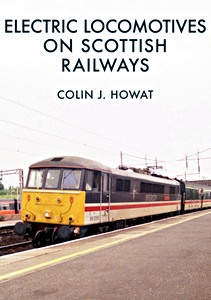
Electric Locomotives on Scottish Railways

Covers virtually the whole of the electrified network across Scotland. The first electrification took place on the north side of Glasgow from 1960 when the Airdrie to Helensburgh line and branches in between were done. This was followed closely by the south side of Glasgow when electrification spread to the Cathcart Circle, Neilston and Newton areas.

In 1967, the lines between Glasgow Central and Gourock along with the Wemyss Bay branch were added to the system. Progress throughout Central Scotland has been steady since, with approximately 40 per cent of the whole network now electrified.

One of the most popular electric locos on the network was the Class 86. These locos could be found working anything from small shunt moves in yards to express services until the mid-2000s when Virgin introduced Class 390 EMUs.
This book covers electric locos from humble Class 81s up to and including Class 92s, with images from 1974 until the present day.

Detalle del libro

Autor:Colin J. Howat
Presentación:96 páginas, 23.5 x 16.5 x 1.1 cm, tapa blanda
Ilustración:180 fotos en b/n y color
Idioma:Inglés
Editorial:Amberley Publishing (GB, 2018)
ISBN:9781445676340
Portada del libro: Electric Locomotives on Scottish Railways | Amberley

Electric Locomotives on Scottish Railways

Idioma: Inglés

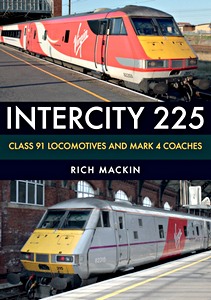
InterCity 225 - Class 91 Locomotives and Mark 4 Coaches

Ordered in 1985, the Class 91 was a joint venture between GEC, Brush and ASEA to deliver a fleet of 140 mph tilting electric locomotives for the East Coast Main Line.
Delivered between 1988 and 1991, the thirty-one locomotives ply their trade daily from London to the North East and Scotland. Accompanied by Metro-Cammell's Mark 4 coaches, they formed British Rail's flagship 'Intercity 225' programme.

While the 225s never tilted nor reached their full speed, for nearly thirty years they have conveyed thousands of passengers each day along the ECML. Today, the Class 91s and Mark 4s are approaching the end of their working lives.
Once Hitachi's Class 800 Intercity Express trains are delivered, a small handful of Class 91s will work with shortened Mark 4 sets on non-stop services.
The majority of the fleet faces an uncertain future, with no clear plans for redeployment elsewhere.

This book looks at these East Coast workhorses, which have followed in the footsteps of Gresley's famous Pacific locomotives, the Deltics and HSTs.

Detalle del libro

Autor:Rich Mackin
Presentación:96 páginas, 23.5 x 16.5 x 1.8 cm, tapa blanda
Ilustración:180 fotos en b/n y color
Idioma:Inglés
Editorial:Amberley Publishing (GB, 2018)
ISBN:9781445676388
Portada del libro: InterCity 225 - Class 91 Locomotives and Mark 4 Coaches | Amberley

InterCity 225 - Class 91 Locomotives and Mark 4 Coaches

Idioma: Inglés

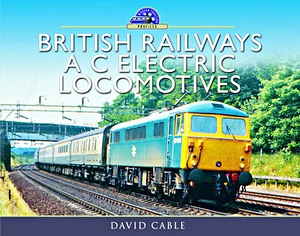
British Railways AC Electric Locomotives - A Pictorial Guide (Modern Traction Profiles )

The genesis of 25kv overhead electrification began in the late 1960s on the West Coast Main Line, the 1980s for the East Anglian Main Line, and the East Coast Main Line in the late 1980s.
Development took place in stages culminating in fully electrified lines from London to Scotland on both East and West Coast lines, and from London to Norwich. The introduction of these lines required the construction of new motive power.

Initially five types were produced for the WCML, from which the second phase of loco design was developed, giving a higher level of reliability, as well as power output.
These newer designs were applied to the Anglian services, but the ECML plans required an updated design, ostensibly for mixed traffic, but hardly ever used on anything other than express passenger services, for which their 140mph potential enabled a major recast of the timetable.
The opening of the Channel Tunnel required a mixed traffic dual voltage locomotive, running on both 25kv and the Southern Region 750v third rail DC.

The locomotives are classified between 81 and 92 inclusive, and this book of photographs by David Cable covers all the classes in a variety of locations and duties.

Detalle del libro

Autor:David Cable
Presentación:160 páginas, 24 x 25 cm, tapa dura
Ilustración:165 fotos y color
Idioma:Inglés
Editorial:Pen & Sword Books Ltd (GB, 2017)
ISBN:9781473896376
Portada del libro: British Railways AC Electric Locomotives - A Pictorial Guide | Pen & Sword

British Railways AC Electric Locomotives - A Pictorial Guide

Idioma: Inglés

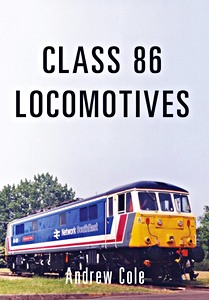
Class 86 Locomotives

The Class 86 of AC electric loco comprised a hundred members, built from 1965 onwards. The first forty locos were built by British Rail at their Doncaster Works, and the other sixty were built by English Electric at their Vulcan Works.

They were built for West Coast services, which had been electrified from London, and would eventually run all the way to Glasgow. They were delivered in Electric Blue livery, complete with cast lion and wheel.
They were originally known as the AL6 class, but under TOPS became the Class 86s. They were originally numbered in the Class 86/0 series and the Class 86/2 number series, with the 86/2s used on passenger workings due to them being fitted with improved suspension, allowing them to run at 100 mph.

Three of the Class 86/2s were used as test beds for the Class 87 development, being fitted with different bogies, becoming the Class 86/1 series. The class has also found passenger workings on the Great Eastern route from London to Norwich, finally being replaced by Class 90s.
They have also been very useful engines on freight workings, with quite a few still in use with Freightliner.

Detalle del libro

Autor:Andrew Cole
Presentación:96 páginas, 23.5 x 16.5 cm, tapa blanda
Ilustración:180 fotos en b/n y color
Idioma:Inglés
Editorial:Amberley Publishing (GB, 2016)
ISBN:9781445662084
Portada del libro: Class 86 Locomotives | Amberley

Class 86 Locomotives

Idioma: Inglés

También te puede interesar:

Portada del libro: British Industrial Steam Locomotives - A Pictorial Survey

British Industrial Steam Locomotives - A Pictorial Survey

David Mather | Inglés | tapa dura | 204 pág. | 2021

Portada del libro: Industrial Locomotives & Railways of the North West of England

Industrial Locomotives & Railways of the North West of England

Gordon Edgar | Inglés | tapa blanda | 128 pág. | 2018

Portada del libro: Working and Preserved Industrial Locomotives - From the Bill Reed Collection

Working and Preserved Industrial Locomotives - From the Bill Reed Collection

Peter Tuffrey | Inglés | tapa blanda | 128 pág. | 2012