Acquistando tramite i link, sostieni nostro sito senza alcun costo aggiuntivo per te. Per saperne di più >

Carri armati - Francia: libri - storia e modelli

Un libro sui carri armati? Scoprite qui i volumi illustrati sulla storia, i modelli e la tecnologia dei carri armati della Francia.

Renault FT & M1917 Light Tank

Durante i suoi 25 anni di servizio, il carro armato Renault FT è stato utilizzato in molti paesi del mondo: Francia, Italia, Polonia, Stati Uniti, Belgio, Brasile, Grecia, Turchia, Cina, paesi baltici, Unione Sovietica, Giappone, Romania, Paesi Bassi, Finlandia, Svezia, Svizzera e Jugoslavia.
Fu in servizio durante entrambe le guerre mondiali.

La configurazione strutturale ideata da L. Renault, con trasmissione e ruote motrici nella parte posteriore, compartimento di combattimento al centro dello scafo e torretta mobile, è diventata una soluzione costruttiva classica per i carri armati ed è tuttora utilizzata. Ha costituito la base per nuovi carri armati prodotti negli Stati Uniti, in Italia e nell'Unione Sovietica.

Dettagli

Autore:Jacek Szafrański, Samir Karmieh
Formato:180 pagine, 29.5 x 21 x 1.3 cm, brossura
Illustrazioni:24 foto in B&N e 132 in colori, 100 disegni al computer in 3D
Lingua:inglese
Editore:Kagero Oficyna Wydawnicza (PL, 2019)
ISBN:9788366148048
Copertina del libro: Renault FT & M1917 Light Tank | Kagero

Renault FT & M1917 Light Tank

Lingua: inglese

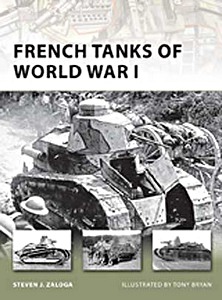
French Tanks of World War I (Osprey)

Questo volume esamina la nascita del primo carro armato moderno, il Renault FT. È un fatto poco noto che la Francia abbia schierato più carri armati di qualsiasi altro esercito durante la Prima Guerra Mondiale. Tuttavia, i primi carri armati francesi soffrivano di scarsa mobilità e corazzatura rispetto ai modelli contemporanei.
In effetti, il loro impiego iniziale sul Chemin des Dames nel 1917 fu un sanguinoso fiasco. Nonostante le battute d'arresto iniziali, l'esercito francese riscattò la propria reputazione con il Renault FT.

Il Renault FT è stato il pioniere del design moderno dei carri armati, con l'armamento in una rivoluzionaria torretta centrale e il motore nella parte posteriore. Ancora più importante, il Renault fu progettato per essere economico e facile da produrre. Scoprite la storia dei primi sviluppi francesi nel campo dei mezzi corazzati e del loro trionfale nuovo progetto, il Renault FT, che contribuì a cambiare le sorti della guerra a favore degli Alleati.

Dettagli

Autore:Steven J. Zaloga
Formato:48 pagine, 25 x 17.5 x 0.4 cm, brossura
Illustrazioni:riccamente illustrato con foto e disegni (in B&N e in colori)
Lingua:inglese
Editore:Osprey Publishing (GB, 2010)
Collana:New Vanguard (173)
ISBN:9781846035135
Copertina del libro: French Tanks of World War I | New Vanguard (173) | Osprey

French Tanks of World War I

Lingua: inglese

A bord du Renault FT - de la genèse à la mémoire du premier char moderne

NUOVO

"A bordo del Renault FT" invita il lettore a scoprire la storia di questo carro armato precursore, dalla sua concezione fino al suo posto attuale nei musei e nella memoria collettiva.
L'opera è riccamente illustrata con fotografie e tavole tecniche, permettendo di conoscere in dettaglio questo veicolo significativo. Propone uno studio completo, sia storico che tecnico, e presenta i suoi numerosi impieghi così come la sua diffusione nel mondo.

Dettagli

Autore:Camille Vargas
Formato:200 pagine, 24 x 16 x 1.8 cm, brossura
Illustrazioni:riccamente illustrato
Lingua:francese
Editore:L'Escadron Editions (F, 2025)
ISBN:9782487984028
Copertina del libro: A bord du Renault FT - de la genèse à la mémoire du premier char moderne | L'Escadron

A bord du Renault FT - de la genèse à la mémoire du premier char moderne

Lingua: francese

Le grand album des automitrailleuses de la Victoire

L'idea di montare una mitragliatrice sul telaio di un'automobile è antica quanto l'automobile stessa. Agli albori, intorno al 1900, i termini usati per descrivere questa combinazione variavano: alcuni la definivano "automobile mitragliatrice", mentre altri usavano l'espressione "auto da guerra". Spesso si trattava semplicemente di veicoli a forma di siluro dotati di supporti per mitragliatrici, come la famosa Panhard-Genty inviata in Marocco alla fine del 1907. Altri erano già vere e proprie autoblindo, come la CGV presentata all'esercito francese nel 1906.
Fu la Grande Guerra, iniziata nell'agosto del 1914, a dare a questo nuovo veicolo da combattimento il suo nome definitivo, con la parola "automitrailleuse" e la sua forma derivata "autocanon".

Già nell'ottobre del 1914, diversi telai di automobili si dimostrarono in grado di supportare il fuoco di piccoli cannoni da 37 mm forniti dalla marina, equipaggi compresi. Nacque così in Francia un nuovo e singolare ramo delle forze armate, con marinai che, indossando pon-pon rossi, percorrevano le strade del fronte.
Trasferito più logicamente alla cavalleria nel 1916, questo nuovo equipaggiamento, basato principalmente su telai Peugeot e Renault, avrebbe atteso il suo momento di gloria ad ogni tentativo di sfondare il fronte.

In quest'opera riccamente illustrata, nessun modello progettato fino al 1918, sia esso di serie o prototipo, viene dimenticato; ognuno è trattato con particolare attenzione all'illustrazione, seguendo una struttura basata sul consueto rigore di analisi e sintesi dell'autore.

Dettagli

Autore:François Vauvillier
Formato:160 pagine, 31 x 23 cm, copertina rigida
Illustrazioni:330 foto in B&N e 70 in colori, disegni
Lingua:francese
Editore:Histoire & Collections (F, 2023)
ISBN:9791038013148
Copertina del libro: Le grand album des automitrailleuses de la Victoire | Histoire & Collections

Le grand album des automitrailleuses de la Victoire

Lingua: francese

Tous les blindés de l'armée française des origines à 1940

When France entered the war in September 1939, its rearmament effort since the adoption of the first new 1935 model equipment had been considerable: more than 2 700 modern combat vehicles - tanks and armored cars - had been delivered in four years by French factories.
And 1 800 others would come out at an accelerated rate after industrial mobilization, from September 1939 until the armistice of June 1940.

This effort, both little known and totally obscured by the disaster, was not a spontaneous generation. Its roots were in the previous war - in particular with the impressive production program of the Renault FT light tank - without forgetting that it was also in France that the first armed and armored combat vehicles were born, at the dawn of the 20th century.

Pagine del libro Tous les blindes de l'armee francaise (1)

Pagine del libro "Tous les blindés de l'armée française des origines à 1940"

Presented one by one in an encyclopedic form, all this equipment is gathered here in an absolutely complete panorama: 100 main vehicles (battle tanks and armored cars) and 284 variants and derived equipment (troop transports, bridge layers, mine-jumping tanks, etc.).
A concise and absolutely synthetic text, extremely precise genealogical tables, all the technical sheets of the main vehicles, a profusion of illustrations, made up of rare period photographs and sumptuous color profiles, all at constant scale, make this work the essential bible of the subject.

A completed reissue of the best-selling work of 2014, which had quickly become unobtainable.

Dettagli

Autore:François Vauvillier
Formato:172 pagine, 31 x 23 cm, copertina rigida
Illustrazioni:riccamente illustrato con foto in B&N e in colori, disegni
Lingua:francese
Editore:Histoire & Collections (F, 2020)
ISBN:9782352505280
Copertina del libro: Tous les blindés de l'armée française des origines à 1940 | Histoire & Collections

Tous les blindés de l'armée française des origines à 1940

Lingua: francese

La Grande Guerre des chars

When the front stabilized in 1914, the armies dug in. The offensives of 1915 showed that it was impossible to break through the front. New weapons had to be found, especially on the Allied side, in order to regain the ground lost at the start of the war.
The British and the French then worked, without any connection between them, on land battleships capable of operating in no man's land. Thus were born the tanks in 1916, then the French tanks in 1917. They revolutionized warfare on land.

Dettagli

Autore:Yves Buffetaut
Formato:184 pagine, 27 x 22 x 1.1 cm, brossura
Illustrazioni:160 foto in B&N, 55 viste di profilo in colori
Lingua:francese
Editore:Ysec Editions (F, 2019)
ISBN:9782846733052
Copertina del libro: La Grande Guerre des chars | Ysec

La Grande Guerre des chars

Lingua: francese

Le Char Saint-Chamond

The Saint-Chamond tank, a failed machine and almost incapable of moving off-road, which is a shame for an assault tank, was only produced because of a war of influence within the French general staff.
Despite its flaws, 400 were ordered, which made it possible to form twelve groups of Saint-Chamond tanks (AS 31 to AS 42). They were engaged only four times during the conflict: at the Laffaux farm in May 1917, at Malmaison in October 1917, at the Battle of Matz in June 1918 and finally, on 18 and 19 July 1918. It was later replaced by British Infantry Tank Mk V tanks, which were very superior off-road.

This 32-page booklet, illustrated with excellent period photographs and color illustrations by Éric Schwartz, is part of a series of monographs published by Ysec Éditions, the Mark I, IV, V infantry tank, the 75 cannon and the Argonnenbahn.

Dettagli

Autore:Yves Buffetaut, Bruno Jurkiewicz
Formato:32 pagine, 24 x 16 x 0.3 cm, brossura
Illustrazioni:foto e disegni
Lingua:francese
Editore:Ysec Editions (F, 2018)
ISBN:9782846732901
Copertina del libro: Le Char Saint-Chamond | Ysec

Le Char Saint-Chamond

Lingua: francese

Le char Schneider

Il carro armato Schneider fu il primo carro armato dell'esercito francese. Il suo prototipo, nato dall'iniziativa del colonnello Estienne e dell'ingegnere Eugène Brillié della ditta Schneider et Cie, fu prodotto in 400 esemplari.
I primi esemplari furono consegnati nel settembre del 1916. Furono impiegati in combattimento per la prima volta il 16 aprile 1917 a Berry-au-Bac, durante l'offensiva sul Chemin des Dames. Più della metà degli 82 carri armati impiegati furono distrutti.

Lo Schneider, che si muove bene su ogni terreno, è penalizzato da uno spazio interno troppo ristretto per un equipaggio di sei uomini, da una corazzatura laterale troppo debole e dal serbatoio del carburante posizionato frontalmente. Tutti questi aspetti verranno migliorati e il carro parteciperà a numerose battaglie fino all'armistizio.

Questo opuscolo di 32 pagine, illustrato con eccellenti fotografie d'epoca e illustrazioni a colori di Éric Schwartz, fa parte di una serie di monografie pubblicate da Ysec Éditions sulle armi e i veicoli della Prima Guerra Mondiale.

Dettagli

Autore:Yves Buffetaut
Formato:32 pagine, 24 x 16 x 0.2 cm, brossura
Illustrazioni:riccamente illustrato con foto in B&N e in colori
Lingua:francese
Editore:Ysec Editions (F, 2018)
ISBN:9782846732895
Copertina del libro: Le char Schneider | Ysec

Le char Schneider

Lingua: francese

Renault FT - Le char de la Victoire

The "Victory Tank". This is the term that history uses to describe the Renault FT, a light tank whose eminently modern formula would set a precedent. Produced in large quantities and thrown into battle in large numbers in 1918, this armoured vehicle, both manoeuvrable and high-performance, thus played a leading role in the operations carried out by the Allies in this decisive year of the Great War.
However, its career did not end with the First World War and continued for many more years, both in combat and in schools.

This book, written by Jean-Baptiste Petrequin and Paul Villatoux, two recognized specialists in the field of military history, looks back at the genesis of this armored combat vehicle, its various developments, its operational engagements as well as its different versions both in France and abroad.
Around fifteen diagrams, some of them unpublished, and a hundred photos complete a dense and precise story.

Dettagli

Autore:Jean-Baptiste Petrequin, Paul Villatoux
Formato:128 pagine, 25.5 x 18.5 x 1 cm, brossura
Illustrazioni:100 foto e 15 disegni
Lingua:francese
Editore:Ysec Editions (F, 2018)
ISBN:9782490688005
Copertina del libro: Renault FT - Le char de la Victoire | Ysec

Renault FT - Le char de la Victoire

Lingua: francese

Titoli correlati:

Copertina del libro: Chars B au combat - Hommes et matériels du 15e BCC

Chars B au combat - Hommes et matériels du 15e BCC

Stéphane Bonnaud, François Vauvillie | francese | copertina rigida | 180 p. | 2021

Copertina del libro: Chars D2 au combat - Les éléphants de guerre du colonel de Gaulle

Chars D2 au combat - Les éléphants de guerre du colonel de Gaulle

Stéphane Bonnaud | francese | copertina rigida | 176 p. | 2015

Copertina del libro: 1940: Les Blindes Francais

1940: Les Blindes Francais

Jean-Yves Mary | francese | copertina rigida | 160 p. | 2012

Copertina del libro: Renault R35 & R40 through a German lens | Camera On (26)

Renault R35 & R40 through a German lens

Alan Ranger | inglese | brossura | 80 p. | 2021

Copertina del libro: Division Leclerc : The Leclerc Column and Free French 2nd Armored Division, 1940-1946 | Elite (226)

Division Leclerc : The Leclerc Column and Free French 2nd Armored Division, 1940-1946

Merlin Robinson, Thomas Seignon | inglese | brossura | 64 p. | 2018

Copertina del libro: Hotchkiss H35 & H39 : Through A German Lens | Camera On (7)

Hotchkiss H35 & H39 : Through A German Lens

Alan Ranger | inglese | brossura | 64 p. | 2018

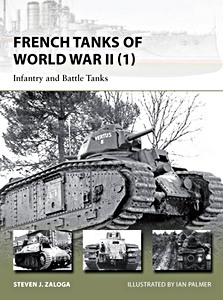
Copertina del libro: French Tanks of World War II (1) - Infantry and Battle Tanks | New Vanguard (209)

French Tanks of World War II (1) - Infantry and Battle Tanks

Steven J. Zaloga | inglese | brossura | 48 p. | 2014

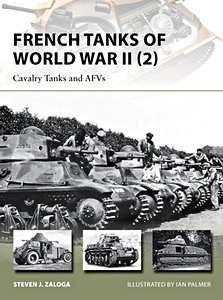
Copertina del libro: French Tanks of World War II (2) - Cavalry Tanks and AFVs | New Vanguard (213)

French Tanks of World War II (2) - Cavalry Tanks and AFVs

Steven J. Zaloga | inglese | brossura | 48 p. | 2014

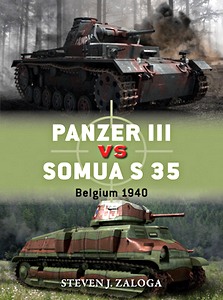
Copertina del libro: Panzer III vs Somua S 35 - Belgium 1940 | Duel (63)

Panzer III vs Somua S 35 - Belgium 1940

Steven J. Zaloga | inglese | brossura | 80 p. | 2014

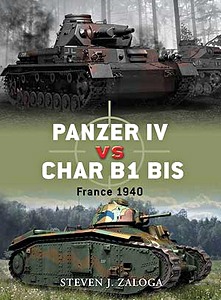
Copertina del libro: Panzer IV vs Char B1 Bis - France 1940 | Duel (33)

Panzer IV vs Char B1 Bis - France 1940

Steven J. Zaloga | inglese | brossura | 80 p. | 2011