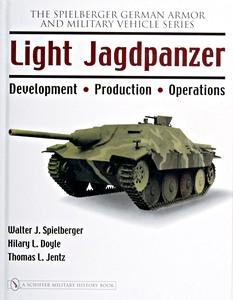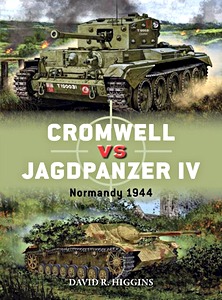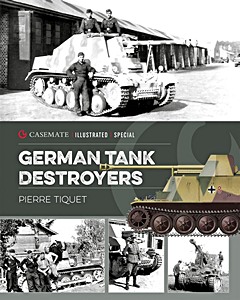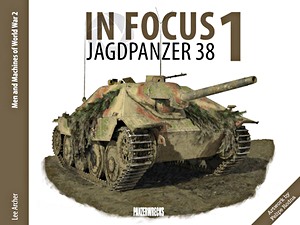
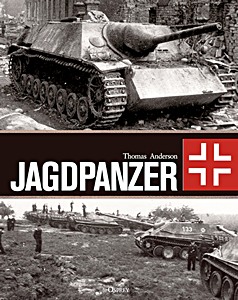
Jagdpanzer
During World War II, all armies faced the challenge of countering enemy armor. The German Army initially relied on the 3.7 cm anti-tank gun, but by 1942, it was clear that towed weapons lacked sufficient firepower. More powerful anti-tank weapons were introduced in 1942 and 1943.
On the Eastern Front, overstretched Panzerjäger (anti-tank) units increasingly relied on StuG-equipped assault artillery for support. By late 1943, the StuG was issued to new tank destroyer units, and a dedicated Jagdpanzer (hunting tank) was developed, based on the chassis of the PzKpfw IV.
This illustrated study by German armor expert Thomas Anderson draws on archival material and after-action reports to trace the Jagdpanzer's development and the various models built on different German tank chassis. It also examines unit organization and battlefield experiences.
Table of Contents
Introduction
Chapter 1: Anti-tank Defences: 1935-1939
Chapter 2: From Panzerabwehr to Panzerjäger
Chapter 3: Russia: 1942-1943
Chapter 4: The first Jagdpanzer
Chapter 5: Jagdpanther
Chapter 6: Jagdpanzer 38
Chapter 7: Jagdtiger
Chapter 8: Weaponry
Chapter 9: Allied and Soviet Types.
Product details
| Author: | Thomas Anderson |
|---|---|
| Details: | 272 pages, 9.8 x 8.9 x 0.94 in (25 x 22.5 x 2.4 cm), hardback |
| Illustrations: | many b&w photos |
| Language: | English |
| Publisher: | Osprey Publishing (GB, 2024) |
| ISBN: | 9781472857361 |
Jagdpanzer
Language: English
Price and availability are shown by the seller