Wenn Sie über unsere Links bestellen, unterstützen Sie diese Website - ohne Mehrkosten für Sie. Mehr erfahren >

Artillerie: Bücher - Geschichte und Modelle

Ein Buch über Artillerie? Entdecken Sie hier Bildbände über die Geschichte und Modelle der Artillerie.

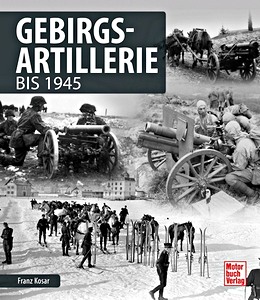
Gebirgsartillerie - bis 1945

Der Einsatz von Artillerie im Hochgebirge stellte vor allem in früheren Zeiten besondere Anforderungen an das Gerät, denn es musste nicht nur unwirtlichen Witterungen trotzen, sondern auch im unwegsamsten Gelände in oft schwindelerregenden Höhen transportiert und bedient werden können - und das ohne die fortschrittlichen technischen Hilfsmittel der Gegenwart.

Seiten aus dem Buch Gebirgsartillerie - bis 1945 (1)

Seiten aus dem Buch "Gebirgsartillerie - bis 1945"

Unterstützt von rund 200 historischen Abbildungen, beschreibt Franz Kosar in diesem Band ausführlich, welche Lösungen hierfür weltweit seit dem 19. Jahrhundert bis zum Ende des Zweiten Weltkrieges gefunden wurden: in Europa, Afrika, Asien sowie in Nord- und Südamerika.

Details

Autor:Franz Kosar
Ausführung:232 Seiten, 26.5 x 23 cm, gebunden
Abbildungen:200 farbige und s/w-Abbildungen, Zeichnungen
Sprache:Deutsch
Verlag:Motorbuch Verlag (D, 2018)
ISBN:9783613041202
Cover des Buches: Gebirgsartillerie - bis 1945 | Motorbuch

Gebirgsartillerie - bis 1945

Sprache: Deutsch

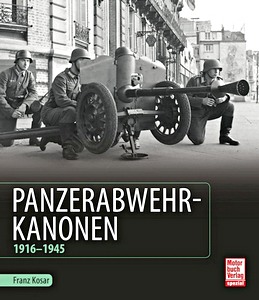
Panzerabwehrkanonen 1916-1945

Als im Ersten Weltkrieg die ersten Panzerkampfwagen auf Seiten der Alliierten zum Einsatz kamen, musste gegen diese neue Bedrohung eine Abwehrwaffe gefunden werden. Weil Artillerie für diese Aufgabe nicht wirklich geeignet war, entwickelten die Kriegsparteien schliesslich eine spezielle Waffe dafür, die sogenannte Panzerabwehrkanone.

Seiten aus dem Buch Panzerabwehrkanonen 1916-1945 (1)

Seiten aus dem Buch "Panzerabwehrkanonen 1916-1945"

Franz Kosar beschreibt in diesem Buch die ganze Entwicklung der Panzerabwehrkanonen von ihren Anfängen 1916 über die Zwischenkriegszeit, den Zweiten Weltkrieg bis in die Zeit danach. Dabei berücksichtigt er die Besonderheiten und Waffenmodelle individueller Länder wie Deutschland, Frankreich und USA.

Seiten aus dem Buch Panzerabwehrkanonen 1916-1945 (2)

Details

Autor:Franz Kosar
Ausführung:192 Seiten, 26.5 x 23 cm, gebunden
Abbildungen:205 s/w-Abbildungen und 23 Zeichnungen
Sprache:Deutsch
Verlag:Motorbuch Verlag (D, 2018)
ISBN:9783613040144
Cover des Buches: Panzerabwehrkanonen 1916-1945 | Motorbuch

Panzerabwehrkanonen 1916-1945

Sprache: Deutsch

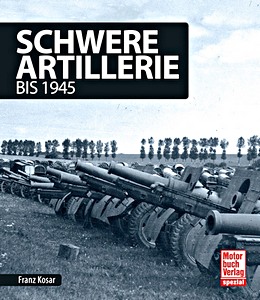
Schwere Artillerie - bis 1945

Die schweren und schwersten Geschütze haben schon immer aufgrund ihrer Dimensionen und Wirkungen grösstes Interesse hervorgerufen. Trotzdem fehlte bisher eine Gesamtübersicht aller gebauten schweren Geschütze. Diesem Mangel will dieses Buch abhelfen.

Seiten aus dem Buch Schwere Artillerie - bis 1945 (1)

Seiten aus dem Buch "Schwere Artillerie - bis 1945"

Franz Kosar beschreibt die schwere Artillerie aller Staaten, die je solche Geschütze erzeugten sowie die Entwicklung, die zu ihnen führte.
Vorgestellt werden Geschütze ab dem Kaliber 200 mm, die für den Einsatz bei den Feldheeren vorgesehen waren, also Feldgeschütze, Belagerungsartillerie und Selbstfahrlafetten. Der Schwerpunkt der Darstellung liegt auf dem 20. Jahrhundert.

Seiten aus dem Buch Schwere Artillerie - bis 1945 (2)

Details

Autor:Franz Kosar
Ausführung:192 Seiten, 26.5 x 23 cm, gebunden
Abbildungen:300 Fotos und Zeichnungen
Sprache:Deutsch
Verlag:Motorbuch Verlag (D, 2019)
ISBN:9783613041851
Cover des Buches: Schwere Artillerie - bis 1945 | Motorbuch

Schwere Artillerie - bis 1945

Sprache: Deutsch

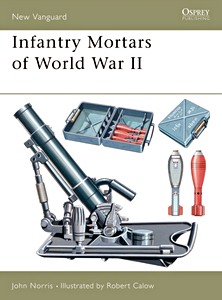
Infantry Mortars of World War II (Osprey)

The mortar has proved to be one of the most influential and prevalent infantry support weapons of the 20th century. Throughout the course of World War II many different varieties of this weapon were used by the six main armies of the war: Britain, the USA, the Soviet Union, Germany Italy and Japan. Although the concept of the mortar was similar throughout these armies, calibres and usage varied enormously, dependent upon tactical use and terrain.

This title covers all variants from the British 3-in.-equipped 'Heavy Weapon Companies', through to the Soviet12cm mortars, which were incorporated into the Tank Corps for the storming of Berlin in 1945.

Contents: An old weapon reinvented - Definition of a mortar - Ammunition - Categories - The British Army - The US Army - The Soviet Army - The German Army - The Italian Army - The Japanese Army - Other countries - Bibliography - Colour Plate Commentary - Index.

Details

Autor:John Norris
Ausführung:48 Seiten, 25 x 18.5 x 0.5 cm, kartoniert
Abbildungen:Fotos und Zeichnungen (in s/w und Farbe)
Sprache:Englisch
Verlag:Osprey Publishing (GB, 2002)
Serie:New Vanguard (54)
ISBN:9781841764146
Cover des Buches: Infantry Mortars of World War II | New Vanguard (54) | Osprey

Infantry Mortars of World War II

Sprache: Englisch

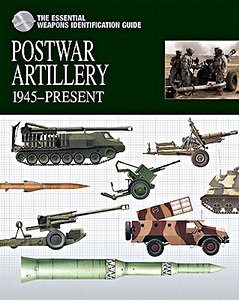
Postwar Artillery - 1945-Present (Essential Weapons Identification Guide)

An highly-illustrated guide to the world's main artillery units and their weapons used since the end of World War II. This compact volume includes sample unit structures and orders of battle from divisional to corps and army level, providing an organizational context for key wars fought since 1945. Organised chronologically, the book is a comprehensive survey of units and their artillery weapons by war, including Korea, Vietnam, the Arab-Israeli conflicts, Indo-Pakistan wars, the cold war in Europe, the Yugoslav civil war, the Iraq wars and Afghanistan.

All the major guns, missiles and mortar types are featured, with both towed and self-propelled artillery, for example, as well as anti-tank, anti-aircraft and other infantry support weapons. Less conventional forms of artillery are also included, including tactical and strategic missile systems, all combining to make this a rounded compendium of modern artillery weapons as used by the world's armed forces.
Packed with more than 200 full-colour artworks and photographs with exhaustive specifications, The Essential Weapons Identification Guide: Postwar Artillery 1945-Present is a key reference guide for military modellers and artillery enthusiasts.

Details

Autor:Michael E. Haskew
Ausführung:192 Seiten, 24.5 x 19.5 x 2.1 cm, gebunden
Abbildungen:40 Fotos und 200 Zeichnungen in s/w und Farbe
Sprache:Englisch
Verlag:Amber Books Ltd (GB, 2011)
ISBN:9781907446603
Cover des Buches: Postwar Artillery - 1945-Present (Essential Weapons Identification Guide) | Amber

Postwar Artillery - 1945-Present (Essential Weapons Identification Guide)

Sprache: Englisch

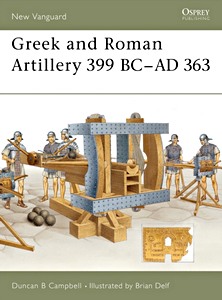
Greek and Roman Artillery 399 BC–AD 363 (Osprey)

The catapult (katapeltikon) was invented under the patronage of Dionysius I, tyrant of Syracuse, in the 4th century bc. At first only the arrow-firing variant was used, and it was not until the reign of Alexander the Great that stone-projecting catapults were introduced. The Romans adopted these weapons during the Punic Wars and further developed them, before introducing the new arrow-firing ballista and stone-throwing onager.

This title traces the often controversial design, development and construction of these weapons throughout the history of the classical world.

Contents: Introduction - The Arrow-Firing Catapult of the Greeks - The Stone-Projecting Catapult of the Greeks - Roman Artillery: The Republic and Early Empire - The Roman Artillery Revolution - Conclusion.

Details

Autor:Duncan B Campbell
Ausführung:48 Seiten, 25 x 18.5 x 0.4 cm, kartoniert
Abbildungen:Fotos und Zeichnungen (in s/w und Farbe)
Sprache:Englisch
Verlag:Osprey Publishing (GB, 2003)
Serie:New Vanguard (89)
ISBN:9781841766348
Cover des Buches: Greek and Roman Artillery 399 BC–AD 363 | New Vanguard (89) | Osprey

Greek and Roman Artillery 399 BC–AD 363

Sprache: Englisch

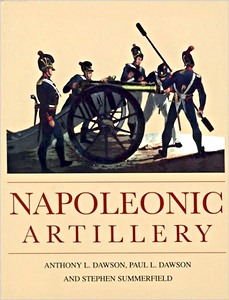
Napoleonic Artillery

The Napoleonic Wars gripped Europe, and beyond, for over ten years at the beginning of the Nineteenth century. Hundreds of battles were fought between the armies of France (and its allies) and all those powers that wished to see Napoleon Bonaparte stopped in his tracks and an end to the French Empire.

The battles and sieges of the Napoleonic Wars, which cost the lives of between 3 and 6 million men, made unprecedented use of large guns, and every participating army possessed a range of artillery.

With the Wars covering such a long period of time, and with so many armies involved, the subject of Napoleonic artillery is a complicated one. The product of years of research, this book presents most of what is known about the artillery pieces of the Napoleonic Wars. Including numerous drawings, contemporary illustrations and modern photographs of surviving guns, it will be an invaluable addition to the library of historians, modellers, wargamers and re-enactors.

Details

Autor:Paul Dawson
Ausführung:304 Seiten, 25 x 20 x 2.8 cm, gebunden
Abbildungen:200 s/w-Abbildungen
Sprache:Englisch
Verlag:The Crowood Press Ltd (GB, 2007)
ISBN:9781861269232
Cover des Buches: Napoleonic Artillery | Crowood

Napoleonic Artillery

Sprache: Englisch

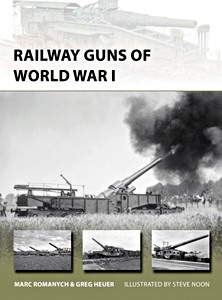
Railway Guns of World War I (Osprey)

World War I was the Golden Age of the railway gun. Even though at the start of the conflict none of the armies possessed any railway artillery pieces and the very idea was comparatively new, more railway guns were used during this war than in any other conflict.
Designed to break the stalemate of trench warfare, the first railway guns were simple, improvised designs made by mounting surplus coastal defence, fortress, and naval guns onto existing commercial railway carriages.

As the war dragged on, railway artillery development shifted to longer range guns that could shell targets deep behind enemy lines. This change of role brought much larger and more sophisticated guns often manufactured by mounting long-barrel naval guns to specially-designed railway carriages.

This book details the design and development of railway guns during World War I from the very first basic designs to massive purpose built "monster" railway guns.
Accompanying the text are many rare, never-before-published, photographs and colour illustrations depicting how these weapons were used during World War I.

Details

Autor:Marc Romanych, Greg Heuer
Ausführung:48 Seiten, 25 x 18.5 x 0.5 cm, kartoniert
Abbildungen:30 s/w-Abbildungen und 33 Farbfotos
Sprache:Englisch
Verlag:Osprey Publishing (GB, 2017)
Serie:New Vanguard (249)
ISBN:9781472816399
Cover des Buches: Railway Guns of World War I | New Vanguard (249) | Osprey

Railway Guns of World War I

Sprache: Englisch

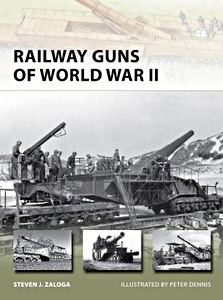
Railway Guns of World War II (Osprey)

World War II marked the zenith of railway gun development. Although many of the railway guns deployed at the start of the conflict were of World War I vintage, Germany's ambitious development programme saw the introduction of a number of new classes, including the world's largest, the 80cm-calibre Schwerer Gustav and Schwerer Dora guns, which weighed in at 1,350 tons and fired a huge 7-ton shell.

This book provides an overview of the types of railway guns in service during World War II, with a special focus on the German railway artillery used in France, Italy and on the Eastern Front, and analyzes why railway guns largely disappeared from use following the end of the war.

Contents: Introduction - French Railway Artillery - Belgian Railway Artillery - German Railway Artillery - Italian Railway Artillery - Soviet Railway Artillery - Finnish Railway Artillery - Japanese Railway Artillery - British Railway Artillery - US Railway Artillery - Conclusion - Bibliography - Index.

Details

Autor:Steven J. Zaloga
Ausführung:48 Seiten, 25 x 18.5 x 0.5 cm, kartoniert
Abbildungen:40 s/w-Abbildungen und 7 Farbfotos
Sprache:Englisch
Verlag:Osprey Publishing (GB, 2016)
Serie:New Vanguard (231)
ISBN:9781472810687
Cover des Buches: Railway Guns of World War II | New Vanguard (231) | Osprey

Railway Guns of World War II

Sprache: Englisch

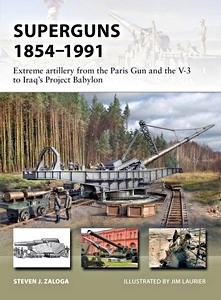
Superguns 1854-1991 - Extreme artillery from the Paris Gun and the V-3 to Iraq's Project Babylon (Osprey)

Over the last 150 years, gun designers have sought to transform warfare with artillery of superlative range and power, from William Armstrong's 19th-century "monster guns" to the latest research into hypersonic electro-magnetic railguns.

Taking a case study approach, "Superguns" explains the technology and role of the finest monster weapons of each era. It looks at the 1918 "Wilhelm Gun," designed to shell Paris from behind the German trenches; the World War II "V-3" gun built to bombard London across the Channel; the Cold War atomic cannons of the US and Soviet Union; and the story of Dr Gerald Bull's HARP program and the Iraqi "Supergun" he designed for Saddam Hussein.

Illustrated throughout, this is an authoritative history of the greatest and most ambitious artillery pieces of all time.

Details

Autor:Steven J. Zaloga
Ausführung:48 Seiten, 25 x 18.5 cm, kartoniert
Abbildungen:zahlreiche farbige und s/w-Abbildungen
Sprache:Englisch
Verlag:Osprey Publishing (GB, 2018)
Serie:New Vanguard
ISBN:9781472826107
Cover des Buches: Superguns 1854-1991 - Extreme artillery from the Paris Gun and the V-3 to Iraq's Project Babylon | New Vanguard | Osprey

Superguns 1854-1991 - Extreme artillery from the Paris Gun and the V-3 to Iraq's Project Babylon

Sprache: Englisch

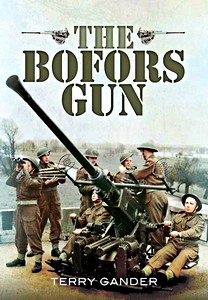
The Bofors Gun

The 40mm Bofors Gun, first produced in the 1930s, has become one of the most famous artillery pieces of all time. It shows no sign of fading from the defence scene even though, in the second decade of the twenty-first century, it performs in many roles that were not contemplated by its original designers. It has also proved to be so versatile that it is now allied to electronic and other technological marvels that were mere pipe dreams only a few years ago.

When the Bofors entered the international defence market, its primary quarry, the military aircraft, was still a slow and fragile machine that could be terminally damaged by a single hit from a 40mm projectile. Terry Gander describes this early period in the gun's development and he shows how, despite recent increases in target speed and other performance parameters, it can still inflict a one-hit kill on almost any aircraft, helicopter or guided missile.

Perhaps the most astonishing aspect of the story is that the fundamentals of today's Bofors guns remain virtually unchanged from the very first examples to come off the Karlskoga production line in Sweden. In all its forms, the Bofors continues to be a sound, reliable and lethal piece of military hardware that has given good service to gunners all over the world.

Terry Gander's comprehensive account of the history of this remarkable weapon over the course of almost eighty years is fascinating reading and an invaluable work of reference for military historians and artillery specialists alike. It is the definitive work in the field.

Details

Autor:Terry Gander
Ausführung:256 Seiten, 23.5 x 16.5 x 2.1 cm, gebunden
Abbildungen:200 farbige und s/w-Abbildungen
Sprache:Englisch
Verlag:Pen & Sword Books Ltd (GB, 2014)
ISBN:9781783462025
Cover des Buches: The Bofors Gun | Pen & Sword

The Bofors Gun

Sprache: Englisch

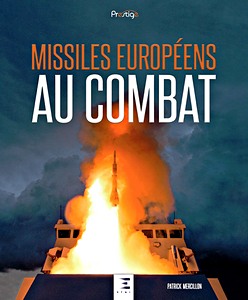
Missiles européens au combat

European tactical missiles, whether anti-tank, air-to-ground, anti-ship or surface-to-air, have played a decisive role in contemporary conflicts around the world for decades. More than forty different missile systems have been engaged in more than thirty crises or wars since 1956.
This book presents a detailed account, conflict after conflict, of these combat engagements, based on testimonies collected over more than twenty-five years from the operators of these different missile systems.

The iconography includes many photos in action, but also more than seventy maps allowing to follow the course of each conflict and to precisely locate the different actions described. The painter Daniel Bechennec has produced more than seventy paintings to celebrate the first use in combat of each European missile and some of their greatest battles.
This work is aimed as much at specialists in the subject as at readers interested in discovering a complete and relatively unexplored part of the military.

Details

Autor:Patrick Mercillon
Ausführung:448 Seiten, 29 x 24 cm, gebunden, im Schmuckschuber
Abbildungen:660 farbige und s/w-Abbildungen, Zeichnungen
Sprache:Französisch
Verlag:ETAI (F, 2019)
ISBN:9791028302788
Cover des Buches: Missiles européens au combat | ETAI

Missiles européens au combat

Sprache: Französisch

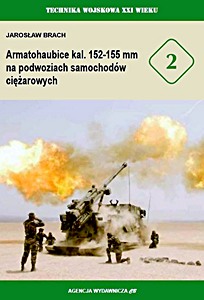
Armatohaubice kal. 152-155 mm na podwoziach samochodów ciężarowych

Das Buch stellt eine der modernsten Waffenarten vor - 152-155 mm Selbstfahrlafetten auf Lkw-Fahrgestellen. Es behandelt alle Fahrzeuge dieses Typs von den späten 1970er Jahren bis heute.

Die neue Generation begann in der ehemaligen Tschechoslowakei, wo die 152 mm wz. 77 Dana entworfen und produziert wurde (111 Fahrzeuge sind noch in der polnischen Armee im Einsatz). Jahrzehntelang waren sie die besten Fahrzeuge dieses Typs; heute ist die tschechische 155 mm Dita ihr Nachfolger.

Ein weiteres bekanntes Modell ist der französische Caesar, der von mehreren Ländern genutzt wird. Das Buch beschreibt außerdem Fahrzeuge aus China, Indien, Iran, Israel, Japan, Deutschland, Südafrika, Rumänien, Serbien, der Slowakei, der Türkei, der Ukraine und der UdSSR/Russland.

Details

Autor:Jarosław Brach
Ausführung:84 Seiten, 23.5 x 16 x 0.4 cm, kartoniert
Abbildungen:reich illustriert
Sprache:Polnisch
Verlag:Wydawnictwo CB (PL, 2022)
Serie:Technika wojskowa XXI wieku (2)
ISBN:9788373392069
Cover des Buches: Armatohaubice kal. 152-155 mm na podwoziach samochodów ciężarowych | Technika wojskowa XXI wieku (2) | CB

Armatohaubice kal. 152-155 mm na podwoziach samochodów ciężarowych

Sprache: Polnisch

Andere Bücher in dieser Kategorie:

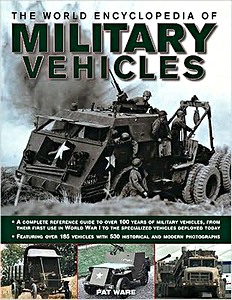
Cover des Buches: The World Encyclopedia of Military Vehicles

The World Encyclopedia of Military Vehicles

Pat Ware | Englisch | gebunden | 256 S. | 2010

Cover des Buches: Riot Control Vehicles 1945-Present | New Vanguard (219)

Riot Control Vehicles 1945-Present

Chris McNab | Englisch | kartoniert | 48 S. | 2015

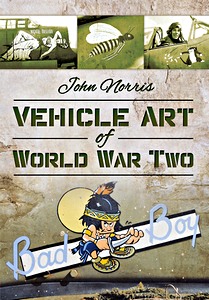
Cover des Buches: Vehicle Art of World War Two

Vehicle Art of World War Two

John Norris | Englisch | gebunden | 179 S. | 2016

Cover des Buches: Armored Trains | New Vanguard (140)

Armored Trains

Steven J. Zaloga | Englisch | kartoniert | 48 S. | 2008