Zamawiając produkty za pośrednictwem linków, wspierasz tę stronę bez ponoszenia dodatkowych kosztów. Więcej informacji >

Goederentreinen - Wielka Brytania: książki - historia

Ilustrowane książki na temat historii pociągów towarowych i taboru kolejowego w Wielkiej Brytanii.

British Freight Trains

Against a backdrop of declining volumes, the competition between the various freight companies has never been so acute. The 'big five' freight haulage companies, DB Cargo, Freightliner, GB Railfreight, Direct Rail Services and Colas Rail, dominate the market.
It is no surprise that all five companies include the ubiquitous Class 66 within their fleets, with over 300 examples of the class operating across the country.

The observer could be forgiven for thinking that these are the only traction in use today. Of course they dominate the current UK freight scene but that is by no means the whole story.

Numerous other classes of both diesel and electric locomotives contribute to the mix of rail freight traction on display in the UK today. Class 37 diesels and a reducing number of AC electric locomotives have notched up half a century of freight haulage. They can be seen today working alongside newer examples such as the Class 68 and 70 locomotives.
With an array of rare and unpublished images, John Jackson offers a fascinating overview of the freight scene today.

Szczegóły

Autor:John Jackson
Wydanie:96 strony, 23.5 x 16.5 x 0.8 cm, miękka oprawa
Ilustracje:180 kolorowych zdjęć
Język:angielski
Wydawca:Amberley Publishing (GB, 2017)
ISBN:9781445672687
Okładka książki: British Freight Trains | Amberley

British Freight Trains

Język: angielski

British Freight Trains

Britain's hard-working freight trains are captured in a variety of locations, from the dramatic backdrop of the Cumbrian Hills to the more industrial sites. Featuring a range of freight operators, Paul Manley's photographs have been taken in various parts of the country, in particular around Cumbria, Lancashire, Cheshire, as well as further south in the Midlands area including Staffordshire, Warwickshire, Northamptonshire and Leicestershire - all of which are busy with freight traffic and container trains.

The Peak District in Derbyshire is dominated by the stone trains from Peak Forest and Tunstead, while Barnetby le Wold in North Lincolnshire is another freight hotspot with the port at Immingham and the Scunthorp steel works nearby.
At Teesside the main freight is imported coal from Redcar and the steel trains running into the Lackenby plant.

Szczegóły

Autor:Paul Manley
Wydanie:128 strony, 16.5 x 24.5 x 1.3 cm, miękka oprawa
Ilustracje:200 czarno-białych i kolorowych zdjęć
Język:angielski
Wydawca:Amberley Publishing (GB, 2014)
ISBN:9781445633435
Okładka książki: British Freight Trains | Amberley

British Freight Trains

Język: angielski

Containers by Rail in the UK

The importance of our railways in the movement of sea containers cannot be overstressed. Industry figures suggest that one in four of all containers arriving at UK ports move onwards via the UK rail network. This is particularly significant to the railfreight sector given the dramatic downturn in coal traffic in recent years.

Four of the country's major players in the freight sector - Freightliner, DB Cargo, GB Railfreight and Direct Rail Services - all move significant volumes of container traffic to almost all parts of the UK. This book takes a look at these movements, from the major ports of Felixstowe and Southampton to destinations as far afield as Bristol and the Scottish Highlands.

John Jackson takes an in-depth look at the diversity of locomotives and container wagons used on these services provided by these key players on our twenty-first-century railway.

Szczegóły

Autor:John Jackson
Wydanie:96 strony, 23.5 x 16.5 x 1.3 cm, miękka oprawa
Ilustracje:180 kolorowych zdjęć
Język:angielski
Wydawca:Amberley Publishing (GB, 2022)
ISBN:9781398108868
Okładka książki: Containers by Rail in the UK | Amberley

Containers by Rail in the UK

Język: angielski

DB Cargo Locomotives and Stock in the UK

DB Cargo emerged from the government's sell-off of the rail freight sector in the mid-1990s. It has gone through many changes of name and branding since those early post-privatisation days.
Like other companies, it has suffered from the dramatic downturn in coal movement by rail and there are undoubtedly uncertain times ahead. It still claims, however, to be the UK's largest provider of rail freight services despite increasing competition from both road and other rail freight operators.

Diesel and electric locos of classes 60, 66, 67, 90 and, occasionally, 92 all see regular service today. Twenty years on, John Jackson looks at both the large loco fleet at DB Cargo's disposal today and the variety of traffic it continues to handle.
As well as being a major player in the rail freight sector, DB Cargo also provide locos for passenger duties such as Scottish sleeper services, charters and as hauliers for the Royal Family. The full range of DB Cargo locos is covered in this book.

Szczegóły

Autor:John Jackson
Wydanie:96 strony, 23.5 x 16.5 x 0.7 cm, miękka oprawa
Ilustracje:180 czarno-białych i kolorowych zdjęć
Język:angielski
Wydawca:Amberley Publishing (GB, 2018)
ISBN:9781445682969
Okładka książki: DB Cargo Locomotives and Stock in the UK | Amberley

DB Cargo Locomotives and Stock in the UK

Język: angielski

Freight Trains of the Western Region in the 1980s

From coal trains in South Wales to clay trains in Cornwall, there were still large numbers of unfitted and vacuum-braked wagons of various types in use across the Western Region at the start of the 1980s.
However changes were taking place, and by 1984 the traditional wagon-load freight network had disappeared, and with it many yards were closed or rationalised. The replacement Speedlink Network conveyed modern air-braked wagons, many of them privately owned. Company block trains also connected freight customers across the Region, hauled by a variety of loco classes.

Between 1980 and 1986 Kevin Redwood was working in the Area Freight Centre at Bristol with a particular interest in freight traffic. On his days off he frequently travelled across the region to photograph the changing scene. His journeys took him to busy mainline locations like Didcot, as well as more obscure locations in South Wales and the West Country.

Szczegóły

Autor:Kevin Redwood
Wydanie:96 strony, 23.5 x 16.5 x 0.8 cm, miękka oprawa
Ilustracje:180 czarno-białych i kolorowych zdjęć
Język:angielski
Wydawca:Amberley Publishing (GB, 2021)
ISBN:9781398100503
Okładka książki: Freight Trains of the Western Region in the 1980s | Amberley

Freight Trains of the Western Region in the 1980s

Język: angielski

Freightliner Locomotives

Dating back to 1965, Freightliner is still going strong today; a great success for rail freight. It started life moving shipping containers from ports to inland terminals, where specialised cranes were used to tranship from rail to road. These trains serve no fewer than nineteen intermodal terminals across the UK.

With the privatisation of British Rail in 1996, Freightliner's assets were transferred to a new company called Freightliner 1995 Ltd, in readiness for sale. Then in 1999 Freightliner set up the Heavyhaul side of the business as a direct competitor to the bulk rail freight company English Welsh & Scottish Railway (EWS). Today there are major maintenance depots at Crewe Basford Hall, and Leeds Midland Road, while the main marshalling yard and stabling point is at Crewe Cheshire.

With a stunning collection of full-colour photography taken around the country, Dave Smith offers up a fantastic pictorial tribute to this icon of Britain's railways.

Szczegóły

Autor:Dave Smith
Wydanie:96 strony, 23.5 x 16.5 cm, miękka oprawa
Ilustracje:180 czarno-białych i kolorowych zdjęć
Język:angielski
Wydawca:Amberley Publishing (GB, 2018)
ISBN:9781445673707
Okładka książki: Freightliner Locomotives | Amberley

Freightliner Locomotives

Język: angielski

GB Railfreight

Formed in 1999, GB Railfreight was one of several new rail freight operators to appear after the privatisation and break-up of British Rail in the 1990s.
After winning a contract to operate infrastructure trains for Railtrack in 2000 the company enjoyed a long period of rapid growth to become one of the UK's principal rail freight companies, later expanding into passenger operations.

Today, with a fleet of over 100 locomotives, the company operates a wide and varied range of services across the UK. This book aims to take a look at the operations and fleet of this successful rail business.

Szczegóły

Autor:John Jackson
Wydanie:96 strony, 23 x 16.5 x 0.8 cm, miękka oprawa
Ilustracje:180 kolorowych zdjęć
Język:angielski
Wydawca:Amberley Publishing (GB, 2020)
ISBN:9781445682112
Okładka książki: GB Railfreight | Amberley

GB Railfreight

Język: angielski

Heavy Freight Locomotives

In the 1970s the introduction of the merry-go-round coal trains required a far more powerful loco, leading to the 3300 hp Class 56 being built. For general freight services, the Class 60 was developed. Both these types suffered from reliability problems in their early years.

Several large stone companies in Somerset became frustrated with the constant loco problems that BR were having and decided to order their own locos, choosing General Motors in the USA to supply them. This resulted in the Class 59, which started service in 1986 and proved to be so effective that other Railfreight operators followed suit and ordered what became Class 66. Eventually, more than 400 entered service.

This book of mostly unpublished colour photographs, taken by George Woods between 1966 until 2019, show the locos hauling a variety of trains all over the BR system.

Szczegóły

Autor:George Woods
Wydanie:96 strony, 23.5 x 16.5 x 1.4 cm, miękka oprawa
Ilustracje:180 kolorowych zdjęć
Język:angielski
Wydawca:Amberley Publishing (GB, 2022)
ISBN:9781398101999
Okładka książki: Heavy Freight Locomotives | Amberley

Heavy Freight Locomotives

Język: angielski

London Rail Freight Since 1985

London's rail freight traffic is dictated by the geography of the city. When railways first came to London, each line was built by a different company seeking to link their area to the capital. There was no through service from one side of London to the other, and indeed the railway companies were prevented from entering the central area of the City and West End.

In order to transfer freight traffic from one company to another, the various railway companies made links to the orbital North London Railway, which ran from Broad Street station in the east to Richmond in the south-west, and also had a route into the east London docks.

Traffic from north to south London was dictated by the River Thames and the need to maintain height for navigation to the upriver docks and wharves. Thus there were no bridges east of London Bridge until Tower Bridge (road) opened in 1894, and no others until the QE2 bridge at Dartford (also road) opened in 1991.
Most cross-river traffic, which these days includes traffic to and from the Channel Tunnel, used the route through Kensington Olympia and the river bridge at Chelsea.

This book takes the freight routes around London geographically, in an anti-clockwise direction, starting in east London north of the Thames and ending in south-east London. It covers the period since 1985 when BR blue gave way to corporate sectors with different liveries and on into privatisation, and shows the various types of locomotives used, and freight traffic carried over this period.

Szczegóły

Autor:Malcolm Batten
Wydanie:96 strony, 23.5 x 16.5 x 0.8 cm, miękka oprawa
Ilustracje:180 kolorowych zdjęć
Język:angielski
Wydawca:Amberley Publishing (GB, 2019)
ISBN:9781445688985
Okładka książki: London Rail Freight Since 1985 | Amberley

London Rail Freight Since 1985

Język: angielski

MGR Coal Trains

As electricity became more widely used to power and light Britain's towns and cities a number of municipal boroughs built their own power stations. In the early years these were inevitably fed by coal, of which the UK had a plentiful supply.
In the 1960s and early 1970s the government embarked on a programme of constructing new power stations. The majority of these were constructed with direct rail-connected on-site coal handling facilities and thus was born the Merry-Go-Round, or MGR, coal train.

The book features a UK panorama of a wide variety of coal trains on the move, with previously unpublished images from across many years and locations.

Szczegóły

Autor:Mike Rhodes
Wydanie:96 strony, 23.5 x 16.5 x 0.8 cm, miękka oprawa
Ilustracje:180 czarno-białych i kolorowych zdjęć
Język:angielski
Wydawca:Amberley Publishing (GB, 2023)
ISBN:9781398108882
Okładka książki: MGR Coal Trains | Amberley

MGR Coal Trains

Język: angielski

Rail Freight - North West England

This book illustrates the changing face of rail freight in North West England over 40 years. During that time the traction and wagon fleets have been almost completely replaced, freight trains have become heavier and less frequent, the amount of shunting and trip working has been dramatically reduced, and most small freight terminals have closed.

Perhaps the most striking loss has been freight from the oil and chemicals complex around Ellesmere Port and Stanlow and the former ICI complex around Northwich has lost almost all its rail traffic.
On the Cumbrian coast, just nuclear traffic remains after the loss of coal, steel and chemicals traffic. However, not all the change has been negative: we now have biomass on rail, increased intermodal traffic and significant growth in stone traffic from the Buxton area.

Illustrated with over 150 stunning photographs, many of which are previously unpublished, this volume looks at the evolution of rail freight in specific localities, detailing the changes in traction, rolling stock and railway infrastructure over four decades.

Szczegóły

Autor:Paul Shannon
Wydanie:96 strony, 24.5 x 17 x 0.9 cm, miękka oprawa
Ilustracje:150 czarno-białych i kolorowych zdjęć
Język:angielski
Wydawca:Key Publishing Ltd (GB, 2020)
ISBN:9781913295813
Okładka książki: Rail Freight - North West England | Key

Rail Freight - North West England

Język: angielski

Rail Freight - Scotland

In the early 1980s, Ravenscraig steel works was the biggest source of rail freight north of the border, handling iron ore, coal, lime and scrap, as well as semi-finished and finished products. Opencast coal was thriving and would even lead to some lines re-opening later in the decade.
Wagonload freight was still providing a service on some rural lines, not least the Far North line where many intermediate stations still handled general freight, such as seed potatoes and fertiliser.

Today, Ravenscraig is a distant memory and coal is no longer carried by rail anywhere in Scotland. Wagonload freight has also disappeared, despite some attempts to revive the concept in the early 2000s.
However, in a few areas, rail freight has done well. The cement works at Oxwellmains is a big user of rail and Grangemouth refinery still produces three trainload flows. Intermodal traffic has grown substantially, with several regular Anglo-Scottish flows on the West and East Coast main lines as well as internal movements to Aberdeen and Inverness.

Illustrated with over 160 photographs, many of which are previously unpublished, this volume looks at the changing face of rail freight in Scotland. It details the changes in traction, rolling stock and railway infrastructure over four decades.

Szczegóły

Autor:Paul Shannon
Wydanie:96 strony, 23.5 x 17.5 x 1.3 cm, miękka oprawa
Ilustracje:160+ zdjęcia czarno-białe i kolorowe
Język:angielski
Wydawca:Key Publishing Ltd (GB, 2022)
Seria:Railways and Industry
ISBN:9781802821659
Okładka książki: Rail Freight - Scotland | Railways and Industry | Key

Rail Freight - Scotland

Język: angielski

Rail Freight - South West England

From the intricate china clay operations in Cornwall to the major limestone quarries of the Mendips, rail freight has maintained a vibrant presence across the counties of South West England. However, the changes in traffic patterns and day-to-day operations have been substantial.
In the early 1980s, china clay was still carried in elderly wooden-bodied wagons from about a dozen loading points, with much shunting and short-distance trip working. Gradually, the operation has been modernised and streamlined, although even the latest generation of rolling stock is now over 30 years old.
The Mendip quarries have a different story to tell, as here the railway has fully exploited its natural strength by moving ever-greater quantities of stone to terminals across southern England. Meanwhile, many small-scale freight flows have disappeared as the railway has moved to full trainload operation.

Illustrated with over 160 carefully chosen photographs, many of which are previously unpublished, this volume looks at the changing face of rail freight in South West England. It details the changes in traction, rolling stock and railway infrastructure over four decades.

Szczegóły

Autor:Paul Shannon
Wydanie:96 strony, 24.5 x 17 x 1.2 cm, miękka oprawa
Ilustracje:160 czarno-białych i kolorowych zdjęć
Język:angielski
Wydawca:Key Publishing Ltd (GB, 2020)
Seria:Railways and Industry
ISBN:9781913870911
Okładka książki: Rail Freight - South West England | Railways and Industry | Key

Rail Freight - South West England

Język: angielski

Rail Freight - Wales and the Borders

The changes to rail freight in Wales and the Borders since the 1980s have been dramatic in many ways and have often been a knock-on effect of huge transformations in the industries that the railway serves, most notably, the coal-mining sector. These have led to a railway with a slimmed-down infrastructure and renewed traction and rolling-stock fleets.

Until the 1980s, coal was still the lifeblood of many railway lines in South Wales. However, one by one, the pits closed, leaving just a handful of surface operations still active in 2020.
The sight and sound of a Class 37 winding its way up a steep-sided valley is now a distant memory. Industrial decline has affected other traffics too, with the loss of the heavy iron ore trains to Llanwern and many other flows.
However, Welsh rail freight is far from dead. Class 60-hauled oil and steel trains still ply the South Wales main line, and there have even been small revivals such as cement from Penyffordd.

Illustrated with over 150 stunning photographs, many of which are previously unpublished, this volume looks at the changing face of rail freight in Wales and the Borders, detailing the changes in traction, rolling stock and railway infrastructure over four decades.

Szczegóły

Autor:Paul Shannon
Wydanie:96 strony, 24 x 16.5 x 0.8 cm, miękka oprawa
Ilustracje:160 kolorowych zdjęć
Język:angielski
Wydawca:Key Publishing Ltd (GB, 2022)
Seria:Railways and Industry
ISBN:9781913870218
Okładka książki: Rail Freight - Wales and the Borders | Railways and Industry | Key

Rail Freight - Wales and the Borders

Język: angielski

Rail Freight - Yorkshire and North East England

Forty years ago, large areas of Yorkshire and the North East were criss-crossed by freight-only lines, many of them serving the heavy industries that had brought prosperity to the railways decades earlier. Classes 25 and 40 were enjoying their last few years of service in the early 1980s, while the unique Class 76s on the Woodhead route and Class 13 'master and slave' shunters at Tinsley lasted until 1981 and 1985 respectively.

The Class 37s still had plenty of life left in them, especially in the North East where they worked most coal trains and a share of other traffic, too. Often overlooked were the humble Class 08 shunters, busying themselves not just in marshalling yards but also sometimes on short main-line trips.

Today's rail freight scene may be less varied, but it still thrives where there are large tonnages to be moved regularly from A to B. As in most parts of Britain, rail freight haulage these days is dominated by the Class 66, but the uniformity is relieved by numerous livery styles, reflecting not only the different freight operators but also some of the customers that they serve.
Also, the Class 60s have made a comeback in some surprising areas, notably the GB Railfreight biomass trains out of Tyne Dock. Classes 70, 56 and, very occasionally, 68 all bring added interest. The wagon fleet, likewise, is more standardised, but arguably more colourful than it ever has been.

Illustrated with over 160 photographs, this book looks at Yorkshire and the North East's varied freight scene over the last 40 years.

Szczegóły

Autor:Paul Shannon
Wydanie:96 strony, 24 x 17 x 1.3 cm, miękka oprawa
Ilustracje:160+ zdjęcia czarno-białe i kolorowe
Język:angielski
Wydawca:Key Publishing Ltd (GB, 2023)
Seria:Railways and Industry
ISBN:9781802823073
Okładka książki: Rail Freight - Yorkshire and North East England | Railways and Industry | Key

Rail Freight - Yorkshire and North East England

Język: angielski

The Later Years of British Rail 1980-1995: Freight Special

1980 to 1995 was an extraordinary time for the railways of Britain, especially the freight sector. In 1980 there was a unified, monochrome railway. Freight traffic was still abundant, with marshalling yards active and many branch lines still operating. There were hundreds of collieries.
In the early 1980s, Sectorisation arrived. The freight division was separated from the passenger side and further sub-divided into different freight sectors. New locomotives were introduced, and the older types started to disappear.

As the eighties progressed, the freight sector was constantly changing. The mixed freight train became a thing of the past but new traffic flows developed, particularly in containers and aggregates. The coal sector steadily declined and branch lines became disused.
In the early nineties three new freight companies were created in anticipation of privatisation and then finally privatisation itself arrived, with all freight traffic being taken over by an American company.

It was a period of enormous change and adaptation, and the story is told here through the images of two photographers who were keen observers of the railway scene throughout the whole of this fascinating period.

Szczegóły

Autor:Patrick Bennett, Peter Lovell
Wydanie:96 strony, 23.5 x 16.5 x 0.8 cm, miękka oprawa
Ilustracje:180 czarno-białych i kolorowych zdjęć
Język:angielski
Wydawca:Amberley Publishing (GB, 2021)
ISBN:9781398102934
Okładka książki: The Later Years of British Rail 1980-1995: Freight Special | Amberley

The Later Years of British Rail 1980-1995: Freight Special

Język: angielski

Inne książki z tej kategorii:

Okładka książki: A Century of Locomotive Building - By Robert Stephenson & Co 1823-1923

A Century of Locomotive Building - By Robert Stephenson & Co 1823-1923

J. G. H. Warren | angielski | miękka oprawa | 480 str. | 2014

Okładka książki: British Steam Locomotive Builders

British Steam Locomotive Builders

James W. Lowe | angielski | twarda oprawa | 704 str. | 2014

Okładka książki: The North British Locomotive Company

The North British Locomotive Company

Colin Alexander, Alon Siton | angielski | miękka oprawa | 96 str. | 2018

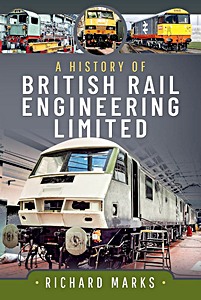
Okładka książki: A History of British Rail Engineering Limited

A History of British Rail Engineering Limited

Richard Marks | angielski | twarda oprawa | 254 str. | 2024

Okładka książki: Beyer, Peacock & Company

Beyer, Peacock & Company

Colin Alexander, Alon Siton | angielski | miękka oprawa | 96 str. | 2019

Okładka książki: British Diesel and Electric Locomotives Abroad - A Second Life Overseas

British Diesel and Electric Locomotives Abroad - A Second Life Overseas

Anthony P Sayer | angielski | twarda oprawa | 288 str. | 2020

Okładka książki: English Electric Diesel Locomotives

English Electric Diesel Locomotives

George Woods | angielski | miękka oprawa | 96 str. | 2020

Okładka książki: George and Robert Stephenson - The Railway Revolution

George and Robert Stephenson - The Railway Revolution

L.T.C. Rolt | angielski | miękka oprawa | 384 str. | 2016

Okładka książki: Hunslet Locomotives Preserved

Hunslet Locomotives Preserved

Oliver Edwards | angielski | miękka oprawa | 64 str. | 2021

Okładka książki: Locomotive Builders of Leeds : E.B. Wilson and Manning Wardle

Locomotive Builders of Leeds : E.B. Wilson and Manning Wardle

Mark Smithers | angielski | twarda oprawa | 200 str. | 2018