
Navi da guerra (SGM) - Gran Bretagna: libri di storia illustrati

Un libro sulle navi da guerra della Royal Navy? Qui trovi i libri sulla storia e le tipologie di navi da guerra britanniche dalla Seconda Guerra Mondiale in poi.

Consigli di lettura indipendenti! Acquisti effettuati tramite i nostri link sostengono il nostro lavoro, senza alcun costo aggiuntivo per te. Per saperne di più >

A Shipyard at War - Unseen Photographs from John Brown's, Clydebank 1914 - 1918

Although best known for large liners and capital ships, between 1914 and the completion of the wartime programmes in 1920 the Clydebank shipyard of John Brown & Sons built a vast range of vessels - major warships down to destroyers and submarines, unusual designs like a seaplane carrier and submarine depot ship, and even a batch of war-standard merchant ships.
This makes the yard a particularly good exemplar of the wartime shipbuilding effort.

Like most shipyards of the time, Clydebank employed professional photographers to record the whole process of construction, using large-plate cameras that produced pictures of stunning clarity and detail; but unlike most shipyard photography, Clydebank's collection has survived, although relatively few of the images have ever been published.

For this book some 200 of the most telling were carefully selected, and scanned to the highest standards, depicting in unprecedented detail every aspect of the yard's output, from the liner Aquitania in 1914 to the cruiser Enterprise, completed in 1920.
Although ships are the main focus of the book, the photos also chronicle the impact of the war on working conditions in the yard and, perhaps most noticeable in the introduction of women in large numbers to the workforce. With lengthy and informative captions, and an authoritative introduction by Ian Johnston, this book is a vivid portrait of a lost industry at the height of its success.

Dettagli del libro

Autore:Ian Johnston
Formato:192 pagine, 26 x 24 cm, copertina rigida
Illustrazioni:200 foto
Lingua:inglese
Editore:Seaforth Publishing (GB, 2014)
ISBN:9781848322165
Copertina del libro: A Shipyard at War - Unseen Photographs from John Brown's, Clydebank 1914 - 1918 | Seaforth

A Shipyard at War - Unseen Photographs from John Brown's, Clydebank 1914 - 1918

Lingua: inglese

Prezzo e disponibilità sono indicati dal venditore
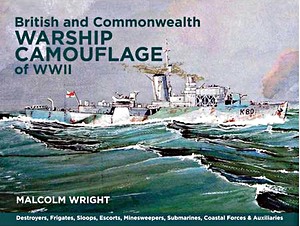
British and Commonwealth Warship Camouflage of WW II - Destroyers, Frigates, Sloops, Escorts, Minesweepers, Submarines, Coastal Forces and Auxiliaries

During the Second World War navies developed low visibility camouflage for their ships, on both the vertical and horizontal surfaces, in order reduce visibility by blending in with the sea, or confuse the identity of a ship by applying more obtrusive patters.

In this book by maritime artist Mal Wright both the official and unofficial paint schemes that adorned ships of the Royal Navy and Commonwealth are depicted in detail, along with discussion on changes of armament and electronics that effected the outward appearance of each ship.

Starting with destroyers from WW1 still in service during WW2, the book progressively covers ships below cruisers, class by class, to provide a detailed and easy-to-use guide to paint schemes in use. In some cases individual ships are shown in the several schemes they wore thus providing a source that covers various periods of service.

With 740 full colour illustrations, all of named vessels, this book concentrates information into a single volume to provide a one-stop reference source, and, for the first time in a single volume, it covers not just the well-known ships, but also escort vessels, minesweepers, trawlers, coastal craft and auxiliaries in sequential format.
Many schemes would be difficult for the reader to have found other than with the most intensive research so that historians, collectors, modelmakers and wargamers will find this unique reference source absolutely invaluable.

Dettagli del libro

Autore:Malcolm George Wright
Formato:144 pagine, 20.5 x 26 x 1.7 cm, copertina rigida
Illustrazioni:740 illustrazioni in colori
Lingua:inglese
Editore:Seaforth Publishing (GB, 2014)
ISBN:9781848322059
Copertina del libro: British and Commonwealth Warship Camouflage of WW II - Destroyers, Frigates, Sloops, Escorts, Minesweepers, Submarines, Coastal Forces and Auxiliaries | Seaforth

British and Commonwealth Warship Camouflage of WW II - Destroyers, Frigates, Sloops, Escorts, Minesweepers, Submarines, Coastal Forces and Auxiliaries

Lingua: inglese

Prezzo e disponibilità sono indicati dal venditore
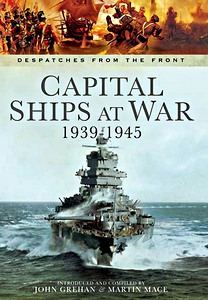
Capital Ships at War, 1939-1945 - Despatches from the Front

First time full collection of Despatches reports have been published. Despatches in this volume include those relating to:

- the sinking of the German battleship Graf Spee in the Battle of the River Plate in 1939,

- the loss of the battleships HMS Prince of Wales and HMS Repulse in the Far East,
- the sinking of the German battle cruiser Scharnhorst in 1943,
- the attack on Tirpitz by midget submarines,
- the contribution by British Pacific Fleet to the assault on Okinawa in 1945 (which included four Royal Navy battleships),
- and the sinking of Bismarck in 1941.

This unique collection of original documents will prove to be an invaluable resource for historians, students and all those interested in what was one of the most significant periods in British military history.

Dettagli del libro

Autore:John Grehan, Martin Mace
Formato:224 pagine, 24 x 15.5 x 2.1 cm, copertina rigida
Illustrazioni:illustrato
Lingua:inglese
Editore:Pen & Sword Books Ltd (GB, 2014)
ISBN:9781783462049
Copertina del libro: Capital Ships at War, 1939-1945 - Despatches from the Front | Pen & Sword

Capital Ships at War, 1939-1945 - Despatches from the Front

Lingua: inglese

Prezzo e disponibilità sono indicati dal venditore

Dunkirk Little Ships

Nel maggio del 1940, in seguito alla rapida avanzata delle truppe tedesche attraverso l'Olanda, il Belgio e la Francia, il Corpo di Spedizione Britannico e l'esercito francese si ritirarono a Dunkerque. L'Operazione Dynamo fu avviata nel tentativo di salvare quanti più soldati possibile. Poiché il porto di Dunkerque era gravemente danneggiato, gran parte dell'evacuazione dovette avvenire dalle spiagge. Solo piccole imbarcazioni a basso pescaggio erano adatte a questo scopo.

Dopo aver lanciato appelli a cantieri navali, yacht club e diportisti in tutto il sud-est dell'Inghilterra, l'Ammiragliato riuscì a radunare circa 700 piccole imbarcazioni che, insieme a 200 navi militari, permisero di trarre in salvo la straordinaria cifra di 338.226 soldati in nove giorni.

Nel 1965, quarantatré imbarcazioni che avevano partecipato all'evacuazione commemorarono il venticinquesimo anniversario attraversando il mare da Ramsgate a Dunkerque, e poco dopo nacque l'Associazione delle Piccole Navi di Dunkerque. Cinquant'anni dopo, oltre 120 Piccole Navi sono ancora in servizio e si pensa che centinaia di altre possano essere ancora esistenti.

Dettagli del libro

Autore:Nigel Sharp
Formato:96 pagine, 23.5 x 16.5 x 0.9 cm, brossura
Illustrazioni:180 foto
Lingua:inglese
Editore:Amberley Publishing (GB, 2015)
ISBN:9781445647500
Copertina del libro: Dunkirk Little Ships | Amberley

Dunkirk Little Ships

Lingua: inglese

Prezzo e disponibilità sono indicati dal venditore

J. Samuel White & Co., Shipbuilders

La J. Samuel White & Company era la più antica azienda presente nell'elenco dell'Ammiragliato e costruì ben 252 navi per la sola Royal Navy. La chiusura del cantiere nel 1966 pose fine a 300 anni di attività cantieristica, durante i quali l'azienda si era guadagnata la stima di clienti sia del settore commerciale che di quello militare.

Nota inizialmente per i suoi veloci cutter della Guardia Costiera e i brigantini, negli ultimi anni la Royal Navy si distinse soprattutto per i suoi cacciatorpediniere. Altamente innovativa, sviluppò e brevettò numerosi prodotti pionieristici, tra cui motori semidiesel, scambiatori di calore, condizionatori d'aria e compressori, oltre a una gamma di propulsori marini.

L'azienda non solo costruiva navi e imbarcazioni, ma anche una vasta gamma di velivoli navali. Durante la Prima Guerra Mondiale, la produzione della White ammontò a 100 navi, tra cui ventisette cacciatorpediniere, e 201 idrovolanti. La produzione durante la Seconda Guerra Mondiale raggiunse le 317 navi, tra cui ventisei cacciatorpediniere e una grande posamine.

Illustrato con fotografie di questi e di molti altri prodotti dell'azienda, questo libro racconta la storia di J. Samuel White e delle sue società sussidiarie, un'impresa costruita su una reputazione di qualità che le è valsa lo slogan: "White's-built - well-built!".

Dettagli del libro

Autore:David Williams, Richard P. de Kerbrech
Formato:176 pagine, 23.5 x 16.5 x 1.2 cm, brossura
Illustrazioni:illustrato
Lingua:inglese
Editore:The History Press Ltd (GB, 2012)
ISBN:9780752466125
Copertina del libro: J. Samuel White & Co., Shipbuilders | The History Press

J. Samuel White & Co., Shipbuilders

Lingua: inglese

Prezzo e disponibilità sono indicati dal venditore

The Ships of Scapa Flow

Le isole che circondano Scapa Flow costituivano uno dei migliori porti naturali della Gran Bretagna, mentre la posizione a nord della Scozia proteggeva gli accessi al Mare del Nord e all'Atlantico.

La base navale fu importante durante entrambe le guerre, ma ciò che rende Scapa Flow famosa sono i suoi relitti, i resti di una flotta tedesca che un tempo contava circa 74 navi, la maggior parte delle quali affondate nel 1919, nonché le tombe di guerra della HMS Royal Oak e della HMS Vanguard.

I relitti delle navi della marina sono ancora visibili, insieme a quelli di otto navi da guerra tedesche, il cui recupero fu impedito dalla Seconda Guerra Mondiale. Oggi paradiso per i subacquei, i relitti di Scapa Flow attraggono subacquei da tutto il mondo e danno lavoro a molti abitanti delle Orcadi.

Questa è la storia delle navi di Scapa Flow, del loro affondamento e del loro recupero, con l'ausilio di numerose immagini inedite del recupero e del successivo trasferimento di molte corazzate e incrociatori tedeschi al cantiere navale di Rosyth, nel Fife, per la demolizione.

Dettagli del libro

Autore:Campbell McCutcheon
Formato:96 pagine, 23.5 x 18.5 x 0.9 cm, brossura
Illustrazioni:illustrato
Lingua:inglese
Editore:Amberley Publishing (GB, 2013)
ISBN:9781445633862
Copertina del libro: The Ships of Scapa Flow | Amberley

The Ships of Scapa Flow

Lingua: inglese

Prezzo e disponibilità sono indicati dal venditore

Titoli correlati: