Acquistando tramite i link, sostieni nostro sito senza alcun costo aggiuntivo per te. Per saperne di più >

Veicoli militari - Austria: libri - storia e modelli

Un libro sui veicoli militari austriaci? Scoprite qui i volumi illustrati sulla storia, i modelli e la tecnologia dei veicoli militari.

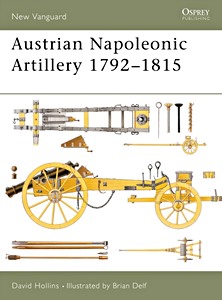
Austrian Napoleonic Artillery 1792–1815 (Osprey)

The Austrian artillery of the Revolutionary and Napoleonic Wars was a creation of the renowned Lichtenstein system of the early 1750s. This weight system produced a series of weapons of 3-, 6- and 12-pdr. calibre along with 7- and 10-pdr. howitzers.
In the 1780s they were joined by Cavalry artillery guns with their Wurst seats. In 1811 Austria also began the establishment of rocket troops based upon the British invention, whilst their heavy and siege pieces remained the 12 -,18- and 24-pdrs throughout the period.

This book describes the system as well as its operational use during the Napoleonic Wars.

Contents: Introduction - Organisation - The Lichtenstein system - The Cavalry Artillery Guns - Tactics and Massed Batteries - The Rockets - The Siege Guns - Bibliography and Collections - Colour plate commentary - Index.

Dettagli

Autore:David Hollins
Formato:48 pagine, 24.5 x 18.5 x 0.5 cm, brossura
Illustrazioni:riccamente illustrato con foto e disegni (in B&N e in colori)
Lingua:inglese
Editore:Osprey Publishing (GB, 2003)
Collana:New Vanguard (72)
ISBN:9781841764993
Copertina del libro: Austrian Napoleonic Artillery 1792–1815 | New Vanguard (72) | Osprey

Austrian Napoleonic Artillery 1792–1815

Lingua: inglese

Vedi l'offerta:

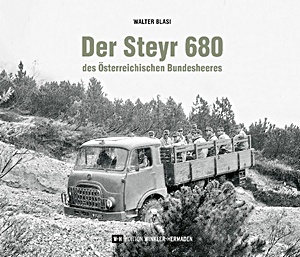
Der Steyr 680 des Österreichischen Bundesheeres

A partire dalla fine degli anni 1960, lo Steyr 680 fu il principale veicolo da trasporto dell'esercito austriaco. Serviva per il trasporto di materiale e truppe, con una capacità per un conducente, un passeggero e 18 soldati.
Sviluppata a partire da modelli civili, la versione militare sostituì lo Steyr 580 g, ritenuto troppo debole.

Furono prodotte due versioni: una a due assi e una a tre assi. La prima, testata inizialmente, mostrò rapidamente i suoi limiti rispetto al GMC americano, il che portò alla versione a tre assi.
In servizio per quasi 40 anni, lo Steyr 680 divenne, insieme all'Haflinger e al Pinzgauer, uno dei veicoli militari emblematici dell'Austria.

Dettagli

Autore:Walter Blasi
Formato:116 pagine, 20 x 23.5 x 1.4 cm, copertina rigida
Illustrazioni:135 foto in B&N e in colori
Lingua:tedesco
Editore:Edition Winkler-Hermaden (A, 2024)
ISBN:9783951976242
Copertina del libro: Der Steyr 680 des Österreichischen Bundesheeres | Edition Winkler-Hermaden

Der Steyr 680 des Österreichischen Bundesheeres

Lingua: tedesco

Vedi l'offerta:

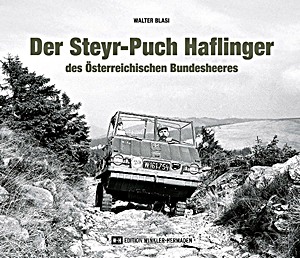
Der Steyr-Puch Haflinger des Österreichischen Bundesheeres

La Steyr-Puch Haflinger è oggi un veicolo cult. La sua casa museale è il Museo Puch di Graz, dove sono esposte numerose varianti. È ancora visibile sulla strada e, grazie a Internet, esiste una comunità mondiale di fan del Haflinger.
Walter Blasi descrive nel suo libro il lungo percorso di questo veicolo per diventare un pilastro chiave delle forze armate austriache. Le basi del Haflinger furono poste nel 1956 e i primi prototipi furono costruiti nel 1957.
I test del dipartimento di prova di Graz suscitarono un grande interesse pubblico. Nel 1959, il veicolo entrò in produzione in serie sotto il nome di "Haflinger Tipo 700 AP".

Il nome "Haflinger" deriva da un cavallo di montagna ben collaudato dalle forze armate ed è stato inventato spontaneamente durante una dimostrazione. A partire dal 1958, il veicolo è stato testato in diverse unità militari.
Il Haflinger è stato utilizzato per i comandanti, i posti di comando e le piccole squadre radio. La versione standard era a quattro posti, il Haflinger radio a tre posti.
Il veicolo è diventato un successo di esportazione militare. L'80% della produzione è stata esportata in 110 paesi. Negli anni 1970, molti veicoli sono stati esportati in Africa. Il calo della domanda è stato progressivamente compensato dagli ordini del suo fratello maggiore, il Pinzgauer.

Dettagli

Autore:Walter Blasi
Formato:116 pagine, 20.5 x 24 x 1.5 cm, copertina rigida
Illustrazioni:riccamente illustrato con foto in B&N e in colori
Lingua:tedesco
Editore:Edition Winkler-Hermaden (A, 2020)
ISBN:9783950472097
Copertina del libro: Der Steyr-Puch Haflinger des Österreichischen Bundesheeres | Edition Winkler-Hermaden

Der Steyr-Puch Haflinger des Österreichischen Bundesheeres

Lingua: tedesco

Vedi l'offerta:

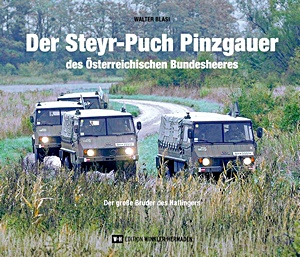
Der Steyr-Puch Pinzgauer des Österreichischen Bundesheeres

Dopo il suo lavoro sugli Haflinger, Walter Blasi presenta una documentazione illustrata dedicata al suo successore, lo Steyr-Puch Pinzgauer dell'esercito austriaco. Considerato uno dei migliori veicoli fuoristrada al mondo, il Pinzgauer acquisì una notorietà internazionale e uno vero status di culto.
La richiesta di un veicolo più grande e potente portò all'avvio della produzione in serie nel 1964. I primi prototipi furono testati nel 1965.

Furono costruite due versioni principali: 4×4 e 6×6, adattate a diverse missioni. Il motore a benzina fu successivamente sostituito da un motore diesel.
Alcune migliaia di esemplari furono consegnati all'esercito austriaco e all'esercito svizzero. Dopo quasi 30 anni di produzione e circa 24 000 unità, la fabbricazione cessò a Graz nel 2000.

Dettagli

Autore:Walter Blasi
Formato:120 pagine, 21.5 x 24 x 1.5 cm, copertina rigida
Illustrazioni:riccamente illustrato
Lingua:tedesco
Editore:Edition Winkler-Hermaden (A, 2022)
ISBN:9783950493764
Copertina del libro: Der Steyr-Puch Pinzgauer des Österreichischen Bundesheeres | Edition Winkler-Hermaden

Der Steyr-Puch Pinzgauer des Österreichischen Bundesheeres

Lingua: tedesco

Vedi l'offerta:

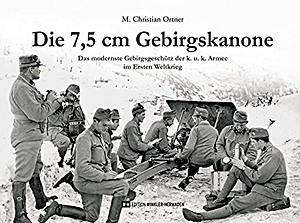
Die 7,5 cm Gebirgskanone - Das modernste Gebirgsgeschütz der k. u. k. Armee im Ersten Weltkrieg

With the 7.5 cm M.15 mountain cannon system Škoda, the Austro-Hungarian Army had the most modern mountain cannon used in the First World War. It replaced the 7 cm M.99 mountain cannon, which was already considered technically outdated when it was introduced.
As early as 1904, the Technical and Administrative Military Committee worked intensively on a successor model for the M.99 system, but the M.8 and M.9 cannons were only interim solutions. Although corresponding test models from the major gun manufacturers Schneider, Krupp and Škoda already existed, a new design was decided upon.

With the M.12 prototype, Škoda ultimately presented a completely equivalent gun. The cannon, eventually designated M.15, fulfilled all expectations and was used on all Austro-Hungarian fronts from 1915 to 1918, especially on the Italian theater of war.
In addition, imperial and royal artillery formations in Turkey and Turkish batteries were also equipped with this modern cannon.

From 1915 to 1918, a total of 2181 barrels and 2023 carriages were produced. The cannon was also delivered to Germany and was still used during the Second World War.
In this book, M. Christian Ortner documents the history of this famous mountain gun in an informative text and with the help of numerous previously unpublished illustrations.

Dettagli

Autore:M. Christian Ortner
Formato:96 pagine, 15.5 x 21 x 1.5 cm, copertina rigida
Illustrazioni:riccamente illustrato
Lingua:tedesco
Editore:Edition Winkler-Hermaden (A, 2019)
ISBN:9783950472004
Copertina del libro: Die 7,5 cm Gebirgskanone - Das modernste Gebirgsgeschütz der k. u. k. Armee im Ersten Weltkrieg | Edition Winkler-Hermaden

Die 7,5 cm Gebirgskanone - Das modernste Gebirgsgeschütz der k. u. k. Armee im Ersten Weltkrieg

Lingua: tedesco

Vedi l'offerta:

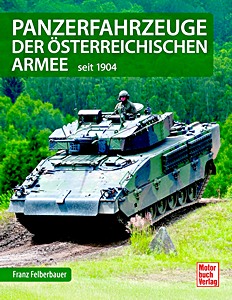
Panzerfahrzeuge der österreichischen Armee - seit 1904

NUOVO

Le forze armate austriache dispongono di una notevole diversità di veicoli corazzati. I primi modelli furono costruiti da Austro-Daimler tra il 1903 e il 1905. Negli anni 1930, l'esercito utilizzò diverse tankette italiane.
Dopo la Seconda Guerra Mondiale, furono create truppe corazzate moderne, inizialmente equipaggiate con carri armati americani e francesi, tra cui l'AMX-13. Successivamente apparvero modelli austriaci come il cacciacarri Kürassier. Oggi, il Leopard 2A4 tedesco è il carro principale dell'esercito austriaco.

In quest'opera riccamente illustrata, lo storico militare Franz Felberbauer presenta un panorama completo dei veicoli corazzati austriaci - dallo Steyr ADGZ, Kürassier e Ulan al Pandur, Dingo e Leopard 2A4.
Il libro contiene dati tecnici, informazioni storiche e numerose foto rare. L'autore ha personalmente partecipato allo sviluppo tecnico di diversi veicoli.

Dettagli

Autore:Franz Felberbauer
Formato:128 pagine, 28.5 x 21 x 1.3 cm, copertina rigida
Illustrazioni:140 foto in B&N e in colori
Lingua:tedesco
Editore:Motorbuch Verlag (D, 2025)
ISBN:9783613047631
Copertina del libro: Panzerfahrzeuge der österreichischen Armee - seit 1904 | Motorbuch

Panzerfahrzeuge der österreichischen Armee - seit 1904

Lingua: tedesco

Vedi l'offerta:

Titoli correlati:

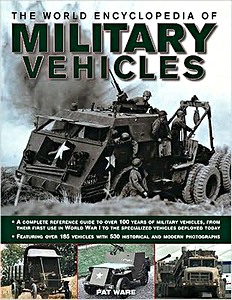
Copertina del libro: The World Encyclopedia of Military Vehicles

The World Encyclopedia of Military Vehicles

Pat Ware | inglese | copertina rigida | 256 p. | 2010

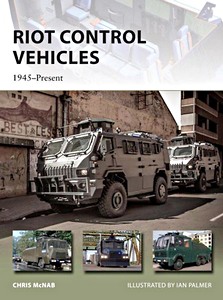
Copertina del libro: Riot Control Vehicles 1945-Present | New Vanguard (219)

Riot Control Vehicles 1945-Present

Chris McNab | inglese | brossura | 48 p. | 2015

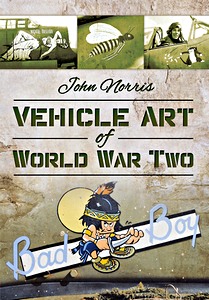
Copertina del libro: Vehicle Art of World War Two

Vehicle Art of World War Two

John Norris | inglese | copertina rigida | 179 p. | 2016

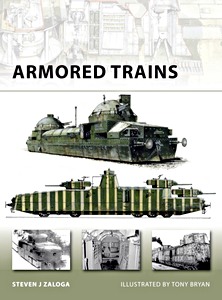
Copertina del libro: Armored Trains | New Vanguard (140)

Armored Trains

Steven J. Zaloga | inglese | brossura | 48 p. | 2008