Al comprar mediante los enlaces, apoyas este sitio sin coste adicional para usted. Más información >

Mitsubishi A6M Rei-sen / Zero: libros - historia

¿Un libro sobre cazas Mitsubishi A6M Rei-sen / Zero? Aquí encontrarás los mejores libros sobre la historia, la técnica y el despliegue de cazas Mitsubishi.

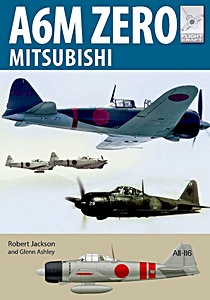
Mitsubishi A6M Zero (Flight Craft)

El Mitsubishi A6M Zero voló por primera vez el 1 de abril de 1939 y pronto demostró su superioridad sobre los primeros cazas aliados en el Pacífico. Ligero, resistente y muy maniobrable, llevaba dos cañones de 20 mm y dos ametralladoras de 7.7 mm.
Su estructura era poco común: motor, cabina, fuselaje delantero y alas formaban una sección rígida unida al fuselaje trasero y al empenaje con 80 pernos.

En 1942 los estadounidenses dieron al A6M el nombre en clave Zeke, aunque el nombre Zero se hizo habitual. En los primeros meses de la guerra del Pacífico logró resultados destacados. En la batalla de Java, que terminó el 8 de marzo de 1942, sus pilotos destruyeron unas 550 aeronaves aliadas.

Con el avance de la guerra, el Zero quedó superado por cazas estadounidenses más modernos como el F6F Wildcat y el Corsair. En los últimos meses muchos fueron equipados con bombas para ataques Kamikaze.

Este libro ofrece una visión clara del diseño y la historia operativa del Zero. Explica su origen, su comportamiento en combate, su comparación con rivales y el trabajo de ingenieros y pilotos. Datos técnicos, fotografías y perfiles en color completan el volumen.

Detalle del libro

Autor:Robert Jackson
Presentación:96 páginas, 30.5 x 21.5 x 0.6 cm, tapa blanda
Ilustración:200 fotos en b/n y color
Idioma:Inglés
Editorial:Pen & Sword Books Ltd (GB, 2021)
Colección:Flight Craft (22)
ISBN:9781526759948
Portada del libro: Mitsubishi A6M Zero | Flight Craft (22) | Pen & Sword

Mitsubishi A6M Zero

Idioma: Inglés

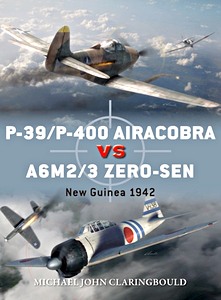
P-39 / P-400 Airacobras vs A6M2/3 Zero-sen : New Guinea 1942 (Osprey)

After the huge advances made in the early months of the Pacific war, it was in remote New Guinea where the advance of Imperial Japanese Naval Air Force (IJNAF) A6M Zero-sen fighters was first halted due to a series of offensive and defensive aerial battles ranging from treetop height up to 30,000 ft.

Initially, the IJNAF fought Australian Kittyhawks, but by May 1942 they had fought themselves into oblivion, and were relieved by USAAF P-39 and P-400 Airacobras. The battles unfolded over mountainous terrain with treacherous tropical weather.
Neither IJNAF or USAAF pilots had been trained for such extreme conditions, incurring many additional losses aside from those that fell in combat.

Using specially commissioned artwork and contemporary photographs and testimony, this fascinating study explains how, despite their initial deficit in experience and equipment, the Airacobras managed to square the ledger and defend New Guinea.

Detalle del libro

Autor:Jim Laurier, Gareth Hector
Presentación:80 páginas, 25 x 18.5 x 0.7 cm, tapa blanda
Ilustración:50 fotos en b/n y 13 a color
Idioma:Inglés
Editorial:Osprey Publishing (GB, 2018)
Colección:Duel (87)
ISBN:9781472823663
Portada del libro: P-39 / P-400 Airacobras vs A6M2/3 Zero-sen : New Guinea 1942 | Duel (87) | Osprey

P-39 / P-400 Airacobras vs A6M2/3 Zero-sen : New Guinea 1942

Idioma: Inglés

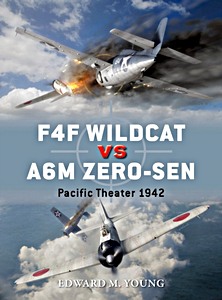
F4F Wildcat vs A6M Zero-Sen - Pacific, 1942 (Osprey)

The Grumman F4F Wildcat and the Mitsubishi A6M Zero-sen were contemporaries, although designed to very different requirements. The Wildcat, ruggedly built to survive the rigors of carrier operations, was the best carrier fighter the US Navy had available when the USA entered World War II, and it remained the principal fighter for the US Navy and the US Marine Corps until 1942-43.
With a speed greater than 300mph, exceptional manoeuvrability, long range, and an impressive armament the slick Zero-sen could out-perform any Allied fighter in 1941-42.
The battles between the Wildcat and the Zero-sen during 1942 represent a classic duel in which pilots flying a nominally inferior fighter successfully developed air-combat tactics that negated the strengths of their opponent.

Contents: Introduction - Chronology - Design and Development - Technical Specifications - The Strategic Situation - The Combatants - Combat - Statistics and Analysis - Aftermath - Bibliography - Index.

Detalle del libro

Autor:Edward M. Young
Presentación:80 páginas, 24.5 x 18.5 x 0.7 cm, tapa blanda
Ilustración:ricamente ilustrado con fotos y dibujos (en b/n y color)
Idioma:Inglés
Editorial:Osprey Publishing (GB, 2013)
Colección:Duel (54)
ISBN:9781780963228
Portada del libro: F4F Wildcat vs A6M Zero-Sen - Pacific, 1942 | Duel (54) | Osprey

F4F Wildcat vs A6M Zero-Sen - Pacific, 1942

Idioma: Inglés

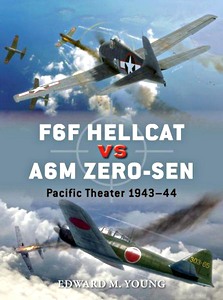
F6F Hellcat vs A6M Zero-Sen - Pacific Theater 1943-44 (Osprey)

The Grumman F6F Hellcat and Mitsubishi A6M Zero-sen were the two principal opposing fighters in the brutal aerial clashes of the Pacific War from 1943 onwards. Reminiscent of the preceding F4F Wildcat, the F6F Hellcat was designed specifically to counter the earlier A6M2 Zero-sen, the strengths and weaknesses of which became fully understood by US designers after an undamaged example was recovered in the Aleutians. The powerful Hellcat had an impressive top speed, rate of climb and armament, and it retained its predecessor's incredible ruggedness.
The A6M5 Zero-sen was also born out of an earlier type, but was intended merely as a stop-gap until more modern Japanese fighters could be produced to restore performance parity with Allied aircraft. The chaotic conditions of the Japanese Aircraft industry and war economy prevented new types from being built.
Featuring detailed artwork illustrating the technical specifications of these two types and the dramatic encounters between them, this volume focuses on how these iconic fighters came into being, and how they fared as they faced one another over the Pacific skies of World War II.

Contents: Introduction - Chronology - Design and Development - Technical Specifications - The Strategic Situation - The Combatants - Combat - Statistics and Analysis - Aftermath - Further Reading - Index.

Detalle del libro

Autor:Edward M. Young
Presentación:80 páginas, 25 x 18.5 x 0.8 cm, tapa blanda
Ilustración:ricamente ilustrado con fotos y dibujos (en b/n y color)
Idioma:Inglés
Editorial:Osprey Publishing (GB, 2014)
Colección:Duel (62)
ISBN:9781782008132
Portada del libro: F6F Hellcat vs A6M Zero-Sen - Pacific Theater 1943-44 | Duel (62) | Osprey

F6F Hellcat vs A6M Zero-Sen - Pacific Theater 1943-44

Idioma: Inglés

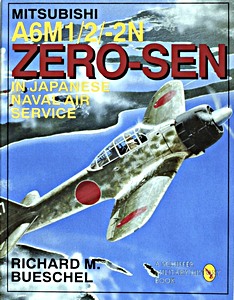
Mitsubishi A6M 1 / 2 / -2N Zero-Sen of the Japanese Naval Air Service

Reknowned Japanese aircraft historian Richard Bueschel revises and updates his classic series of books on Japanese Naval and Army Air Force aircraft of World War II. The A6M-1/2/-2N ZERO-SEN is the first volume. All variations and markings are covered in this the first of a projected multi-volume series.

Detalle del libro

Autor:Richard M. Bueschel
Presentación:64 páginas, 28 x 21.5 x 0.6 cm, tapa blanda
Ilustración:más de 60 fotos
Idioma:Inglés
Editorial:Schiffer Publishing Ltd (USA, 2004)
ISBN:9780887407543
Portada del libro: Mitsubishi A6M 1 / 2 / -2N Zero-Sen of the Japanese Naval Air Service | Schiffer

Mitsubishi A6M 1 / 2 / -2N Zero-Sen of the Japanese Naval Air Service

Idioma: Inglés

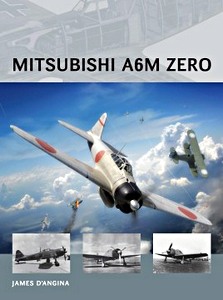
Mitsubishi A6M Zero (Osprey)

Unquestionably the most iconic Japanese fighter of World War II, the Mitsubishi A6M Rei-Sen, Type Zero fighter was used from the initial raid on Pearl Harbor up to the Kamikaze attacks at the end of the war.
Facing off against the likes of the Wildcat, Corsair and even the Spitfire, the Zero gained a legendary reputation amongst Allied pilots due to its incredible manoeuvrability.

Detailed analysis of its technical qualities show why the Zero was so feared, but also pinpoints the weaknesses that would eventually be its downfall as Allied pilots learned how to combat it.
A selection of historical photographs and unique artwork accompany the analysis as James D'Angina delves into the history of the premier Axis fighter of the Pacific Theatre, exploring the design and combat effectiveness of the Zero as well as the tactics developed by Allied pilots to counter it.

Detalle del libro

Autor:James D'Angina, Adam Tooby
Presentación:64 páginas, 25 x 18.5 x 0.7 cm, tapa blanda
Ilustración:35 fotos en b/n y 12 a color
Idioma:Inglés
Editorial:Osprey Publishing (GB, 2016)
Colección:Air Vanguard (19)
ISBN:9781472808219
Portada del libro: Mitsubishi A6M Zero | Air Vanguard (19) | Osprey

Mitsubishi A6M Zero

Idioma: Inglés

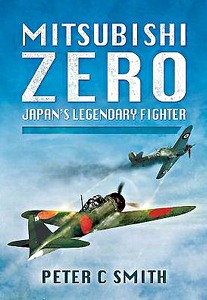
Mitsubishi Zero - Japan's Legendary Fighter

Engineered with manoeuvrability in mind, the light-weight, stripped-back Mitsubishi Zero had a performance that left her opponents totally outclassed. The dogfights she engaged in with the Chinese, British, Dutch and American warplanes in the 1941-42 period are the stuff of aviation legend. All aircraft designs are a compromise of course, and the Zero had faults as well as strengths, two of which were to finally doom her; one was her lack of armour protection and the other was the inability of the Japanese to match the overwhelming production strength and innovation of Allied aircraft construction. Even so, she remained a potent threat until the end of the war, not least in her final role, that of a Kamikaze aircraft, in which she created as much havoc on the sea as she had done earlier in the air.

Peter C. Smith takes the reader on a journey from inspired inception to the blazing termination of this unique aircraft, the first Naval fighter to be superior to land-based aircraft. It describes in detail the many victories that punctuated the early days of its operational career as well as the desperate dying days of the Second World War which witnessed her final demise. Smith also lists the preserved Zero aircraft on display today. This is a fast-paced and fascinating history of a fighter aircraft like no other.

Detalle del libro

Autor:Peter C Smith
Presentación:240 páginas, 23.5 x 15.5 cm, tapa dura
Ilustración:16 páginas fotos en b/n
Idioma:Inglés
Editorial:Pen & Sword Books Ltd (GB, 2014)
ISBN:9781781593196
Portada del libro: Mitsubishi Zero - Japan's Legendary Fighter | Pen & Sword

Mitsubishi Zero - Japan's Legendary Fighter

Idioma: Inglés

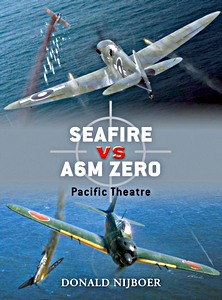
Seafire F III vs A6M Zero - Pacific Theatre (Osprey)

Products of vastly different design philosophies, the Seafire F III and the A6M Zero were never intended to meet in combat, and never should have.
The Zero, extremely nimble at low speeds was purpose-built as a shipboard fighter. In contrast, the Spitfire was intended to operate from established airfields, and needed to be adapted as a carrier fighter.
The book examines these two iconic fighters and their two very different histories, using fantastic artwork and first hand accounts to illustrate the last aerial duel of World War II, as the British Seafire overcame its critics to emerge victorious over the Japanese Zero.

Contents: Introduction - Chronology - Design and Development - The Strategic Situation - Technical Specifications - The Combatants - Combat - Statistics and analysis - Aftermath - conclusion - Bibliography - Further Reading - Glossary.

Detalle del libro

Autor:Donald Nijboer, Jim Laurier
Presentación:80 páginas, 24.5 x 18.5 x 0.7 cm, tapa blanda
Ilustración:ricamente ilustrado con fotos y dibujos (en b/n y color)
Idioma:Inglés
Editorial:Osprey Publishing (GB, 2009)
Colección:Duel (16)
ISBN:9781846034336
Portada del libro: Seafire F III vs A6M Zero - Pacific Theatre | Duel (16) | Osprey

Seafire F III vs A6M Zero - Pacific Theatre

Idioma: Inglés

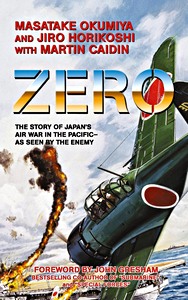
Zero - The Story of Japan's Air War in the Pacific - As seen by the Enemy

This is the thrilling saga of war in the air in the Pacific Theater of Operations during World War II told from the Japanese point of view. It is the story of the men who created, led, and fought in the deadly Zero fighter plane.

In their own words, Jiro Horikoshi (who designed the Zero), Masatake Okumiya (leader of many Zero squadrons), and Saburo Sakai (Japan's leading surviving fighter ace) as well as many other men, tell the inside story of developing the Zero and Japan's air force.

They tell what it felt like to bomb American ships and to shoot down American airplanes - and then of their own shock when the myth of invincibility was shattered by the new Lightning, Hellcat, and Corsair fighters.
They tell of the fight against the growing strength of a remorseless American enemy; and how, in desperation, the Japanese High Command ordered the ceration of deadly suicide squadrons, the Kamikaze. And finally, they reveal their reaction to the dropping of the atomic bombs on Hiroshima and Nagasaki.

Detalle del libro

Autor:Masatake Okumiya, Jiro Horikoshi, Martin Caidin
Presentación:364 páginas, 23 x 15 x 2.1 cm, tapa dura
Ilustración:fotos en b/n
Idioma:Inglés
Editorial:ibooks (USA, 2014)
ISBN:9781596874510
Portada del libro: Zero - The Story of Japan's Air War in the Pacific - As seen by the Enemy | ibooks

Zero - The Story of Japan's Air War in the Pacific - As seen by the Enemy

Idioma: Inglés