Wenn Sie über unsere Links bestellen, unterstützen Sie diese Website - ohne Mehrkosten für Sie. Mehr erfahren >

Schlachtkreuzer - Grossbritannien: Bücher - Geschichte und Schiffe

Ein Buch über Schlachtkreuzer der Royal Navy? Entdecken Sie hier Bildbände über die Geschichte und Typen der Schlachtkreuzer aus Großbritannien.

Schlachtkreuzer der Royal Navy - 1908-1945 (Typenkompass)

Die Royal Navy entwickelte noch vor dem Ersten Weltkrieg den weltweit ersten Schlachtkreuzer und gab somit auch das Einsatzkonzept für diese neue Schiffsklasse vor. Schneller als grosse Schlachtschiffe, aber schwächer gepanzert, sollten sie sich um alle kleineren Kriegsschiffe kümmern.
Weil sich die Theorie in der Praxis so jedoch nicht bestätigen wollte, wurde die Schiffsklasse der Schlachtkreuzer nach dem Ersten Weltkrieg wieder verworfen.

Seiten aus dem Buch [TK] Schlachtkreuzer der Royal Navy - 1908-1945 (1)

Seiten aus dem Buch "Schlachtkreuzer der Royal Navy - 1908-1945"

Ingo Bauernfeind porträtiert in diesem reich bebilderten Typenkompass alle Schlachtkreuzer, die das Vereinigte Königreich zwischen 1909 und 1920 in Dienst stellte. Jeder Typ wird anhand eines Fotos, einer historischen Beschreibung und eines technischen Datenblatts vorgestellt.

Details

Autor:Ingo Bauernfeind
Ausführung:96 Seiten, 20.5 x 14 cm, kartoniert
Abbildungen:99 s/w-Abbildungen, 9 Zeichnungen
Sprache:Deutsch
Verlag:Motorbuch Verlag (D, 2015)
Serie:Typenkompass
ISBN:9783613038257
Cover des Buches: Schlachtkreuzer der Royal Navy - 1908-1945 | Typenkompass | Motorbuch

Schlachtkreuzer der Royal Navy - 1908-1945

Sprache: Deutsch

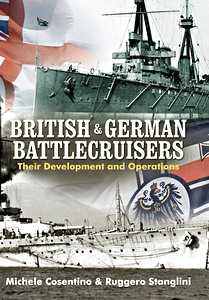
British and German Battlecruisers : Their Development and Operations

Die schnellen und gewaltig bewaffneten Schlachtkreuzer Großbritanniens und Deutschlands, die vor und während des Ersten Weltkriegs entwickelt wurden, werden in diesem Buch auf eine Weise und mit einem Detaillierungsgrad verglichen und gegenübergestellt, wie es noch nie zuvor versucht wurde.
Die Autoren beginnen mit einer Betrachtung der Beziehung und Rivalität zwischen Großbritannien und Deutschland und untersuchen, wie außenpolitische, strategische und taktische Überlegungen, wirtschaftliche, industrielle und technologische Entwicklungen sowie die Marinepolitik zur Initiierung der Schlachtkreuzerprogramme in beiden Ländern führten.

Anschließend werden Kapitel der Entwicklung des jeweiligen Typs in den einzelnen Ländern, seiner Konstruktion und Bauweise, dem Schutz, den Antriebsanlagen, der Bewaffnung, der Feuerleitanlage und den Kommunikationssystemen gewidmet, wobei der Schwerpunkt insbesondere auf den innovativen Aspekten der Konstruktionen sowie auf ihren Stärken und Schwächen liegt.

Diese Schiffe gerieten schließlich im Januar 1915 in der Nordsee auf der Doggerbank aneinander, und obwohl keine der beiden Seiten Verluste erlitt, waren die Unterschiede in ihrer Konstruktion und Handhabung deutlich erkennbar - Unterschiede, die ein Jahr später in der Skagerrakschlacht noch deutlicher zutage treten sollten, als drei britische Schiffe zerstört wurden.
Diese und weitere Aktionen, an denen sie beteiligt waren, werden von den Autoren beschrieben und bewertet. Abschließend analysieren sie deren Stärken und Schwächen. Dies ist ein bedeutendes Werk für Marinebegeisterte weltweit.

Details

Autor:Michele Cosentino, Rugero Stanglini
Ausführung:256 Seiten, 29 x 24.5 cm, gebunden
Abbildungen:220 s/w-Abbildungen
Sprache:Englisch
Verlag:Seaforth Publishing (GB, 2016)
ISBN:9781848321847
Cover des Buches: British and German Battlecruisers : Their Development and Operations | Seaforth

British and German Battlecruisers : Their Development and Operations

Sprache: Englisch
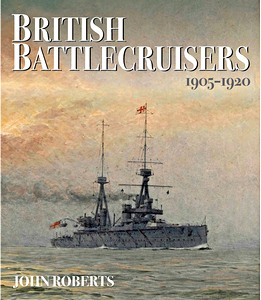
British Battlecruisers 1905 - 1920

The brainchild of Admiral Sir John Fisher, battlecruisers combined heavy guns and high speed in the largest hulls of their era. Conceived as 'super-cruisers' to hunt down and destroy commerce raiders, their size and gun-power led to their inclusion in the battlefleet as a fast squadron of capital ships.

This book traces in detail the development of Fisher's original idea into first battlecruiser Invincible of 1908, through to the 'Splendid Cats' of the Lion class, and culminating in HMS Hood in 1920, the largest warship in the world for the next twenty years. The origins of the unusual 'light battlecruisers' of the Courageous type are also covered.

The well-publicised problems of British battlecruisers are examined, including the latest research throwing light on the catastrophic loss of three of the ships at the Battle of Jutland.
The developmental history is backed by chapters covering machinery, armament and armour, with a full listing of important technical data.
The comprehensive collection of illustrations includes the author's superb drawings and original Admiralty plans reproduced in full colour.

This revised and updated edition of the classic work first published in 1997 will be welcomed by anyone with an interest in the most charismatic and controversial warships of the dreadnought era.

Details

Autor:John Roberts
Ausführung:128 Seiten, 29 x 24.5 cm, gebunden
Abbildungen:100 s/w-Abbildungen und Zeichnungen, 10 Zeichnungen in Farbe
Sprache:Englisch
Verlag:Seaforth Publishing (GB, 2016)
ISBN:9781473882355
Cover des Buches: British Battlecruisers 1905 - 1920 | Seaforth

British Battlecruisers 1905 - 1920

Sprache: Englisch

British Battlecruiser vs German Battlecruiser - 1914-16 (Osprey)

Die rivalisierenden Schlachtkreuzer trafen erstmals im Januar 1915 auf der Doggerbank in der Nordsee aufeinander, und obwohl die Schlacht ein taktischer Sieg für die Briten war, da keine der beiden Seiten einen ihrer Schlachtkreuzer verlor, waren die Unterschiede in den Konstruktionen der britischen und deutschen Schiffe bereits deutlich erkennbar.

Die beiden Seiten reagierten sehr unterschiedlich auf dieses erste Gefecht; während die Deutschen ihre Munitionshandhabungsverfahren verbesserten, um das Risiko von funktionsunfähigen Explosionen zu verringern, zogen die Briten die gegenteilige Lehre und horteten Munition, um ihre Feuerrate zu erhöhen, was ihre Schlachtkreuzer jedoch angreifbarer machte.

Diese Unterschiede traten während der Skagerrakschlacht im Mai 1916 besonders deutlich zutage. Von den neun eingesetzten britischen Schlachtkreuzern wurden drei zerstört, alle von ihren deutschen Gegenstücken. Fünf deutsche Schlachtkreuzer waren beteiligt, von denen nur einer versenkt und die übrigen beschädigt wurden.

Dieses Buch, reich illustriert mit eigens in Auftrag gegebenen Kunstwerken, erzählt die packende Geschichte des Zusammenstoßes der rivalisierenden Schlachtkreuzer der Royal Navy und der Kaiserlichen Marine auf dem Höhepunkt des Ersten Weltkriegs.

Details

Autor:Mark Stille
Ausführung:80 Seiten, 25 x 18.5 x 0.6 cm, kartoniert
Abbildungen:Fotos und Zeichnungen (in s/w und Farbe)
Sprache:Englisch
Verlag:Osprey Publishing (GB, 2013)
Serie:Duel (56)
ISBN:9781780960968
Cover des Buches: British Battlecruiser vs German Battlecruiser - 1914-16 | Duel (56) | Osprey

British Battlecruiser vs German Battlecruiser - 1914-16

Sprache: Englisch

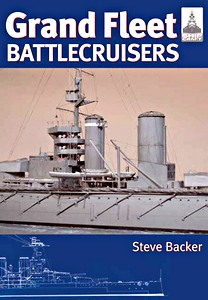
Grand Fleet Battlecruisers 1906-1915 (Ship Craft)

The 'ShipCraft' series provides in-depth information about building and modifying model kits of famous warship types. Lavishly illustrated, each book takes the modeller through a brief history of the subject class, highlighting differences between sister-ships and changes in their appearance over their careers. This includes paint schemes and camouflage, featuring colour profiles and highly-detailed line drawings and scale plans.
The modelling section reviews the strengths and weaknesses of available kits, lists commercial accessory sets for super-detailing of the ships, and provides hints on modifying and improving the basic kit. This is followed by an extensive photographic gallery of selected high-quality models in a variety of scales, and the book concludes with a section on research references - books, monographs, large-scale plans and relevant websites.

This volume includes illustrations of the many different designs, from the Invincible of 1906 to the Renowns of 1915, and including the hybrid 'large light cruisers' Courageous, Glorious and Furious.

Details

Autor:Steve Backer
Ausführung:128 Seiten, 30 x 21.5 x 1.4 cm, gebunden
Abbildungen:250 s/w, Farbe und Zeichnungen
Sprache:Englisch
Verlag:Seaforth Publishing (GB, 2011)
Serie:ShipCraft
ISBN:9781848321045
Cover des Buches: Grand Fleet Battlecruisers 1906-1915 | ShipCraft | Seaforth

Grand Fleet Battlecruisers 1906-1915

Sprache: Englisch

HMS Hood - Pride of the Royal Navy

The sinking of the battlecruiser HMS Hood on 24 May 1941, dealt a major blow to the British Royal Navy. Like Titanic years before, Hood had seemed invincible and much of the hopes of the Navy rested with her as the nation entered the war with Germany. The epitome of British naval power, the 48,360-ton Hood boasted eight 15-inch and eight 4-inch guns - a formidably armed vessel that the Royal Navy had hoped could match German battleships such as the Bismarck.
But in just eight minutes, after an encounter with Bismarck and her consort Prinz Eugen, HMS Hood blew up and sank to the bottom of the Alantic, taking the lives of 1,418 men with her. Her sinking was met with disbelief both in England and around the world; the formerly invincible Royal Navy now seemed very vulnerable.

Author Dr Andrew Norman explores the events leading up to the disaster and the legacy left in its wake. His research includes reports from both the Royal Naval Museum and German naval records, and many of the photographs included are previously unpublished. In "HMS Hood: Pride of the Royal Navy", he reassesses the possible reasons for Hood's sinking, in the light of the discovery of her wreckage in July 2001.

Details

Autor:Dr. Andrew Norman
Ausführung:157 Seiten, 23.5 x 15.5 x 1.1 cm, kartoniert
Abbildungen:8 Karten, 55 s/w-Abbildungen
Sprache:Englisch
Verlag:The History Press Ltd (GB, 2009)
ISBN:9781862274532
Cover des Buches: HMS Hood - Pride of the Royal Navy | The History Press

HMS Hood - Pride of the Royal Navy

Sprache: Englisch

British Battlecruisers 1914-1918 (Osprey)

Early British battlecruisers were not a failed design as is so often claimed, but a very successful and revolutionary one that was critical to, and instrumental in, Britain winning the naval war of 1914-18.

This book contains new information on these innovative ships, using previously untapped evidence from the wrecks of the sunken battlecruisers and detailed analysis of admiralty records to show why Admiral Fisher's famous battlecruiser concept was a revolution that drew together technological breakthroughs, global communications and intelligence gathering to create the first worldwide rapid-response task force.

Contents: Introduction - Admiral Fisher and the Transformation of the Navy - Committee on Designs, 1904 - British Battlecruisers - Construction - Modifications - Battlecruisers at War - Conclusion - Select Bibliography - Colour Plate Commentary - Index.

Details

Autor:Lawrence Burr
Ausführung:48 Seiten, 25 x 18.5 x 0.4 cm, kartoniert
Abbildungen:Fotos und Zeichnungen (in s/w und Farbe)
Sprache:Englisch
Verlag:Osprey Publishing (GB, 2006)
Serie:New Vanguard (126)
ISBN:9781846030086
Cover des Buches: British Battlecruisers 1914-1918 | New Vanguard (126) | Osprey

British Battlecruisers 1914-1918

Sprache: Englisch

British Battlecruisers 1939-1945 (Osprey)

When war broke out in 1939, only three true battlecruisers remained in the Royal Navy including HMS 'Hood', the world's largest and fastest capital ship for much of her life, which would be destroyed in action against the German battleship 'Bismarck'.
Out of the remaining two battlecruisers ('Repulse' and 'Renown') one was sunk by Japanese aircraft off Singapore, whilst the other served with distinction until the end of the war.

This book traces the pre-war development of these spectacular warships, then describes their wartime exploits, using this to demonstrate their operational and mechanical performance. It examines what life was like on these wartime battlecruisers when they sailed into action.

Contents: Introduction - Design and Development - Operation History - Variants - Colour plate commentary.

Details

Autor:Angus Konstam
Ausführung:48 Seiten, 25 x 18.5 x 0.4 cm, kartoniert
Abbildungen:Fotos und Zeichnungen (in s/w und Farbe)
Sprache:Englisch
Verlag:Osprey Publishing (GB, 2003)
Serie:New Vanguard (88)
ISBN:9781841766331
Cover des Buches: British Battlecruisers 1939-1945 | New Vanguard (88) | Osprey

British Battlecruisers 1939-1945

Sprache: Englisch

Andere Bücher in dieser Kategorie:

Cover des Buches: Schlachtschiffe der Royal Navy - Großkampfschiffe 1895-1945 | Typenkompass

Schlachtschiffe der Royal Navy - Großkampfschiffe 1895-1945

Ingo Bauernfeind | Deutsch | kartoniert | 128 S. | 2014

Cover des Buches: The Battleship Dreadnought (Anatomy of the Ship) | Anatomy of the Ship

The Battleship Dreadnought (Anatomy of the Ship)

John Roberts | Englisch | kartoniert | 256 S. | 2020

Cover des Buches: Battleship Warspite - Detailed in the Original Builders' Plans

Battleship Warspite - Detailed in the Original Builders' Plans

Robert Brown | Englisch | gebunden | 128 S. | 2017

Cover des Buches: British Battleships of the Victorian Era

British Battleships of the Victorian Era

Norman Friedman | Englisch | gebunden | 400 S. | 2017

Cover des Buches: The British Battleship : 1906 - 1946

The British Battleship : 1906 - 1946

Norman Friedman | Englisch | gebunden | 400 S. | 2015

Cover des Buches: Dreadnought - The Ship that Changed the World

Dreadnought - The Ship that Changed the World

Roger Parkinson | Englisch | gebunden | 304 S. | 2014

Cover des Buches: British Battleships 1914-18 (2) : The Super Dreadnoughts | New Vanguard (204)

British Battleships 1914-18 (2) : The Super Dreadnoughts

Angus Konstam | Englisch | kartoniert | 48 S. | 2013

Cover des Buches: British Battleships, 1914-18 (1) - The Early Dreadnoughts | New Vanguard (200)

British Battleships, 1914-18 (1) - The Early Dreadnoughts

Angus Konstam | Englisch | kartoniert | 48 S. | 2013

Cover des Buches: British Battleships of World War One

British Battleships of World War One

R. A. Burt | Englisch | gebunden | 344 S. | 2012