Wenn Sie über unsere Links bestellen, unterstützen Sie diese Website - ohne Mehrkosten für Sie. Mehr erfahren >

Kriegsschiffe (2. WK) - Grossbritannien: Bücher - Geschichte

Ein Buch über Kriegsschiffe der Royal Navy? Entdecken Sie hier Bücher über die Geschichte und Typen der Kriegsschiffe aus Großbritannien aus dem 2. Weltkrieg.

British Warships of the Second World War : Detailed in the Original Builders' Plans

This volume reproduces a representative selection of official plans depicting the main types of warship with which the Royal Navy fought the Second World War. Carefully chosen from the incomparable collection at the National Maritime Museum, these range from battleships and fleet aircraft carriers, through cruisers, destroyers and submarines, to examples of the vast array of specialist vessels built during the war.

Concentrating on 'as fitted' drawings which show the warships as they first entered service, this collection offers an unprecedented wealth of detail on the equipment and fittings of some of the Royal Navy's most famous ships.
It also documents how their appearance changed over time, since many of the plans include alterations and additions made in different shades of ink and wash, and here printed in full colour for instant understanding of the modifications.

With an accompanying text and detailed individual captions by one of the leading experts in the field, this book provides an insight into the warship design process itself, and explains for the benefit of ship modellers and technical historians which types of plan contain the most valuable information.
For anyone with more than a passing interest in warship design and construction, this book will be a revelation.

Details

Autor:John Roberts
Ausführung:176 Seiten, 29 x 24.5 cm, gebunden
Abbildungen:85 Zeichnungen in Farbe
Sprache:Englisch
Verlag:Pen & Sword Books Ltd (GB, 2017)
ISBN:9781473890688
Cover des Buches: British Warships of the Second World War : Detailed in the Original Builders' Plans | Pen & Sword

British Warships of the Second World War : Detailed in the Original Builders' Plans

Sprache: Englisch

Dunkirk Little Ships

In May 1940, following the rapid advance of German troops through Holland, Belgium and France, the British Expeditionary Force and French army retreated to Dunkirk. Operation Dynamo was instigated in an attempt to rescue as many of them as possible. With the harbour at Dunkirk severely damaged, much of the evacuation would have to take place from the beaches; only small, shallow-draught boats could do this.
After appealing to boatyards, yacht clubs and yachtsmen throughout the south east of England, the Admiralty managed to round up around 700 small craft which, along with 200 military vessels, were able to rescue an astonishing 338,226 troops over nine days.

In 1965, forty-three vessels which had taken part in the evacuation commemorated the twenty-fifth anniversary by crossing from Ramsgate to Dunkirk, and the Association of Dunkirk Little Ships was formed soon afterwards. A further fifty years on, over 120 Little Ships are still in commission and it is thought that hundreds of others may still survive.

Details

Autor:Nigel Sharp
Ausführung:96 Seiten, 23.5 x 16.5 x 0.9 cm, kartoniert
Abbildungen:180 Fotos
Sprache:Englisch
Verlag:Amberley Publishing (GB, 2015)
ISBN:9781445647500
Cover des Buches: Dunkirk Little Ships | Amberley

Dunkirk Little Ships

Sprache: Englisch

A Shipyard at War - Unseen Photographs from John Brown's, Clydebank 1914 - 1918

Obwohl die Clydebank-Werft von John Brown & Sons vor allem für große Passagierschiffe und Großkampfschiffe bekannt ist, baute sie zwischen 1914 und dem Abschluss der Kriegsprogramme im Jahr 1920 eine breite Palette von Schiffen - von großen Kriegsschiffen bis hin zu Zerstörern und U-Booten, ungewöhnliche Konstruktionen wie einen Seeflugzeugträger und ein U-Boot-Depotschiff sowie sogar eine Reihe von Handelsschiffen in Kriegsstandard.
Dies macht die Werft zu einem besonders guten Beispiel für die Schiffbauleistungen während des Krieges.

Wie die meisten Werften jener Zeit beschäftigte auch Clydebank professionelle Fotografen, um den gesamten Bauprozess zu dokumentieren. Dabei kamen Großplattenkameras zum Einsatz, die Bilder von atemberaubender Klarheit und Detailgenauigkeit lieferten; im Gegensatz zu den meisten Werftfotografien ist die Sammlung von Clydebank jedoch erhalten geblieben, obwohl relativ wenige der Bilder jemals veröffentlicht wurden.

Für dieses Buch wurden rund 200 der aussagekräftigsten Bilder sorgfältig ausgewählt und nach höchsten Standards eingescannt. Sie zeigen in beispielloser Detailgenauigkeit jeden Aspekt der Werftproduktion, vom Passagierschiff Aquitania aus dem Jahr 1914 bis zum Kreuzer Enterprise, der 1920 fertiggestellt wurde.
Obwohl Schiffe im Mittelpunkt des Buches stehen, dokumentieren die Fotos auch die Auswirkungen des Krieges auf die Arbeitsbedingungen in der Werft und, vielleicht am deutlichsten, die zunehmende Beschäftigung von Frauen. Mit ausführlichen und informativen Bildunterschriften und einer fundierten Einleitung von Ian Johnston zeichnet dieses Buch ein lebendiges Bild einer untergegangenen Industrie auf dem Höhepunkt ihres Erfolgs.

Details

Autor:Ian Johnston
Ausführung:192 Seiten, 26 x 24 cm, gebunden
Abbildungen:200 Fotos
Sprache:Englisch
Verlag:Seaforth Publishing (GB, 2014)
ISBN:9781848322165
Cover des Buches: A Shipyard at War - Unseen Photographs from John Brown's, Clydebank 1914 - 1918 | Seaforth

A Shipyard at War - Unseen Photographs from John Brown's, Clydebank 1914 - 1918

Sprache: Englisch
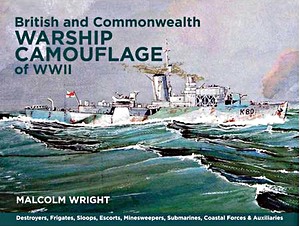
British and Commonwealth Warship Camouflage of WW II - Destroyers, Frigates, Sloops, Escorts, Minesweepers, Submarines, Coastal Forces and Auxiliaries

During the Second World War navies developed low visibility camouflage for their ships, on both the vertical and horizontal surfaces, in order reduce visibility by blending in with the sea, or confuse the identity of a ship by applying more obtrusive patters.

In this book by maritime artist Mal Wright both the official and unofficial paint schemes that adorned ships of the Royal Navy and Commonwealth are depicted in detail, along with discussion on changes of armament and electronics that effected the outward appearance of each ship.

Starting with destroyers from WW1 still in service during WW2, the book progressively covers ships below cruisers, class by class, to provide a detailed and easy-to-use guide to paint schemes in use. In some cases individual ships are shown in the several schemes they wore thus providing a source that covers various periods of service.

With 740 full colour illustrations, all of named vessels, this book concentrates information into a single volume to provide a one-stop reference source, and, for the first time in a single volume, it covers not just the well-known ships, but also escort vessels, minesweepers, trawlers, coastal craft and auxiliaries in sequential format.
Many schemes would be difficult for the reader to have found other than with the most intensive research so that historians, collectors, modelmakers and wargamers will find this unique reference source absolutely invaluable.

Details

Autor:Malcolm George Wright
Ausführung:144 Seiten, 20.5 x 26 x 1.7 cm, gebunden
Abbildungen:740 Illustrationen in Farbe
Sprache:Englisch
Verlag:Seaforth Publishing (GB, 2014)
ISBN:9781848322059
Cover des Buches: British and Commonwealth Warship Camouflage of WW II - Destroyers, Frigates, Sloops, Escorts, Minesweepers, Submarines, Coastal Forces and Auxiliaries | Seaforth

British and Commonwealth Warship Camouflage of WW II - Destroyers, Frigates, Sloops, Escorts, Minesweepers, Submarines, Coastal Forces and Auxiliaries

Sprache: Englisch

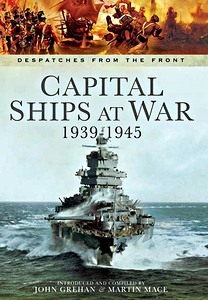
Capital Ships at War, 1939-1945 - Despatches from the Front

First time full collection of Despatches reports have been published. Despatches in this volume include those relating to:
- the sinking of the German battleship Graf Spee in the Battle of the River Plate in 1939,
- the loss of the battleships HMS Prince of Wales and HMS Repulse in the Far East,
- the sinking of the German battle cruiser Scharnhorst in 1943,
- the attack on Tirpitz by midget submarines,
- the contribution by British Pacific Fleet to the assault on Okinawa in 1945 (which included four Royal Navy battleships),
- and the sinking of Bismarck in 1941.

This unique collection of original documents will prove to be an invaluable resource for historians, students and all those interested in what was one of the most significant periods in British military history.

Details

Autor:John Grehan, Martin Mace
Ausführung:224 Seiten, 24 x 15.5 x 2.1 cm, gebunden
Abbildungen:illustriert
Sprache:Englisch
Verlag:Pen & Sword Books Ltd (GB, 2014)
ISBN:9781783462049
Cover des Buches: Capital Ships at War, 1939-1945 - Despatches from the Front | Pen & Sword

Capital Ships at War, 1939-1945 - Despatches from the Front

Sprache: Englisch

The Ships of Scapa Flow

Die Inseln rund um Scapa Flow bildeten einen der besten Naturhäfen Großbritanniens, während die Lage im Norden Schottlands die Zufahrten zur Nordsee und zum Atlantik schützte.

Der Marinestützpunkt war in beiden Kriegen wichtig, aber was Scapa Flow berühmt macht, sind seine Wracks, die Überreste einer deutschen Flotte, die einst etwa 74 Schiffe umfasste, von denen die meisten 1919 versenkt wurden, sowie die Kriegsgräber der HMS Royal Oak und der HMS Vanguard.

Die Wracks der Marineschiffe sind noch immer erhalten, ebenso wie acht deutsche Kriegsschiffe, deren Bergung durch einen zweiten Krieg verhindert wurde. Die Wracks von Scapa Flow sind heute ein Taucherparadies und ziehen Taucher aus aller Welt an. Sie bieten auch vielen Menschen auf Orkney selbst Arbeit.

Dies ist die Geschichte der Schiffe von Scapa Flow, ihres Untergangs und ihrer Bergung, anhand vieler bisher unveröffentlichter Bilder der Bergung und des anschließenden Transports vieler deutscher Schlachtschiffe und Kreuzer zur Rosyth-Werft in Fife zum Abwracken.

Details

Autor:Campbell McCutcheon
Ausführung:96 Seiten, 23.5 x 18.5 x 0.9 cm, kartoniert
Abbildungen:illustriert
Sprache:Englisch
Verlag:Amberley Publishing (GB, 2013)
ISBN:9781445633862
Cover des Buches: The Ships of Scapa Flow | Amberley

The Ships of Scapa Flow

Sprache: Englisch

J. Samuel White & Co., Shipbuilders

J. Samuel White & Company war das älteste Unternehmen auf der Liste der britischen Admiralität und baute allein für die Royal Navy 252 Schiffe. Mit der Schließung der Werft im Jahr 1966 endete eine 300-jährige Schiffbautradition, in der das Unternehmen sowohl bei Handels- als auch bei Marinekunden hohes Ansehen genoss.

Die Royal Navy, die anfangs für ihre schnellen Zollboote und Marinebrigaden bekannt war, erwarb sich in ihren letzten Jahren mit ihren Zerstörern großen Ruhm. Sie war äußerst innovativ und entwickelte und patentierte zahlreiche Pionierprodukte. Zu ihren weiteren Innovationen zählten Halbdieselmotoren, Wärmetauscher, Klimaanlagen und Kompressoren sowie verschiedene Schiffsantriebe.

Das Unternehmen baute nicht nur Schiffe und Boote, sondern auch verschiedene Marineflugzeuge. Im Ersten Weltkrieg produzierte White 100 Schiffe, darunter 27 Zerstörer, sowie 201 Wasserflugzeuge. Im Zweiten Weltkrieg belief sich die Produktion auf 317 Schiffe, darunter 26 Zerstörer und ein großer Minenleger.

Dieses Buch, illustriert mit Fotografien dieser und vieler anderer Produkte des Unternehmens, erzählt die Geschichte von J. Samuel White und seinen Tochtergesellschaften, einem Unternehmen, das auf einem Ruf für Qualität aufbaute, der ihm den Slogan einbrachte: "White's-built - well-built!".

Details

Autor:David Williams, Richard P. de Kerbrech
Ausführung:176 Seiten, 23.5 x 16.5 x 1.2 cm, kartoniert
Abbildungen:illustriert
Sprache:Englisch
Verlag:The History Press Ltd (GB, 2012)
ISBN:9780752466125
Cover des Buches: J. Samuel White & Co., Shipbuilders | The History Press

J. Samuel White & Co., Shipbuilders

Sprache: Englisch

Andere Bücher in dieser Kategorie: