Wenn Sie über unsere Links bestellen, unterstützen Sie diese Website - ohne Mehrkosten für Sie. Mehr erfahren >

Güterzüge - Großbritannien: Bücher - Geschichte

Bildbände über die Geschichte der Güterzüge und Schienenfahrzeuge in Großbritannien.

MGR Coal Trains

Mit der zunehmenden Verbreitung von Elektrizität zur Stromversorgung und Beleuchtung der britischen Städte errichteten zahlreiche Stadtbezirke eigene Kraftwerke. In den Anfangsjahren wurden diese zwangsläufig mit Kohle betrieben, von der Großbritannien über reichlich Vorkommen verfügte.
In den 1960er und frühen 1970er Jahren startete die Regierung ein Programm zum Bau neuer Kraftwerke. Die meisten dieser Kraftwerke wurden mit direkt an das Schienennetz angeschlossenen Kohleumschlaganlagen vor Ort errichtet, wodurch der Kohlezug "Merry-Go-Round" oder kurz MGR entstand.

Das Buch bietet ein Panorama aus Großbritannien mit einer Vielzahl von Kohlezügen in Bewegung, darunter bisher unveröffentlichte Bilder aus vielen Jahren und verschiedenen Orten.

Details

Autor:Mike Rhodes
Ausführung:96 Seiten, 23.5 x 16.5 x 0.8 cm, kartoniert
Abbildungen:180 farbige und s/w-Abbildungen
Sprache:Englisch
Verlag:Amberley Publishing (GB, 2023)
ISBN:9781398108882
Cover des Buches: MGR Coal Trains | Amberley

MGR Coal Trains

Sprache: Englisch

Rail Freight - Yorkshire and North East England

Forty years ago, large areas of Yorkshire and the North East were criss-crossed by freight-only lines, many of them serving the heavy industries that had brought prosperity to the railways decades earlier. Classes 25 and 40 were enjoying their last few years of service in the early 1980s, while the unique Class 76s on the Woodhead route and Class 13 'master and slave' shunters at Tinsley lasted until 1981 and 1985 respectively.

The Class 37s still had plenty of life left in them, especially in the North East where they worked most coal trains and a share of other traffic, too. Often overlooked were the humble Class 08 shunters, busying themselves not just in marshalling yards but also sometimes on short main-line trips.

Today's rail freight scene may be less varied, but it still thrives where there are large tonnages to be moved regularly from A to B. As in most parts of Britain, rail freight haulage these days is dominated by the Class 66, but the uniformity is relieved by numerous livery styles, reflecting not only the different freight operators but also some of the customers that they serve.
Also, the Class 60s have made a comeback in some surprising areas, notably the GB Railfreight biomass trains out of Tyne Dock. Classes 70, 56 and, very occasionally, 68 all bring added interest. The wagon fleet, likewise, is more standardised, but arguably more colourful than it ever has been.

Illustrated with over 160 photographs, this book looks at Yorkshire and the North East's varied freight scene over the last 40 years.

Details

Autor:Paul Shannon
Ausführung:96 Seiten, 24 x 17 x 1.3 cm, kartoniert
Abbildungen:160+ farbige und s/w-Abbildungen
Sprache:Englisch
Verlag:Key Publishing Ltd (GB, 2023)
Serie:Railways and Industry
ISBN:9781802823073
Cover des Buches: Rail Freight - Yorkshire and North East England | Railways and Industry | Key

Rail Freight - Yorkshire and North East England

Sprache: Englisch

Containers by Rail in the UK

Die Bedeutung unserer Eisenbahn für den Transport von Seecontainern kann nicht hoch genug eingeschätzt werden. Branchenzahlen zufolge wird jeder vierte Container, der in britischen Häfen ankommt, über das britische Schienennetz weiterbefördert. Dies ist insbesondere für den Schienengüterverkehr von großer Bedeutung, angesichts des drastischen Rückgangs des Kohletransports in den letzten Jahren.

Vier der größten Akteure im britischen Güterverkehrssektor - Freightliner, DB Cargo, GB Railfreight und Direct Rail Services - transportieren erhebliche Mengen an Containern in nahezu alle Teile Großbritanniens.

Dieses Buch beleuchtet diese Transporte, von den bedeutenden Häfen Felixstowe und Southampton bis hin zu so weit entfernten Zielen wie Bristol und den schottischen Highlands.

John Jackson wirft einen detaillierten Blick auf die Vielfalt der Lokomotiven und Containerwaggons, die auf diesen von den wichtigsten Akteuren unseres Eisenbahnnetzes im 21. Jahrhundert angebotenen Diensten eingesetzt werden.

Details

Autor:John Jackson
Ausführung:96 Seiten, 23.5 x 16.5 x 1.3 cm, kartoniert
Abbildungen:180 Farbfotos
Sprache:Englisch
Verlag:Amberley Publishing (GB, 2022)
ISBN:9781398108868
Cover des Buches: Containers by Rail in the UK | Amberley

Containers by Rail in the UK

Sprache: Englisch

Heavy Freight Locomotives

In den 1970er Jahren erforderte die Einführung der Kohlezüge im Kreisverkehr eine deutlich leistungsstärkere Lokomotive, woraus die 3300 PS starke Baureihe 56 entstand. Für den allgemeinen Güterverkehr wurde die Baureihe 60 entwickelt. Beide Baureihen wiesen in ihren Anfangsjahren Zuverlässigkeitsprobleme auf.

Mehrere große Steinbruchunternehmen in Somerset waren frustriert über die ständigen Lokomotivprobleme der British Rail und beschlossen, eigene Lokomotiven zu bestellen. Als Lieferanten wählten sie General Motors in den USA. Daraus entstand die Baureihe 59, die 1986 in Betrieb genommen wurde und sich als so effektiv erwies, dass andere Betreiber des Güterverkehrs nachzogen und die spätere Baureihe 66 bestellten. Schließlich wurden über 400 Lokomotiven in Betrieb genommen.

Dieses Buch mit größtenteils unveröffentlichten Farbfotografien, die George Woods zwischen 1966 und 2019 aufgenommen hat, zeigt die Lokomotiven beim Ziehen verschiedenster Züge im gesamten BR-Netz.

Details

Autor:George Woods
Ausführung:96 Seiten, 23.5 x 16.5 x 1.4 cm, kartoniert
Abbildungen:180 Farbfotos
Sprache:Englisch
Verlag:Amberley Publishing (GB, 2022)
ISBN:9781398101999
Cover des Buches: Heavy Freight Locomotives | Amberley

Heavy Freight Locomotives

Sprache: Englisch

Rail Freight - Scotland

In the early 1980s, Ravenscraig steel works was the biggest source of rail freight north of the border, handling iron ore, coal, lime and scrap, as well as semi-finished and finished products. Opencast coal was thriving and would even lead to some lines re-opening later in the decade.
Wagonload freight was still providing a service on some rural lines, not least the Far North line where many intermediate stations still handled general freight, such as seed potatoes and fertiliser.

Today, Ravenscraig is a distant memory and coal is no longer carried by rail anywhere in Scotland. Wagonload freight has also disappeared, despite some attempts to revive the concept in the early 2000s.
However, in a few areas, rail freight has done well. The cement works at Oxwellmains is a big user of rail and Grangemouth refinery still produces three trainload flows. Intermodal traffic has grown substantially, with several regular Anglo-Scottish flows on the West and East Coast main lines as well as internal movements to Aberdeen and Inverness.

Illustrated with over 160 photographs, many of which are previously unpublished, this volume looks at the changing face of rail freight in Scotland. It details the changes in traction, rolling stock and railway infrastructure over four decades.

Details

Autor:Paul Shannon
Ausführung:96 Seiten, 23.5 x 17.5 x 1.3 cm, kartoniert
Abbildungen:160+ farbige und s/w-Abbildungen
Sprache:Englisch
Verlag:Key Publishing Ltd (GB, 2022)
Serie:Railways and Industry
ISBN:9781802821659
Cover des Buches: Rail Freight - Scotland | Railways and Industry | Key

Rail Freight - Scotland

Sprache: Englisch

Rail Freight - Wales and the Borders

The changes to rail freight in Wales and the Borders since the 1980s have been dramatic in many ways and have often been a knock-on effect of huge transformations in the industries that the railway serves, most notably, the coal-mining sector. These have led to a railway with a slimmed-down infrastructure and renewed traction and rolling-stock fleets.

Until the 1980s, coal was still the lifeblood of many railway lines in South Wales. However, one by one, the pits closed, leaving just a handful of surface operations still active in 2020.
The sight and sound of a Class 37 winding its way up a steep-sided valley is now a distant memory. Industrial decline has affected other traffics too, with the loss of the heavy iron ore trains to Llanwern and many other flows.
However, Welsh rail freight is far from dead. Class 60-hauled oil and steel trains still ply the South Wales main line, and there have even been small revivals such as cement from Penyffordd.

Illustrated with over 150 stunning photographs, many of which are previously unpublished, this volume looks at the changing face of rail freight in Wales and the Borders, detailing the changes in traction, rolling stock and railway infrastructure over four decades.

Details

Autor:Paul Shannon
Ausführung:96 Seiten, 24 x 16.5 x 0.8 cm, kartoniert
Abbildungen:160 Farbfotos
Sprache:Englisch
Verlag:Key Publishing Ltd (GB, 2022)
Serie:Railways and Industry
ISBN:9781913870218
Cover des Buches: Rail Freight - Wales and the Borders | Railways and Industry | Key

Rail Freight - Wales and the Borders

Sprache: Englisch

Freight Trains of the Western Region in the 1980s

From coal trains in South Wales to clay trains in Cornwall, there were still large numbers of unfitted and vacuum-braked wagons of various types in use across the Western Region at the start of the 1980s.
However changes were taking place, and by 1984 the traditional wagon-load freight network had disappeared, and with it many yards were closed or rationalised. The replacement Speedlink Network conveyed modern air-braked wagons, many of them privately owned. Company block trains also connected freight customers across the Region, hauled by a variety of loco classes.

Between 1980 and 1986 Kevin Redwood was working in the Area Freight Centre at Bristol with a particular interest in freight traffic. On his days off he frequently travelled across the region to photograph the changing scene. His journeys took him to busy mainline locations like Didcot, as well as more obscure locations in South Wales and the West Country.

Details

Autor:Kevin Redwood
Ausführung:96 Seiten, 23.5 x 16.5 x 0.8 cm, kartoniert
Abbildungen:180 farbige und s/w-Abbildungen
Sprache:Englisch
Verlag:Amberley Publishing (GB, 2021)
ISBN:9781398100503
Cover des Buches: Freight Trains of the Western Region in the 1980s | Amberley

Freight Trains of the Western Region in the 1980s

Sprache: Englisch

The Later Years of British Rail 1980-1995: Freight Special

1980 to 1995 was an extraordinary time for the railways of Britain, especially the freight sector. In 1980 there was a unified, monochrome railway. Freight traffic was still abundant, with marshalling yards active and many branch lines still operating. There were hundreds of collieries.
In the early 1980s, Sectorisation arrived. The freight division was separated from the passenger side and further sub-divided into different freight sectors. New locomotives were introduced, and the older types started to disappear.

As the eighties progressed, the freight sector was constantly changing. The mixed freight train became a thing of the past but new traffic flows developed, particularly in containers and aggregates. The coal sector steadily declined and branch lines became disused.
In the early nineties three new freight companies were created in anticipation of privatisation and then finally privatisation itself arrived, with all freight traffic being taken over by an American company.

It was a period of enormous change and adaptation, and the story is told here through the images of two photographers who were keen observers of the railway scene throughout the whole of this fascinating period.

Details

Autor:Patrick Bennett, Peter Lovell
Ausführung:96 Seiten, 23.5 x 16.5 x 0.8 cm, kartoniert
Abbildungen:180 farbige und s/w-Abbildungen
Sprache:Englisch
Verlag:Amberley Publishing (GB, 2021)
ISBN:9781398102934
Cover des Buches: The Later Years of British Rail 1980-1995: Freight Special | Amberley

The Later Years of British Rail 1980-1995: Freight Special

Sprache: Englisch

GB Railfreight

Formed in 1999, GB Railfreight was one of several new rail freight operators to appear after the privatisation and break-up of British Rail in the 1990s.
After winning a contract to operate infrastructure trains for Railtrack in 2000 the company enjoyed a long period of rapid growth to become one of the UK's principal rail freight companies, later expanding into passenger operations.

Today, with a fleet of over 100 locomotives, the company operates a wide and varied range of services across the UK. This book aims to take a look at the operations and fleet of this successful rail business.

Details

Autor:John Jackson
Ausführung:96 Seiten, 23 x 16.5 x 0.8 cm, kartoniert
Abbildungen:180 Farbfotos
Sprache:Englisch
Verlag:Amberley Publishing (GB, 2020)
ISBN:9781445682112
Cover des Buches: GB Railfreight | Amberley

GB Railfreight

Sprache: Englisch

Rail Freight - North West England

This book illustrates the changing face of rail freight in North West England over 40 years. During that time the traction and wagon fleets have been almost completely replaced, freight trains have become heavier and less frequent, the amount of shunting and trip working has been dramatically reduced, and most small freight terminals have closed.

Perhaps the most striking loss has been freight from the oil and chemicals complex around Ellesmere Port and Stanlow and the former ICI complex around Northwich has lost almost all its rail traffic.
On the Cumbrian coast, just nuclear traffic remains after the loss of coal, steel and chemicals traffic. However, not all the change has been negative: we now have biomass on rail, increased intermodal traffic and significant growth in stone traffic from the Buxton area.

Illustrated with over 150 stunning photographs, many of which are previously unpublished, this volume looks at the evolution of rail freight in specific localities, detailing the changes in traction, rolling stock and railway infrastructure over four decades.

Details

Autor:Paul Shannon
Ausführung:96 Seiten, 24.5 x 17 x 0.9 cm, kartoniert
Abbildungen:150 farbige und s/w-Abbildungen
Sprache:Englisch
Verlag:Key Publishing Ltd (GB, 2020)
ISBN:9781913295813
Cover des Buches: Rail Freight - North West England | Key

Rail Freight - North West England

Sprache: Englisch

Rail Freight - South West England

From the intricate china clay operations in Cornwall to the major limestone quarries of the Mendips, rail freight has maintained a vibrant presence across the counties of South West England. However, the changes in traffic patterns and day-to-day operations have been substantial.
In the early 1980s, china clay was still carried in elderly wooden-bodied wagons from about a dozen loading points, with much shunting and short-distance trip working. Gradually, the operation has been modernised and streamlined, although even the latest generation of rolling stock is now over 30 years old.
The Mendip quarries have a different story to tell, as here the railway has fully exploited its natural strength by moving ever-greater quantities of stone to terminals across southern England. Meanwhile, many small-scale freight flows have disappeared as the railway has moved to full trainload operation.

Illustrated with over 160 carefully chosen photographs, many of which are previously unpublished, this volume looks at the changing face of rail freight in South West England. It details the changes in traction, rolling stock and railway infrastructure over four decades.

Details

Autor:Paul Shannon
Ausführung:96 Seiten, 24.5 x 17 x 1.2 cm, kartoniert
Abbildungen:160 farbige und s/w-Abbildungen
Sprache:Englisch
Verlag:Key Publishing Ltd (GB, 2020)
Serie:Railways and Industry
ISBN:9781913870911
Cover des Buches: Rail Freight - South West England | Railways and Industry | Key

Rail Freight - South West England

Sprache: Englisch

London Rail Freight Since 1985

London's rail freight traffic is dictated by the geography of the city. When railways first came to London, each line was built by a different company seeking to link their area to the capital. There was no through service from one side of London to the other, and indeed the railway companies were prevented from entering the central area of the City and West End.

In order to transfer freight traffic from one company to another, the various railway companies made links to the orbital North London Railway, which ran from Broad Street station in the east to Richmond in the south-west, and also had a route into the east London docks.

Traffic from north to south London was dictated by the River Thames and the need to maintain height for navigation to the upriver docks and wharves. Thus there were no bridges east of London Bridge until Tower Bridge (road) opened in 1894, and no others until the QE2 bridge at Dartford (also road) opened in 1991.
Most cross-river traffic, which these days includes traffic to and from the Channel Tunnel, used the route through Kensington Olympia and the river bridge at Chelsea.

This book takes the freight routes around London geographically, in an anti-clockwise direction, starting in east London north of the Thames and ending in south-east London. It covers the period since 1985 when BR blue gave way to corporate sectors with different liveries and on into privatisation, and shows the various types of locomotives used, and freight traffic carried over this period.

Details

Autor:Malcolm Batten
Ausführung:96 Seiten, 23.5 x 16.5 x 0.8 cm, kartoniert
Abbildungen:180 Farbfotos
Sprache:Englisch
Verlag:Amberley Publishing (GB, 2019)
ISBN:9781445688985
Cover des Buches: London Rail Freight Since 1985 | Amberley

London Rail Freight Since 1985

Sprache: Englisch

DB Cargo Locomotives and Stock in the UK

DB Cargo entstand Mitte der 1990er Jahre aus dem Verkauf des Schienengüterverkehrssektors durch die Regierung. Seit diesen frühen Tagen nach der Privatisierung hat das Unternehmen viele Namens- und Markenänderungen durchgemacht.
Wie andere Unternehmen hat auch dieses unter dem dramatischen Rückgang des Kohletransports per Bahn gelitten, und es stehen zweifellos unsichere Zeiten bevor. Trotz zunehmender Konkurrenz durch Straßen- und andere Schienengüterverkehrsunternehmen behauptet es jedoch weiterhin, der größte Anbieter von Schienengüterverkehrsdienstleistungen in Großbritannien zu sein.

Diesel- und Elektrolokomotiven der Baureihen 60, 66, 67, 90 und gelegentlich 92 sind auch heute noch regelmäßig im Einsatz. Zwanzig Jahre später betrachtet John Jackson sowohl den großen Lokomotivpark, der DB Cargo heute zur Verfügung steht, als auch die Vielfalt der von ihr weiterhin abgewickelten Güterzüge.
DB Cargo ist nicht nur ein bedeutender Akteur im Schienengüterverkehr, sondern stellt auch Lokomotiven für den Personenverkehr bereit, beispielsweise für schottische Nachtzüge, Charterfahrten und als Transportmittel für die königliche Familie. Die gesamte Lokomotivpalette von DB Cargo wird in diesem Buch vorgestellt.

Details

Autor:John Jackson
Ausführung:96 Seiten, 23.5 x 16.5 x 0.7 cm, kartoniert
Abbildungen:180 farbige und s/w-Abbildungen
Sprache:Englisch
Verlag:Amberley Publishing (GB, 2018)
ISBN:9781445682969
Cover des Buches: DB Cargo Locomotives and Stock in the UK | Amberley

DB Cargo Locomotives and Stock in the UK

Sprache: Englisch

Freightliner Locomotives

Dating back to 1965, Freightliner is still going strong today; a great success for rail freight. It started life moving shipping containers from ports to inland terminals, where specialised cranes were used to tranship from rail to road. These trains serve no fewer than nineteen intermodal terminals across the UK.

With the privatisation of British Rail in 1996, Freightliner's assets were transferred to a new company called Freightliner 1995 Ltd, in readiness for sale. Then in 1999 Freightliner set up the Heavyhaul side of the business as a direct competitor to the bulk rail freight company English Welsh & Scottish Railway (EWS). Today there are major maintenance depots at Crewe Basford Hall, and Leeds Midland Road, while the main marshalling yard and stabling point is at Crewe Cheshire.

With a stunning collection of full-colour photography taken around the country, Dave Smith offers up a fantastic pictorial tribute to this icon of Britain's railways.

Details

Autor:Dave Smith
Ausführung:96 Seiten, 23.5 x 16.5 cm, kartoniert
Abbildungen:180 farbige und s/w-Abbildungen
Sprache:Englisch
Verlag:Amberley Publishing (GB, 2018)
ISBN:9781445673707
Cover des Buches: Freightliner Locomotives | Amberley

Freightliner Locomotives

Sprache: Englisch

British Freight Trains

Against a backdrop of declining volumes, the competition between the various freight companies has never been so acute. The 'big five' freight haulage companies, DB Cargo, Freightliner, GB Railfreight, Direct Rail Services and Colas Rail, dominate the market.
It is no surprise that all five companies include the ubiquitous Class 66 within their fleets, with over 300 examples of the class operating across the country.

The observer could be forgiven for thinking that these are the only traction in use today. Of course they dominate the current UK freight scene but that is by no means the whole story.

Numerous other classes of both diesel and electric locomotives contribute to the mix of rail freight traction on display in the UK today. Class 37 diesels and a reducing number of AC electric locomotives have notched up half a century of freight haulage. They can be seen today working alongside newer examples such as the Class 68 and 70 locomotives.
With an array of rare and unpublished images, John Jackson offers a fascinating overview of the freight scene today.

Details

Autor:John Jackson
Ausführung:96 Seiten, 23.5 x 16.5 x 0.8 cm, kartoniert
Abbildungen:180 Farbfotos
Sprache:Englisch
Verlag:Amberley Publishing (GB, 2017)
ISBN:9781445672687
Cover des Buches: British Freight Trains | Amberley

British Freight Trains

Sprache: Englisch

British Freight Trains

Großbritanniens fleißige Güterzüge werden an verschiedenen Orten eingefangen, von der dramatischen Kulisse der Cumbrian Hills bis hin zu Industriegebieten. Paul Manleys Fotografien, die verschiedene Güterverkehrsunternehmen zeigen, entstanden in unterschiedlichen Teilen des Landes, insbesondere in Cumbria, Lancashire und Cheshire, sowie weiter südlich in den Midlands, darunter Staffordshire, Warwickshire, Northamptonshire und Leicestershire - allesamt Regionen mit regem Güter- und Containerverkehr.

Der Peak District in Derbyshire wird von den Steintransportzügen aus Peak Forest und Tunstead dominiert, während Barnetby le Wold in North Lincolnshire ein weiterer Güterverkehrsknotenpunkt mit dem Hafen von Immingham und dem nahegelegenen Stahlwerk von Scunthorp ist.
In Teesside besteht der Hauptgüterverkehr aus importierter Kohle aus Redcar und den Stahlzügen, die zum Lackenby-Werk fahren.

Details

Autor:Paul Manley
Ausführung:128 Seiten, 16.5 x 24.5 x 1.3 cm, kartoniert
Abbildungen:200 farbige und s/w-Abbildungen
Sprache:Englisch
Verlag:Amberley Publishing (GB, 2014)
ISBN:9781445633435
Cover des Buches: British Freight Trains | Amberley

British Freight Trains

Sprache: Englisch

Andere Bücher in dieser Kategorie:

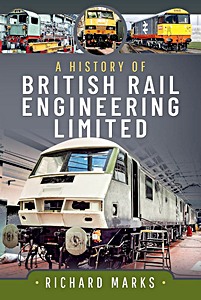
Cover des Buches: A History of British Rail Engineering Limited

A History of British Rail Engineering Limited

Richard Marks | Englisch | gebunden | 254 S. | 2024

Cover des Buches: Hunslet Locomotives Preserved

Hunslet Locomotives Preserved

Oliver Edwards | Englisch | kartoniert | 64 S. | 2021

Cover des Buches: British Diesel and Electric Locomotives Abroad - A Second Life Overseas

British Diesel and Electric Locomotives Abroad - A Second Life Overseas

Anthony P Sayer | Englisch | gebunden | 288 S. | 2020

Cover des Buches: English Electric Diesel Locomotives

English Electric Diesel Locomotives

George Woods | Englisch | kartoniert | 96 S. | 2020

Cover des Buches: Robinson Eight-coupled Locomotives

Robinson Eight-coupled Locomotives

Jeremy Clements | Englisch | gebunden | 252 S. | 2020

Cover des Buches: Beyer, Peacock & Company

Beyer, Peacock & Company

Colin Alexander, Alon Siton | Englisch | kartoniert | 96 S. | 2019

Cover des Buches: Locomotive Builders of Leeds : E.B. Wilson and Manning Wardle

Locomotive Builders of Leeds : E.B. Wilson and Manning Wardle

Mark Smithers | Englisch | gebunden | 200 S. | 2018

Cover des Buches: The North British Locomotive Company

The North British Locomotive Company

Colin Alexander, Alon Siton | Englisch | kartoniert | 96 S. | 2018

Cover des Buches: The Stephenson Railway Legacy

The Stephenson Railway Legacy

Colin Alexander, Alon Siton | Englisch | kartoniert | 96 S. | 2018

Cover des Buches: The Vulcan Foundry - 150 Years of Engineering

The Vulcan Foundry - 150 Years of Engineering

Colin Alexander | Englisch | kartoniert | 96 S. | 2017