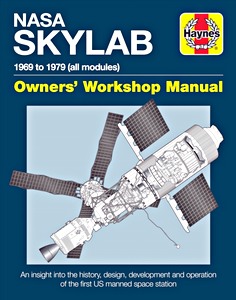
NASA Skylab Manual (1969-1979) - An insight into the history, design, development and operation (Haynes Space Manual)
Skylab werd in 1969 officieel benoemd als het eerste Amerikaanse ruimtestation en werd ontwikkeld op basis van bestaande Apollo-hardware.
Skylab draaide van 1973 tot 1979 in een baan rond de aarde en bood ruimte aan drie langere periodes in een baan om de aarde voor astronautenteams tussen medio 1973 en begin 1974. Skylab keerde in 1979 terug in de aardatmosfeer en viel uiteen. Het vormde een precedent voor het Internationale Ruimtestation, waarvan de assemblage bijna 25 jaar na het vertrek van de laatste Skylab-bemanning begon.
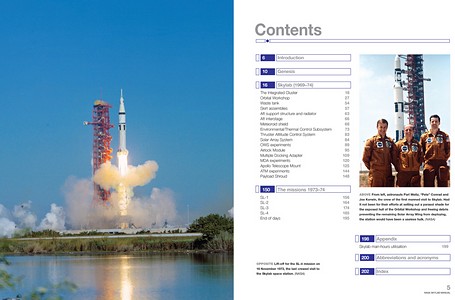
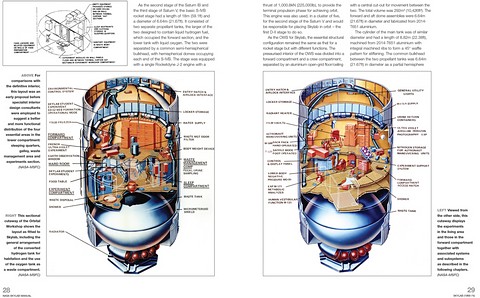
Bladzijden uit het boek "NASA Skylab Manual (1969-1979) - An insight into the history, design, development and operation"
Dit boek richt zich op de techniek en het ontwerp van Skylab, dat is ontworpen om drie categorieën wetenschappelijk onderzoek uit te voeren: aardobservatie, observatie van de zon en de effecten van gewichtloosheid op de mens.
Het beschrijft ook het aangepaste Apollo-ruimtevaartuig dat werd gebruikt om astronauten naar het ruimtestation te vervoeren, en de nieuwe lanceermethode voor de Saturn IB-raketten die werden gebruikt om astronauten naar Skylab te sturen.
Auteur: Dr. David Baker werkte tussen 1965 en 1990 voor NASA aan de Gemini-, Apollo- en Shuttle-programma's. Hij heeft meer dan 80 boeken over ruimtevaarttechnologie geschreven.
Specificaties
| Auteur: | David Baker |
|---|---|
| Uitvoering: | 208 blz, 27.5 x 21.5 x 1.5 cm, harde kaft |
| Illustraties: | rijk geïllustreerd met kleurenfoto's en tekeningen |
| Taal: | Engels (een technisch woordenboek Engels-Nederlands kunt U hier gratis downloaden) |
| Uitgever: | Haynes Publishing (GB, 2018) |
| Serie: | Haynes Space Manual |
| ISBN: | 9781785210655 |
NASA Skylab Manual (1969-1979) - An insight into the history, design, development and operation
Taal: Engels