Acquistando tramite i link, sostieni nostro sito senza alcun costo aggiuntivo per te. Per saperne di più >

Mezzi da sbarco - USA: libri di storia illustrati

Un libro sulle navi da sbarco della Marina degli Stati Uniti? Scopri qui i libri illustrati sulla storia e i tipi di navi da sbarco statunitensi.

American Amphibious Gunboats in World War II - A History of LCI Ships in the Pacific

As the United States began its campaign against numerous Japanese-held islands in the Pacific, Japanese tactics required them to develop new weapons and strategies.
One of the most crucial to the island assaults was a new group of amphibious gunboats that could deliver heavy fire close in to shore as American forces landed. These gunboats were also to prove important in the interdiction of inter-island barge traffic and, late in the war, the kamikaze threat.

Several variations of these gunboats were developed, based on the troop carrying LCI(L). They included three conversions of the LCI(L), with various combinations of guns, rockets and mortars, and a fourth gunboat, the LCS(L), based on the same hull but designed as a weapons platform from the beginning. By the end of the war the amphibious gunboats had proven their worth.

Dettagli del libro

Autore:Robin L. Rielly
Formato:408 pagine, 25.5 x 18 x 2.8 cm, brossura
Illustrazioni:183 foto e disegni, 55 mappe
Lingua:inglese
Editore:McFarland & Co Inc (USA, 2013)
ISBN:9780786474226
Copertina del libro: American Amphibious Gunboats in World War II - A History of LCI Ships in the Pacific | McFarland

American Amphibious Gunboats in World War II - A History of LCI Ships in the Pacific

Lingua: inglese
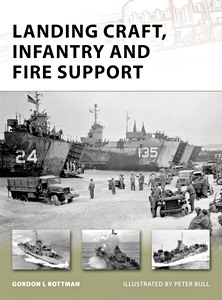
Landing Craft, Infantry and Fire Support (Osprey)

The Landing Craft, Infantry was a large beaching craft intended to deliver an infantry company to a hostile shore, once the beachhead was secured. The LCI and its vehicle-delivery counterpart, the Landing Ship, Medium were widely used by the allies during World War II. Later, the hulls of these ships were used as the basis for a fire support ship. While the landing ships were phased out after the Korean War, some fire support craft remained in use throughout the Vietnam War.

This book tells the developmental and operational history of this important tool of American amphibious military strategy that spanned three wars.

Contents: Introduction - Design and Development - Operational History - Further Reading.

Dettagli del libro

Autore:Gordon L. Rottman
Formato:48 pagine, 24.5 x 16.5 x 0.4 cm, brossura
Illustrazioni:riccamente illustrato con foto e disegni (in B&N e in colori)
Lingua:inglese
Editore:Osprey Publishing (GB, 2009)
Collana:New Vanguard (157)
ISBN:9781846034350
Copertina del libro: Landing Craft, Infantry and Fire Support | New Vanguard (157) | Osprey

Landing Craft, Infantry and Fire Support

Lingua: inglese

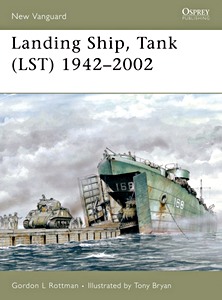
Landing Ship, Tank (LST) 1942-2002 (Osprey)

The Landing Ship Tank (LST) is one of the most famous of the many World War II amphibious warfare ships. Capable of discharging its cargo directly on to shore and extracting itself, the LST provided the backbone of all Allied landings between 1943 and 1945, notably during the D-Day invasion. Through its history, the LST saw service from late 1942 until late 2002, when the US Navy decommissioned the USS Frederick (LST-1184), the last ship of its type.

This book reveals the development and use of the LST, including its excellence beyond its initial design expectations.

Contents: Introduction - Design and development of the LST - Variants and users - Weapons and tactics - Operational history - Bibliography - Color plate commentary - Index.

Dettagli del libro

Autore:Gordon L. Rottman
Formato:56 pagine, 24.5 x 18.5 x 0.5 cm, brossura
Illustrazioni:riccamente illustrato con foto e disegni (in B&N e in colori)
Lingua:inglese
Editore:Osprey Publishing (GB, 2005)
Collana:New Vanguard (115)
ISBN:9781841769233
Copertina del libro: Landing Ship, Tank (LST) 1942-2002 | New Vanguard (115) | Osprey

Landing Ship, Tank (LST) 1942-2002

Lingua: inglese

The Boat That Won the War : An Illustrated History of the Higgins LCVP

The Landing Craft Vehicle Personnel LCVP for short, or simply the Higgins boat to most of its users was one of the keystones of victory in the Second World War. Like the army s Jeep or the Air Force s C-47 transport, it served in almost every theatre of war, performing unglamorous but vital service in the Allied cause.

Derived from a humble workboat, the Higgins boatbuilding company designed a brilliantly simple craft that performed its role so well that over 23,000 of them were constructed indeed, a high proportion of all the troops landed on enemy beaches came ashore from LCVPs, an achievement that led General Eisenhower to describe it as the boat that won the war. As Eisenhower had more experience of major amphibious operations than any other commander, it is a judgment to be taken seriously.

This book combines the first in-depth history of the development and employment of the type, with a detailed description of its construction, machinery, performance and handling, based on the author's first-hand experience masterminding the restoration of a wartime example for his museum. Well illustrated with plans and photographs, it will be of interest to modelmakers and enthusiasts, both military and naval.

Dettagli del libro

Autore:Charles C. Roberts
Formato:136 pagine, 24.5 x 17 cm, copertina rigida
Illustrazioni:120 foto in B&N e in colori
Lingua:inglese
Editore:Seaforth Publishing (GB, 2017)
ISBN:9781526706911
Copertina del libro: The Boat That Won the War : An Illustrated History of the Higgins LCVP | Seaforth

The Boat That Won the War : An Illustrated History of the Higgins LCVP

Lingua: inglese

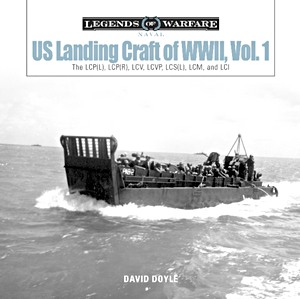
US Landing Craft of World War II (Vol. 1): The LCP(L), LCP(R), LCV, LCVP, LCS(L), LCM and LCI (Legends of Warfare)

No less than Dwight Eisenhower described Andrew Jackson Higgins as "the man who won the war for us," referring to the landing craft he perfected. Those craft, the WWII LCP(L), LCP(R), LCV, LCVP, LCM, and LCS(L), are presented in this volume (the first of two on US landing craft), along with the larger LCI (Landing Craft, Infantry). These vessels, built in the tens of thousands, formed the armada that put Allied troops ashore in North Africa, the Aleutians, and Normandy and across the Pacific.

Though many of these designs were initially planned as essentially disposable vessels, ultimately many of these continued to serve the nation's need through Vietnam. Some were even heavily laden with rocket launchers and used for close-in support for troops going ashore. Part of the Legends of Warfare series.

Dettagli del libro

Autore:David Doyle
Formato:112 pagine, 23.5 x 23.5 x 1.5 cm, copertina rigida
Illustrazioni:176 foto in B&N e in colori
Lingua:inglese
Editore:Schiffer Publishing Ltd (USA, 2019)
Collana:Legends of Warfare
ISBN:9780764358616
Copertina del libro: US Landing Craft of World War II (Vol. 1): The LCP(L), LCP(R), LCV, LCVP, LCS(L), LCM and LCI | Legends of Warfare | Schiffer

US Landing Craft of World War II (Vol. 1): The LCP(L), LCP(R), LCV, LCVP, LCS(L), LCM and LCI

Lingua: inglese

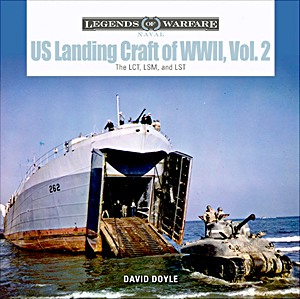
US Landing Craft of World War II (Vol. 2): The LCT, LSM, LCS(L)(3), AND LST (Legends of Warfare)

The need for massive numbers of landing craft capable of disgorging huge numbers of troops and equipment was predicted by the US Army in 1940. Later, the British army estimated that over 2,000 of such vessels would be required for the assault on Europe.

The US launched a building campaign to produce these seagoing craft, turning primarily to shipyards and manufacturers located along the American rivers. Ultimately many of these continued to serve the nation's need through Vietnam. Some were even heavily laden with rocket launchers and used for close-in support for troops going ashore.

This second of two volumes on American landing craft of World War II focuses on the larger LCT, LSM, LCS(L)(3), and LST vessels that transported tanks and heavy equipment to the shores of North Africa and Normandy and throughout the Pacific.

Dettagli del libro

Autore:David Doyle
Formato:128 pagine, 23 x 23 x 1.9 cm, copertina rigida
Illustrazioni:188 foto in B&N e in colori
Lingua:inglese
Editore:Schiffer Publishing Ltd (USA, 2020)
Collana:Legends of Warfare
ISBN:9780764360121
Copertina del libro: US Landing Craft of World War II (Vol. 2): The LCT, LSM, LCS(L)(3), AND LST | Legends of Warfare | Schiffer

US Landing Craft of World War II (Vol. 2): The LCT, LSM, LCS(L)(3), AND LST

Lingua: inglese

Landungsschiffe der U.S. Navy - seit 1939

Landing ships now have a permanent place in the American fleet. They are a class of their own between combat and auxiliary ships. It is all too easy to forget that they only gained such great importance during the Second World War.

This richly illustrated type book by Wilhelm M. Donko offers an overview of this diverse and varied ship category, without which a global security concept would not be possible.
Over 2000 landing ships of the American Navy are listed in detail by type and class. The focus is on the approximately 600 "amphibious mother ships" of the U.S. Navy.

Dettagli del libro

Autore:Wilhelm Maximilian Donko
Formato:224 pagine, 26.5 x 23 cm, copertina rigida
Illustrazioni:300 foto in B&N e in colori
Lingua:tedesco
Editore:Motorbuch Verlag (D, 2020)
ISBN:9783613043343
Copertina del libro: Landungsschiffe der U.S. Navy - seit 1939 | Motorbuch

Landungsschiffe der U.S. Navy - seit 1939

Lingua: tedesco

Titoli correlati:

Copertina del libro: Minensucher der U.S. Navy - seit 1920

Minensucher der U.S. Navy - seit 1920

Wilhelm Maximilian Donko | tedesco | copertina rigida | 224 p. | 2021