Acquistando tramite i link, sostieni nostro sito senza alcun costo aggiuntivo per te. Per saperne di più >

Locomotive a vapore - LMS: libri illustrati di storia e guide

Scoprite i migliori libri illustrati sulla storia e la tecnologia delle locomotive a vapore della London, Midland and Scottish Railway (LMS, 1923-1948), incluse le locomotive Duchess.

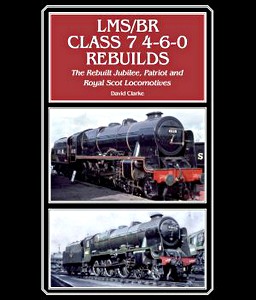
LMS / BR Class 7 4-6-0 Rebuilds - The Rebuilt Jubilee, Patriot and Royal Scot Locomotives

A comprehensive look at the LMS / BR Class 7 4-6-0 rebuilt locomotives, including the rebuilt Jubilees, the rebuilt Patriots and the rebuilt Royal Scots.
The book includes hundreds of photographs and feedback from the original crews that operated the engines.

Topics covered include:
- Origins of the rebuilt Class 7s in the 1940s and the design of the 2A boiler
- Differences between the classes
- Liveries, names and name plates
- Detailed allocation tables
- Rebuilt Class 7s to the rescue - the severe winter of 1962/3
- Decline of the Class 7s and withdrawal in the 1960s
- Preservation of the Class 7 rebuilds.

Dettagli del libro

Autore:David Clarke
Formato:208 pagine, 26.5 x 22 x 1.8 cm, copertina rigida
Illustrazioni:240 foto in colori
Lingua:inglese
Editore:The Crowood Press Ltd (GB, 2014)
ISBN:9781847976512
Copertina del libro: LMS / BR Class 7 4-6-0 Rebuilds - The Rebuilt Jubilee, Patriot and Royal Scot Locomotives | Crowood

LMS / BR Class 7 4-6-0 Rebuilds - The Rebuilt Jubilee, Patriot and Royal Scot Locomotives

Lingua: inglese

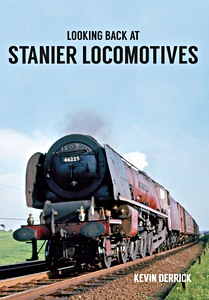
Looking Back at Stanier Locomotives

A photographic album depicting the designs of Sir William Arthur Stanier, chief mechanical engineer of the London, Midland and Scottish Railway from the 1930s.
With an extensive selection of colour photographs taken during the 1950s and 1960s, this volume covers locomotive types including Black Fives, Jubilees, Duchesses, all of Stanier's varieties of tank engines, Princess Royals, Rebuilt Royal Scots, 8Fs, and his Moguls, too.

Paying tribute to Stanier's wonderful designs, the book allows the reader to explore all of the workings, liveries, tenders, chimneys and other details that might have been missed by the casual observer.

Dettagli del libro

Autore:Kevin Derrick
Formato:96 pagine, 23.5 x 16.5 cm, brossura
Illustrazioni:120 foto in B&N e in colori
Lingua:inglese
Editore:Amberley Publishing (GB, 2016)
ISBN:9781445660530
Copertina del libro: Looking Back at Stanier Locomotives | Amberley

Looking Back at Stanier Locomotives

Lingua: inglese

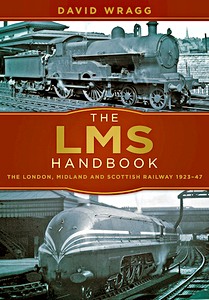
The LMS Handbook : The London, Midland and Scottish Railway 1923-47

The London Midland & Scottish Railway was the largest of the Big Four railway companies to emerge from the 1923 grouping. It was the only one to operate in England, Scotland, Wales and Northern Ireland, as well as having two short stretches of line in the Irish Republic. It was also the world's largest railway shipping operator and owned the greatest number of railway hotels.
Mainly a freight railway, it still boasted the best carriages, and the work of chief engineer Sir William Stanier influenced the first locomotive and carriage designs for the nationalised British railways.

Packed with facts and figures as well as historical narrative, this extensively illustrated book is a superb reference source that will be of interest to all railway enthusiasts.

Dettagli del libro

Autore:David Wragg
Formato:256 pagine, 25 x 17 cm, brossura
Illustrazioni:150 foto in B&N
Lingua:inglese
Editore:The History Press Ltd (GB, 2016)
ISBN:9780750967518
Copertina del libro: The LMS Handbook : The London, Midland and Scottish Railway 1923-47 | The History Press

The LMS Handbook : The London, Midland and Scottish Railway 1923-47

Lingua: inglese

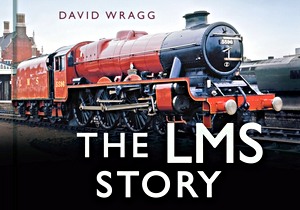
The LMS Story

The London, Midland & Scottish Railway (LMS) claimed to be the largest private enterprise concern in the British Empire. It was Britain's largest steam railway and the only one to operate in England, Scotland, Wales and Northern Ireland, as well as having two short stretches of line in the Irish Republic. It was the world's largest owner of railway hotels and the world's largest railway shipping operator.

Mainly a steam railway, it had a significant electric service out of Euston in London, and on Merseyside and Manchester. One of the leaders in diesel shunting locomotives, the company was a pioneer of using mechanical handling equipment, including large coaling towers.
The LMS was mainly a freight railway, but it was still able to boast the best railway carriages, even on suburban services, where there was more legroom than was offered by other companies.
Full of little-known facts, illustrated throughout and including a useful timeline, "The LMS Story" is the latest addition to this successful series.

Dettagli del libro

Autore:David Wragg
Formato:128 pagine, 13 x 18.5 x 1.2 cm, copertina rigida
Illustrazioni:riccamente illustrato con foto in B&N e in colori
Lingua:inglese
Editore:The History Press Ltd (GB, 2013)
ISBN:9780752488059
Copertina del libro: The LMS Story | The History Press

The LMS Story

Lingua: inglese

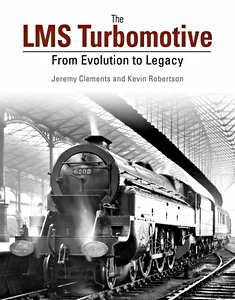
The LMS Turbomotive : From Evolution to Legacy

The last generation of steam-powered locomotives are often viewed as antiquated throw-backs to the Victorian era, which stayed in service well beyond their useful lives. In-fact, even in the twilight of the steam age, Britain was at the forefront of developing a new generation of steam power which could have changed the face of the railways.

William Stanier is known for revolutionising steam locomotive practice on the LMS, creating a modern locomotive fleet. He also explored the possibilities for next generation motive power to produce unquestionably Britain's most successful experimental locomotive of the 20th Century - the 'Turbomotive'.
It was the Ljungström brothers in Sweden who developed the non-condensing steam turbine locomotive for heavy freight work and in 1935 Stanier applied this design in a turbine variant of his famous 'Princess Royals'.

The Turbomotive's performance was such that it even had significant impact in the United States where the Baldwin Company used its core principles in a mighty turbine 6-8-6 for the Pennsylvania Railroad. This machine was arguably the most successful to use steam turbine power to explore the very limits of what was possible with a single large locomotive.

Back in England, the Turbomotive continued in service into British Railways' days, until in 1952 it was converted into a conventional machine, making it the country's most powerful express passenger locomotive of the day.
The irony is that its potential in that form was never to be realised as soon after re-entering service, the Turbomotive was destroyed in the Harrow & Wealdstone disaster.

The remarkable story of the Turbomotive is told here for the first time in book form, illustrated throughout with rare photographs and drawings. It is a fitting tribute to a unique, but ultimately ill-fated, locomotive from the pinnacle of the steam age.

Dettagli del libro

Autore:Jeremy Clements, Kevin Robertson
Formato:160 pagine, 27.5 x 21.5 cm, copertina rigida
Illustrazioni:175 foto in B&N
Lingua:inglese
Editore:Crecy Publishing (GB, 2016)
ISBN:9781909328525
Copertina del libro: The LMS Turbomotive : From Evolution to Legacy | Crecy

The LMS Turbomotive : From Evolution to Legacy

Lingua: inglese

The Turbomotive: Stanier's Advanced Pacific (Locomotive Portfolio)

Turbomotive was unique in Britain's railway history, and an experimental engine that proved successful but came too late to effect the direction of steam development or deflect the onset of diesel and electric locomotives.
It was the brainchild of two of the most influential engineers of the twentieth century - William Stanier of the LMS and Henry Guy of Metropolitan Vickers. They hoped that turbine power, which had already revolutionised ships propulsion and power stations, would do the same for the railways.

When Turbomotive appeared in 1935, she became a PR phenomenon at a time when commercial rivalry between the LMS and the LNER was reaching its height. Its launch at Euston in June was accompanied by a great fanfare and much publicity. Such was the interest in this 'revolutionary' idea that the engine would attract attention all her life.

Although producing good but not remarkable performances, she remained in service, plying her trade between London and Liverpool for longer than anyone predicted. Most expected a quick rebuild to conventional form, but the coming of war and lack of resources meant that she carried on until 1950 in turbine form.
Inevitably, change came when maintenance costs seemed likely to escalate and re-building seemed unavoidable. She re-appeared in August 1952, part Princess and part Coronation, but her new life was cut short by the disaster at Harrow in October.
Although many thought her repairable, she was scrapped to make way for another 'experimental' steam engine.

This book presents the compulsive and fascinating story of this remarkable locomotive, drawn from a wide variety of sources, many previously untapped and unpublished, including memories of the designers, the crew who drove her, accountants and hard-headed business men, PR teams, the press, the passengers and many more.

Dettagli del libro

Autore:Tim Hillier-Graves
Formato:206 pagine, 24 x 25 cm, copertina rigida
Illustrazioni:140 foto in B&N e in colori, 20 disegni
Lingua:inglese
Editore:Pen & Sword Books Ltd (GB, 2017)
Collana:Locomotive Portfolio (Steam)
ISBN:9781473885745
Copertina del libro: The Turbomotive: Stanier's Advanced Pacific | Locomotive Portfolio (Steam) | Pen & Sword

The Turbomotive: Stanier's Advanced Pacific

Lingua: inglese

Titoli correlati:

Copertina del libro: Locomotives of the North Eastern Railway (Reprint)

Locomotives of the North Eastern Railway (Reprint)

John S. Maclean | inglese | brossura | 128 p. | 2014

Copertina del libro: The LNER Handbook : The London and North Eastern Railway 1923-47

The LNER Handbook : The London and North Eastern Railway 1923-47

David Wragg | inglese | brossura | 256 p. | 2017