Acquistando tramite i link, sostieni nostro sito senza alcun costo aggiuntivo per te. Per saperne di più >

Locomotive elettriche - Gran Bretagna: libri illustrati di storia e guide

Qui trovi i migliori libri sulla storia, i modelli e l'evoluzione delle locomotive elettriche di British Rail e delle altre compagnie ferroviarie britanniche.

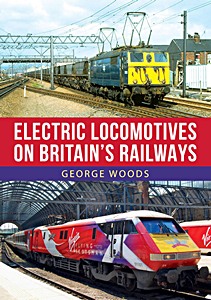
Electric Locomotives on British Railways

Prior to the completion of the West Coast Route electrification in 1966, electric locomotives were uncommon on Britain's railways, except for the Manchester to Sheffield service, which had been electrified since 1954. Although suburban systems around major cities and the south of England featured numerous EMUs, steam remained predominant.

The transformation began with British Rail's 1955 Modernisation Plan, targeting the replacement of steam locomotives with diesel and electric traction by approximately 1975. The plan aimed to electrify main lines and the busiest suburban services using a 25,000-volt overhead wire system, distinct from the third rail system on existing electrified routes.

In this book, George Woods presents predominantly unpublished color photographs showcasing various electric locomotive types deployed on the BR network since 1966 and the diverse trains they pulled.
The images capture the evolution following the electrification initiatives and the shift from steam to electric and diesel traction in line with BR's Modernisation Plan.

Dettagli del libro

Autore:George Woods
Formato:96 pagine, 25.5 x 18 x 2.1 cm, brossura
Illustrazioni:180 foto in colori
Lingua:inglese
Editore:Amberley Publishing (GB, 2023)
ISBN:9781398102019
Copertina del libro: Electric Locomotives on British Railways | Amberley

Electric Locomotives on British Railways

Lingua: inglese

Class 87 Locomotives

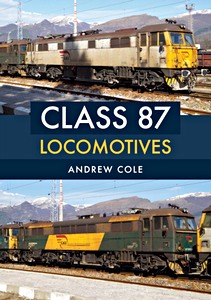
Quando la British Rail decise di elettrificare la West Coast Main Line a nord di Crewe, in direzione della Scozia, si rese necessaria una nuova classe di locomotive elettriche per servire questi servizi. Trentasei esemplari della Classe 87 furono costruiti presso le officine di Crewe a partire dal 1973 e riscossero un successo immediato.
Le prime 35 locomotive erano standard. Tuttavia, l'ultima fu dotata di un sistema di controllo sperimentale a tiristori e fu riclassificata come Classe 87/1.

Tutte le 36 locomotive di questa classe ricevettero un nome e furono una presenza abituale sulla costa occidentale per decenni. Inizialmente venivano utilizzate per il trasporto passeggeri, ma si potevano trovare anche impiegate per il trasporto merci, essendo equipaggiate fin dall'inizio con diverse attrezzature di servizio.
L'intera classe rimase in servizio sulla costa occidentale per tutto il periodo delle British Railways e fino alla privatizzazione, con tutti i membri, ad eccezione del n. 87101, che passarono a Virgin Trains.

L'unica locomotiva della Classe 87/1 passò al settore Railfreight delle Ferrovie Britanniche (BR) e finì per essere di proprietà della EWS. Venne demolita nel 2002. Al termine del loro servizio sulla costa occidentale, 21 esemplari della classe trovarono ulteriore impiego in Bulgaria e tre furono conservati, mentre i rimanenti vennero demoliti.
In questo libro Andrew Cole documenta le locomotive della Classe 87.

Dettagli del libro

Autore:Andrew Cole
Formato:96 pagine, 23.5 x 16.5 x 1.4 cm, brossura
Illustrazioni:180 foto in B&N e in colori
Lingua:inglese
Editore:Amberley Publishing (GB, 2018)
ISBN:9781445666921
Copertina del libro: Class 87 Locomotives | Amberley

Class 87 Locomotives

Lingua: inglese

Class 90 Locomotives

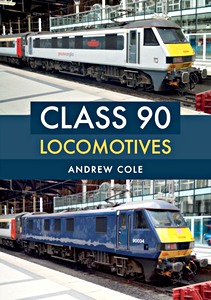
Nel 1987 la British Rail decise di aver bisogno di una nuova classe di locomotive elettriche a corrente alternata da utilizzare sulla West Coast Main Line. L'idea era che questa classe avrebbe contribuito a sostituire le locomotive della Classe 85 e sarebbe stata utilizzata sia per il trasporto merci che per quello passeggeri.
Presso gli stabilimenti di Crewe furono costruiti cinquanta esemplari di questa classe, insieme alle locomotive della Classe 91 destinate alla East Coast Main Line.

Le locomotive della Classe 90 furono progettate per poter operare con un DVT Mk 3, eliminando così la necessità di effettuare manovre di inversione di marcia nelle stazioni terminali. Le prime venticinque unità furono consegnate con la livrea InterCity Swallow, le successive undici con la livrea InterCity Mainline, che consentiva il loro utilizzo sia per il trasporto passeggeri che merci, mentre le ultime quattordici unità, consegnate con la livrea Railfreight Speedlink, erano prevalentemente locomotive merci.

La maggior parte di questi treni è ancora in servizio oggi: quindici sono tuttora impiegati per il trasporto passeggeri da Norwich, mentre i restanti sono in uso presso DB Cargo o Freightliner.

Questo libro racconta la storia dei treni della Classe 90.

Dettagli del libro

Autore:Andrew Cole
Formato:96 pagine, 23.5 x 16.5 x 1.2 cm, brossura
Illustrazioni:180 foto in B&N e in colori
Lingua:inglese
Editore:Amberley Publishing (GB, 2018)
ISBN:9781445666969
Copertina del libro: Class 90 Locomotives | Amberley

Class 90 Locomotives

Lingua: inglese

Class 91 Locomotives

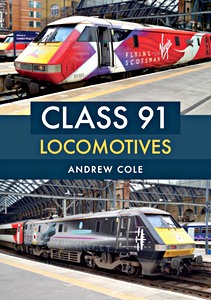
A partire dal 1989, la British Rail ha introdotto trentuno locomotive della Classe 91. Costruite presso gli stabilimenti di Crewe, erano destinate al servizio passeggeri sulla East Coast Main Line, con partenza da Londra King's Cross. Il loro design prevedeva una cabina aerodinamica a un'estremità e una cabina più tozza all'altra, poiché si prevedeva che sarebbero state impiegate per il trasporto notturno di merci e pacchi, riducendo quindi la necessità di velocità elevate.

Con una velocità massima di 140 mph/225 km/h, queste locomotive divennero note come InterCity 225 e la numero 91110 detiene attualmente il record di velocità per una locomotiva britannica. La fine di questa classe di locomotive sulla costa orientale è ormai vicina, con l'introduzione delle unità Virgin Trains Classe 800 Azuma, ma si spera che si possa trovare un utilizzo per queste locomotive elettriche dall'aspetto e dal suono inconfondibili.

Le locomotive della Classe 91 hanno prestato servizio sulla costa orientale per quasi trent'anni e questo libro ne ripercorre la carriera fin dagli inizi. Ci sono stati un paio di incidenti e inconvenienti di alto profilo che hanno coinvolto questa classe di locomotive, ma sono tutte ancora in servizio oggi. Hanno avuto molti operatori diversi e questo libro si propone di illustrare le varie livree, comprese quelle speciali e uniche, utilizzate da queste locomotive.

Dettagli del libro

Autore:Andrew Cole
Formato:96 pagine, 23.5 x 16.5 x 0.7 cm, brossura
Illustrazioni:180 foto in B&N e in colori
Lingua:inglese
Editore:Amberley Publishing (GB, 2018)
ISBN:9781445681375
Copertina del libro: Class 91 Locomotives | Amberley

Class 91 Locomotives

Lingua: inglese

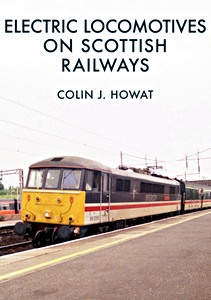
Electric Locomotives on Scottish Railways

Covers virtually the whole of the electrified network across Scotland. The first electrification took place on the north side of Glasgow from 1960 when the Airdrie to Helensburgh line and branches in between were done. This was followed closely by the south side of Glasgow when electrification spread to the Cathcart Circle, Neilston and Newton areas.

In 1967, the lines between Glasgow Central and Gourock along with the Wemyss Bay branch were added to the system. Progress throughout Central Scotland has been steady since, with approximately 40 per cent of the whole network now electrified.

One of the most popular electric locos on the network was the Class 86. These locos could be found working anything from small shunt moves in yards to express services until the mid-2000s when Virgin introduced Class 390 EMUs.
This book covers electric locos from humble Class 81s up to and including Class 92s, with images from 1974 until the present day.

Dettagli del libro

Autore:Colin J. Howat
Formato:96 pagine, 23.5 x 16.5 x 1.1 cm, brossura
Illustrazioni:180 foto in B&N e in colori
Lingua:inglese
Editore:Amberley Publishing (GB, 2018)
ISBN:9781445676340
Copertina del libro: Electric Locomotives on Scottish Railways | Amberley

Electric Locomotives on Scottish Railways

Lingua: inglese

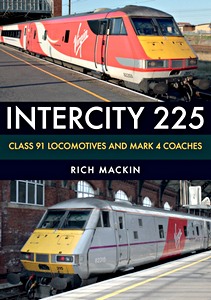
InterCity 225 - Class 91 Locomotives and Mark 4 Coaches

Ordered in 1985, the Class 91 was a joint venture between GEC, Brush and ASEA to deliver a fleet of 140 mph tilting electric locomotives for the East Coast Main Line.
Delivered between 1988 and 1991, the thirty-one locomotives ply their trade daily from London to the North East and Scotland. Accompanied by Metro-Cammell's Mark 4 coaches, they formed British Rail's flagship 'Intercity 225' programme.

While the 225s never tilted nor reached their full speed, for nearly thirty years they have conveyed thousands of passengers each day along the ECML. Today, the Class 91s and Mark 4s are approaching the end of their working lives.
Once Hitachi's Class 800 Intercity Express trains are delivered, a small handful of Class 91s will work with shortened Mark 4 sets on non-stop services.
The majority of the fleet faces an uncertain future, with no clear plans for redeployment elsewhere.

This book looks at these East Coast workhorses, which have followed in the footsteps of Gresley's famous Pacific locomotives, the Deltics and HSTs.

Dettagli del libro

Autore:Rich Mackin
Formato:96 pagine, 23.5 x 16.5 x 1.8 cm, brossura
Illustrazioni:180 foto in B&N e in colori
Lingua:inglese
Editore:Amberley Publishing (GB, 2018)
ISBN:9781445676388
Copertina del libro: InterCity 225 - Class 91 Locomotives and Mark 4 Coaches | Amberley

InterCity 225 - Class 91 Locomotives and Mark 4 Coaches

Lingua: inglese

British Railways AC Electric Locomotives - A Pictorial Guide (Modern Traction Profiles )

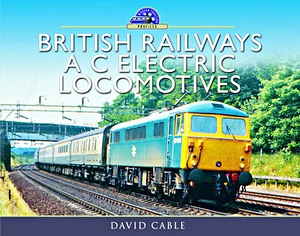
The genesis of 25kv overhead electrification began in the late 1960s on the West Coast Main Line, the 1980s for the East Anglian Main Line, and the East Coast Main Line in the late 1980s.
Development took place in stages culminating in fully electrified lines from London to Scotland on both East and West Coast lines, and from London to Norwich. The introduction of these lines required the construction of new motive power.

Initially five types were produced for the WCML, from which the second phase of loco design was developed, giving a higher level of reliability, as well as power output.
These newer designs were applied to the Anglian services, but the ECML plans required an updated design, ostensibly for mixed traffic, but hardly ever used on anything other than express passenger services, for which their 140mph potential enabled a major recast of the timetable.
The opening of the Channel Tunnel required a mixed traffic dual voltage locomotive, running on both 25kv and the Southern Region 750v third rail DC.

The locomotives are classified between 81 and 92 inclusive, and this book of photographs by David Cable covers all the classes in a variety of locations and duties.

Dettagli del libro

Autore:David Cable
Formato:160 pagine, 24 x 25 cm, copertina rigida
Illustrazioni:165 foto in colori
Lingua:inglese
Editore:Pen & Sword Books Ltd (GB, 2017)
ISBN:9781473896376
Copertina del libro: British Railways AC Electric Locomotives - A Pictorial Guide | Pen & Sword

British Railways AC Electric Locomotives - A Pictorial Guide

Lingua: inglese

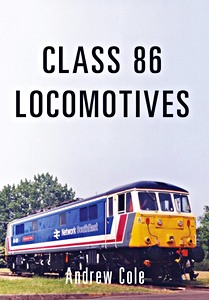
Class 86 Locomotives

The Class 86 of AC electric loco comprised a hundred members, built from 1965 onwards. The first forty locos were built by British Rail at their Doncaster Works, and the other sixty were built by English Electric at their Vulcan Works.

They were built for West Coast services, which had been electrified from London, and would eventually run all the way to Glasgow. They were delivered in Electric Blue livery, complete with cast lion and wheel.
They were originally known as the AL6 class, but under TOPS became the Class 86s. They were originally numbered in the Class 86/0 series and the Class 86/2 number series, with the 86/2s used on passenger workings due to them being fitted with improved suspension, allowing them to run at 100 mph.

Three of the Class 86/2s were used as test beds for the Class 87 development, being fitted with different bogies, becoming the Class 86/1 series. The class has also found passenger workings on the Great Eastern route from London to Norwich, finally being replaced by Class 90s.
They have also been very useful engines on freight workings, with quite a few still in use with Freightliner.

Dettagli del libro

Autore:Andrew Cole
Formato:96 pagine, 23.5 x 16.5 cm, brossura
Illustrazioni:180 foto in B&N e in colori
Lingua:inglese
Editore:Amberley Publishing (GB, 2016)
ISBN:9781445662084
Copertina del libro: Class 86 Locomotives | Amberley

Class 86 Locomotives

Lingua: inglese

Titoli correlati:

Copertina del libro: British Industrial Steam Locomotives - A Pictorial Survey

British Industrial Steam Locomotives - A Pictorial Survey

David Mather | inglese | copertina rigida | 204 p. | 2021

Copertina del libro: Industrial Locomotives & Railways of the North West of England

Industrial Locomotives & Railways of the North West of England

Gordon Edgar | inglese | brossura | 128 p. | 2018

Copertina del libro: Working and Preserved Industrial Locomotives - From the Bill Reed Collection

Working and Preserved Industrial Locomotives - From the Bill Reed Collection

Peter Tuffrey | inglese | brossura | 128 p. | 2012