Acquistando tramite i link, sostieni nostro sito senza alcun costo aggiuntivo per te. Per saperne di più >

Navi da carico: libri illustrati - storia e compagnie di navigazione

Un libro sulle navi da carico? Qui trovi i migliori libri sulla storia delle navi costiere, delle navi da carico, delle navi frigorifere, delle navi portarinfuse e delle petroliere.

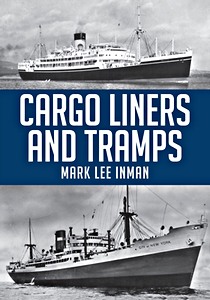
Cargo Liners and Tramps

Nel dopoguerra, persisteva la domanda di viaggi oceanici, non solo a bordo dei lussuosi transatlantici e delle navi postali, ma anche su navi molto più piccole. Molte di queste potevano essere altrettanto ben arredate e confortevoli e senza dubbio offrivano quell'intimità che poteva mancare sulle navi più grandi e veloci.
Se il tempo non era un fattore determinante, e il denaro forse sì, allora viaggiare su una nave mercantile era l'opzione ideale.

Le immagini qui presentate rappresentano testimonianze di un'epoca che il trasporto aereo e l'avvento delle navi portacontainer veloci hanno completamente cancellato. Molte delle fotografie qui esposte sono state acquisite tra il 1961 e il 1965 dalle principali compagnie di navigazione britanniche ed europee, alcune delle quali hanno risposto con particolare generosità. Anche alcune compagnie asiatiche e americane hanno contribuito.

Questo materiale offre uno spaccato sull'uso di cartoline e fotografie come elementi vitali del marketing, della promozione e delle pubbliche relazioni in un mondo destinato a scomparire. Mark Lee Inman raccoglie qui alcune delle immagini e cartoline più interessanti di quest'epoca.

Dettagli del libro

Autore:Mark Lee Inman
Formato:96 pagine, 23.5 x 21.5 x 1.5 cm, brossura
Illustrazioni:180 foto in B&N e in colori
Lingua:inglese
Editore:Amberley Publishing (GB, 2018)
ISBN:9781445673844
Copertina del libro: Cargo Liners and Tramps | Amberley

Cargo Liners and Tramps

Lingua: inglese

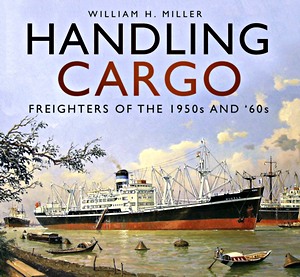
Handling Cargo : Freighters of the 1950s and '60s

Freighters of the 1950s and '60s - with masts, booms and hatches - were the last of their generation. It was the end of an era, just before the massive transition to faster, more efficient containerised shipping on larger and larger vessels.
These were `working ships', but many would be retired prematurely and finish up under flags of convenience, for virtually unknown owners, before going off to the scrappers in the 1970s and '80s.

For some ships, their life's work was cut short and their decommissioning was quick. In "Handling Cargo", William H. Miller remembers the likes of Cunard, Holland America and United States Lines on the North Atlantic, Moore McCormack Lines to South America, Farrell Lines to Africa and P&O out East.

Dettagli del libro

Autore:William H. Miller
Formato:120 pagine, 22.5 x 25 x 1.5 cm, brossura
Illustrazioni:96 foto in B&N e 80 in colori
Lingua:inglese
Editore:The History Press Ltd (GB, 2018)
ISBN:9780750984348
Copertina del libro: Handling Cargo : Freighters of the 1950s and '60s | The History Press

Handling Cargo : Freighters of the 1950s and '60s

Lingua: inglese

Looking Back at Container Ships

In questo nuovo volume della serie "Looking Back" di Andrew Wiltshire, intraprendiamo un viaggio cinquantennale alla scoperta delle navi portacontainer di tutto il mondo. Scopriremo le navi che hanno rapidamente trasformato il volto del trasporto marittimo e del commercio globale, nonché i consorzi formatisi per gestirle.
Uno sguardo cronologico alle navi portacontainer, dalle prime conversioni fino ai giganti entrati in servizio negli ultimi anni.

Dettagli del libro

Autore:Andrew Wiltshire
Formato:80 pagine, 19.5 x 24.5 x 1.4 cm, copertina rigida
Illustrazioni:più di 100 foto
Lingua:inglese
Editore:Bernard McCall (GB, 2017)
ISBN:9781902953878
Copertina del libro: Looking Back at Container Ships | Bernard McCall

Looking Back at Container Ships

Lingua: inglese

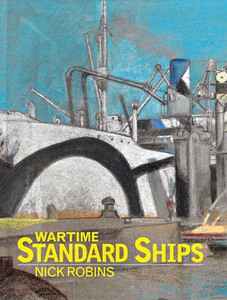
Wartime Standard Ships

In both World Wars there arose a pressing need for merchant tonnage both to supplement existing ships but, more importantly, to replace ships that had been sunk by enemy action, and the key to the Allied strategy in both wars was a massive programme of merchant shipbuilding.
This need gave rise to a series of standard designs with increasing emphasis on prefabrication and a progression towards welded hulls.

This book tells the remarkable story of the design and construction of the many types that not only contributed to their country s war efforts, but were also responsible for a cultural change in world shipbuilding that would lay the foundations for the post-war industry.
The story begins in the First World War with the National type cargo ships which were the first examples of prefabricated construction. The best known of all types of wartime standard ships, of course, were the Liberty ships and their successor, the better equipped Victory ships, both built in the United States. Some 2,700 Liberty ships were built and this incredible achievement undoubtedly saved the Allies from losing the War. In Canada, the Ocean and Park ships made a further major contribution.

Germany and Japan also introduced standard merchant shipbuilding programmes during the Second World War and these are covered in detail. The many different types and designs are all reviewed and their roles explained, while the design criteria, innovative building techniques and the human element of their successful operation is covered.

Dettagli del libro

Autore:Nick Robins
Formato:160 pagine, 24.5 x 19 cm, copertina rigida
Illustrazioni:160 foto e disegni
Lingua:inglese
Editore:Seaforth Publishing (GB, 2017)
ISBN:9781848323766
Copertina del libro: Wartime Standard Ships | Seaforth

Wartime Standard Ships

Lingua: inglese

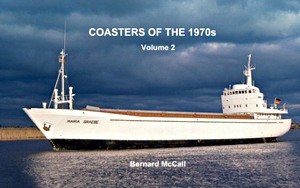
Coasters of the 1970s (Volume 2)

Questo album a colori con copertina rigida illustra nel dettaglio le navi costiere costruite negli anni '70, in 96 pagine e con 106 fotografie. Alcune navi sono rimaste nel loro aspetto originale, mentre altre sono documentate nel corso della loro vita, anche dopo essere state vendute e/o modernizzate.
Le fotografie a colori sono accompagnate da didascalie dettagliate che forniscono maggiori informazioni sulla nave e, in alcuni casi, sul cantiere navale.

Dettagli del libro

Autore:Bernard McCall
Formato:96 pagine, 19.5 x 24.5 cm, copertina rigida
Illustrazioni:106 foto in colori
Lingua:inglese
Editore:Bernard McCall (GB, 2016)
ISBN:9781902953793
Copertina del libro: Coasters of the 1970s (Volume 2) | Bernard McCall

Coasters of the 1970s (Volume 2)

Lingua: inglese

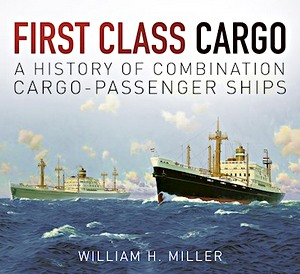
First Class Cargo : A History of Combination Cargo-Passenger Ships

An unusual blend of cargo freight, holiday-making passengers and government officials, the combination cargo-passenger ship is an oddity now all but relegated to the past.
In its heyday, however, royals such as Princess Alice, Countess of Athlone, were known to travel by 'banana boat' to the Caribbean. Ships such as Fyffes Line's Golfito would stop at Trinidad, Barbados and Kingston to load up with bananas, whilst passengers would make the most of the exotic setting.

Carrying between 50 and 100 passengers with anything up to 10,000 tons of cargo, these ships were both working freighters as well as elegant cruise-like ships, renowned for their intimate, yacht-like atmosphere.
William Miller is the author of ninety books on passenger ships and is an acknowledged world expert on the subject. Told with affection, this nostalgic insight into the world of passenger-cargo ships brings to life, in full colour, the magnificent ships and passengers from the golden age of interoceanic travel.

Dettagli del libro

Autore:William H. Miller
Formato:96 pagine, 22.5 x 25 cm, brossura
Illustrazioni:100 foto in B&N e 56 in colori
Lingua:inglese
Editore:The History Press Ltd (GB, 2016)
ISBN:9780750965088
Copertina del libro: First Class Cargo : A History of Combination Cargo-Passenger Ships | The History Press

First Class Cargo : A History of Combination Cargo-Passenger Ships

Lingua: inglese

Coasters of the 1970s (Volume 1)

Scritto da Bernard McCall, questo libro contiene 83 fotografie a colori di navi costiere costruite negli anni '70. Le fotografie risalgono agli anni '70 fino ai giorni nostri e mostrano alcune navi nella loro configurazione originale e altre dopo essere state vendute e/o modernizzate.
Le didascalie dettagliate che accompagnano le fotografie forniscono ulteriori informazioni sulla storia della nave.

Dettagli del libro

Autore:Bernard McCall
Formato:80 pagine, 19.5 x 24.5 cm, copertina rigida
Illustrazioni:83 foto in colori
Lingua:inglese
Editore: (, 2015)
ISBN:9781902953748
Copertina del libro: Coasters of the 1970s (Volume 1) |

Coasters of the 1970s (Volume 1)

Lingua: inglese

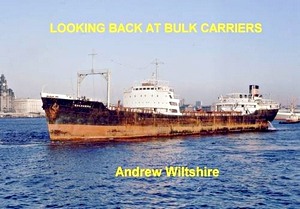
Looking Back at Bulk Carriers

Un importante sviluppo si verificò nel 1925, quando armatori svedesi presero in consegna una coppia di navi portarinfuse costruite appositamente. Gli anni '50 videro il continuo sviluppo delle navi portarinfuse, con la costruzione di navi più grandi, spesso destinate a rotte specifiche come il trasporto di minerale di ferro. Il decennio tra il 1962 e il 1972 vide una crescita esponenziale del commercio di rinfuse. Oggi le navi portarinfuse continuano a svolgere un ruolo vitale in tutto il mondo.

Scritto da Andrew Wiltshire, questo libro contiene 106 immagini a colori di navi portarinfuse, tra cui navi specializzate per il trasporto di minerali, cemento, carbone e con sistema di autoscarico, oltre ai numerosi tipi di navi portarinfuse convenzionali e navi per il trasporto di minerali e petrolio.

Dettagli del libro

Autore:Andrew Wiltshire
Formato:80 pagine, 20 x 24.5 x 1.2 cm, copertina rigida
Illustrazioni:106 foto in colori
Lingua:inglese
Editore:Bernard McCall (GB, 2012)
ISBN:9781902953588
Copertina del libro: Looking Back at Bulk Carriers | Bernard McCall

Looking Back at Bulk Carriers

Lingua: inglese

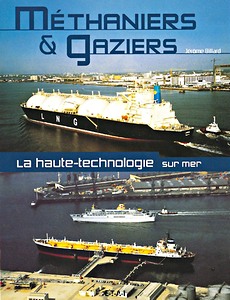
Méthaniers & gaziers - la haute technologie en mer

The history of gas transport by sea, although recent, is incredibly rich. It began after the war thanks to a few pioneers, who were at once outstanding technicians, adventurers, and slightly crazy businessmen.
These exceptional men and women founded empires. The ships followed one another from 1955 to 1980, each one a prototype and becoming the leader in its category. Each time it was put into service, the engineers experienced world firsts.
The transport of gas, as you might have guessed, is no small matter, but a series of bets, each one riskier than the last, but always successful. The crews of these gas carriers, forming a separate band, explored the world, delivering gas to be bottled everywhere. The sector reached its technological peak with the commissioning of large LNG carriers, a specialty of French shipyards, at the end of the 1910s. LNG carriers remain the most delicate and expensive vessels to build.

"Méthaniers & gaziers" tells a maritime saga like few others, where human genius, money, luck, the highest technology and passion are combined. All this with a single goal; to transport all gases, across all oceans, in complete safety. It is a secret, exhilarating, adventurous world, with solid friendships, that this book invites you to discover.

Dettagli del libro

Autore:Jérôme Billard
Formato:192 pagine, 31 x 23.5 cm, copertina rigida
Illustrazioni:100 foto in B&N e 200 in colori
Lingua:francese
Editore:ETAI (F, 2004)
ISBN:9782726893746
Copertina del libro: Méthaniers & gaziers - la haute technologie en mer | ETAI

Méthaniers & gaziers - la haute technologie en mer

Lingua: francese

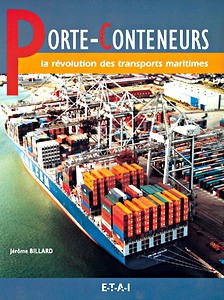
Porte-conteneurs - la révolution des transports maritimes

The docks of the ports, invaded by the various goods freshly unloaded from the cargo ships on stopover, are now only a memory. The warehouses are now desperately empty. The small sailors' bars, the cheerful pharmacies, the sailor's houses, the shipowners' offices, so close to the ships, no longer exist. The dockers no longer go down to the bottom of the holds.
The endless lines of cargo ships docked in the basins, dug in the city centers of the great maritime metropolises, give way to marinas. Today, goods are transported in large iron boxes, with standardized dimensions. The cargo ships, with non-standardized holds, are replaced by impressively large box-carrying ships.

The containerization of maritime transport, which began in the 1970s, is a real revolution, a prelude to what would later be called globalization. It quickly took with it an entire tradition, transformed trades, eliminated others, disrupted naval architecture and the plans of ports, which had to equip themselves at great expense to receive the new container ships. It caused the disappearance of many century-old armaments.

It is this moment in history when everything changed, and its repercussions up to today, that this book aims to tell. "Porte-conteneurs - la révolution des transports maritimes" deals with the most important change experienced by this sector since the arrival on the seas of steam cargo ships, and their generalization at the beginning of the 20th century.

Dettagli del libro

Autore:Jérôme Billard
Formato:192 pagine, 31 x 23.5 cm, copertina rigida
Illustrazioni:50 foto in B&N e 250 in colori
Lingua:francese
Editore:ETAI (F, 2003)
ISBN:9782726893401
Copertina del libro: Porte-conteneurs - la révolution des transports maritimes | ETAI

Porte-conteneurs - la révolution des transports maritimes

Lingua: francese

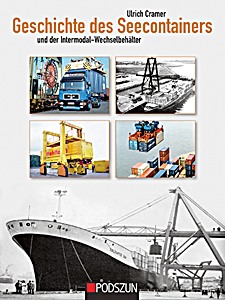
Geschichte des Seecontainers und der Intermodal-Wechselbehälter

L'autore, Ulrich Cramer, ingegnere aeronautico e automobilistico di formazione, è coinvolto in progetti di razionalizzazione dei trasporti sin dai primi anni '60. Inizialmente presso il produttore di veicoli e attrezzature MAFI, e dal 1971 in poi con la sua società di ingegneria, CONTEC. Numerose innovazioni possono essere ricondotte al suo lavoro di ingegneria.
In questo libro, l'autore descrive, basandosi sulla propria esperienza, come gli inizi del traffico container negli Stati Uniti, all'inizio degli anni '50, si siano evoluti in un sistema di trasporto trimodale globale, in grado di raggiungere anche gli angoli più remoti del mondo.

Cramer racconta la storia dal punto di vista di un ingegnere. Lui stesso aveva richiesto un brevetto per il "MAFI Rolltrailer" nel 1966. Nel 1967, insieme a MAFI, costruì i primi container in acciaio per ACL, il primo consorzio europeo di trasporto marittimo di container.
Quando il trasporto marittimo di container iniziò in Europa nel 1966 e il container marittimo era ancora considerato un "toter Elefant", costruì il "Portalift", il primo "Container-Portalfahrzeug" dall'Europa, con MAFI. Contribuì in modo significativo al rapido raggiungimento della posizione dominante da parte del container in acciaio.

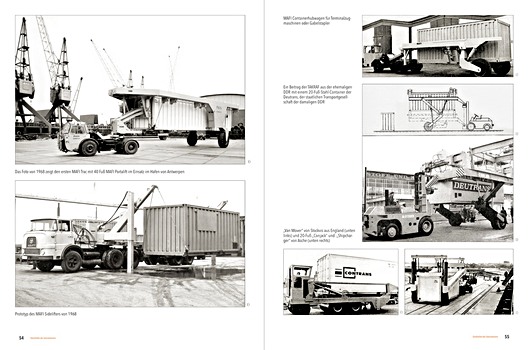
Pagine del libro Geschichte des Seecontainers (1)

Pagine del libro "Geschichte des Seecontainers und der Intermodal-Wechselbehälter"

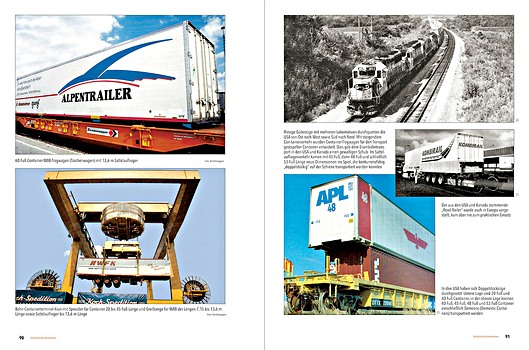
Ulrich Cramer è stato un pioniere nella costruzione della prima fabbrica di container in Cina nel 1980, oggi il più grande produttore di container al mondo, e nella costruzione dei primi due container in acciaio da 20 piedi per CIMC nel 1981. Ha applicato la sua competenza tecnica nella costruzione di container a numerosi progetti nel campo dei container per la navigazione interna e delle casse mobili, nonché allo sviluppo di attrezzature di trasporto e movimentazione correlate.

Pagine del libro Geschichte des Seecontainers (2)

Dettagli del libro

Autore:Ulrich Cramer
Formato:168 pagine, 29 x 21.5 x 1.7 cm, copertina rigida
Illustrazioni:290 foto in B&N e in colori
Lingua:tedesco
Editore:Verlag Podszun (D, 2021)
ISBN:9783861339816
Copertina del libro: Geschichte des Seecontainers und der Intermodal-Wechselbehälter | Podszun

Geschichte des Seecontainers und der Intermodal-Wechselbehälter

Lingua: tedesco

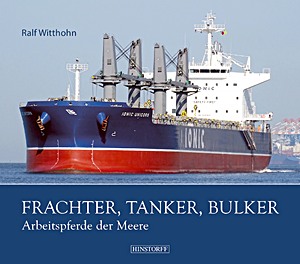
Frachter, Tanker, Bulker: Arbeitspferde der Meere

Il vasto mondo della navigazione mercantile riassunto in un unico libro: da Helsinki a Malta, da Istanbul a Las Palmas, da Vancouver a Singapore, il lettore osserva i punti di incontro del commercio internazionale e, leggendo quest'opera, acquisisce una conoscenza approfondita del settore marittimo attuale, della cantieristica navale globale e dei porti, grandi e piccoli.

Testi specialistici ben documentati descrivono lo stato attuale di sviluppo dell'economia marittima, illustrano la tecnologia e i diversi impieghi delle varie tipologie di navi, dalle portacontainer alle navi per il trasporto di automobili, dai traghetti alle navi portarinfuse e alle petroliere. Vengono esaminate le attività delle compagnie di navigazione e il lavoro nei cantieri navali in Europa e oltremare.
In questo modo, l'autore del libro e direttore di rivista Ralf Witthohn traccia un quadro unico, attuale, significativo e critico del trasporto marittimo internazionale nel XXI secolo.

Dettagli del libro

Autore:Ralf Witthohn
Formato:208 pagine, 21.5 x 24.5 x 2.5 cm, copertina rigida
Illustrazioni:riccamente illustrato
Lingua:tedesco
Editore:Hinstorff Verlag (D, 2018)
ISBN:9783356022032
Copertina del libro: Frachter, Tanker, Bulker: Arbeitspferde der Meere | Hinstorff

Frachter, Tanker, Bulker: Arbeitspferde der Meere

Lingua: tedesco

Titoli correlati:

Copertina del libro: P&O Ferries

P&O Ferries

Ian Collard | inglese | brossura | 96 p. | 2022

Copertina del libro: Sealink British Ferries

Sealink British Ferries

Ian Collard | inglese | brossura | 96 p. | 2019

Copertina del libro: Ferries of Denmark / Danske Faerger

Ferries of Denmark / Danske Faerger

Bruce Peter | inglese | copertina rigida | 172 p. | 2013

Copertina del libro: Fährschiffe auf der Ostsee - Häfen, Technik, Reisen

Fährschiffe auf der Ostsee - Häfen, Technik, Reisen

Dietrich Hub | tedesco | copertina rigida | 160 p. | 2020