Acorazados (GM II) - Alemania: libros - historia y buques

¿Un libro sobre acorazados de la Kriegsmarine? Aquí encontrarás los libros sobre la historia y tipos de acorazados de Alemania de la Segunda Guerra Mundial.

¡Recomendaciones de libros independientes! Compras realizadas a través de nuestros enlaces apoyan nuestro trabajo, sin ningún coste adicional para ti. Más información >

Battleships of the Scharnhorst Class (Warships of the Kriegsmarine)

Scharnhorst and Gneisenau, the subject of this volume, were the product of a long, involved and politically determined design process that saw them develop from an improved Pocket Battleship to what many described as a battlecruiser, although they were really fast battleships. They were the most active, and successful, of the Kriegesmarine's major warships, taking part in numerous famous operations, including the infamous 'Channel Dash'.

This book belongs to a series of six volumes "Warships of the Kriegsmarine", written by Gerhard Koop and illustrated by Klaus-Peter Schmolke. Each contains an account of the development of a particular class, a detailed description of the ships, with full technical details, and an outline of their service, heavily illustrated with plans, battle maps and a substantial collection of photographs.

Detalles del libro

Autor:Gerhard Koop, Klaus-Peter Schmolke
Presentación:176 páginas, 25 x 19.5 cm, tapa blanda
Ilustración:249 fotografías, 36 dibujos, 3 mapas
Idioma:Inglés
Editorial:Seaforth Publishing (GB, 2014)
ISBN:9781848321922
Portada del libro: Battleships of the Scharnhorst Class (Warships of the Kriegsmarine) | Seaforth

Battleships of the Scharnhorst Class (Warships of the Kriegsmarine)

Idioma: Inglés

Ver precio y disponibilidad:

British Battleship vs German Battleship : 1941-43 (Osprey)

At the outbreak of World War II, the four key Capital German ships comprised the Bismarck, Tirpitz, Scharnhorst and Gneisenau. Their primary threats where the Royal Navy's King George V class battleships, the most modern British battleships in commission during World War II and some of the Navy's most powerful vessels.

Five ships of this class were built: HMS King George V, Prince of Wales, Duke of York, Howe (late 1942) and Anson (late 1942). The powerful vessels in this class would clash with the pride of the Kriegsmarine in two major engagements: first, during the Battle of the Denmark Strait and subsequent pursuit of the Bismarck between 24 and 27 May 1941, and again at the Battle of the North Cape on 26 December 1943.

Alongside the King George V class, the Royal Navy's two- ship Nelson-class (Nelson and Rodney), comprised Britain's only other battleships built in the interwar years. Both ships served extensively in the Atlantic, Mediterranean, and Indian oceans during the war, but their moment of fame came when Rodney (together with King George V) chased down and bombarded the doomed Bismarck in May 1941.

This superbly detailed addition to the Duel series compares and contrasts the design and development of these opposing capital ships, and describes the epic clashes on the high seas that ended with the destruction of the Kriegsmarine's major naval assets.

Detalles del libro

Autor:Angus Konstam
Presentación:80 páginas, 24.5 x 18.5 x 0.7 cm, tapa blanda
Ilustración:profusamente ilustrado
Idioma:Inglés
Editorial:Osprey Publishing (GB, 2020)
Colección:Duel
ISBN:9781472841193
Portada del libro: British Battleship vs German Battleship : 1941-43 | Duel | Osprey

British Battleship vs German Battleship : 1941-43

Idioma: Inglés

Ver precio y disponibilidad:

German Battleships 1939-45 (Osprey)

In this, the first of a five volume series covering the capital ships of the German Navy of World War II, Gordon Williamson examines the design, development and operational use of the battleships used by the Kriegsmarine.
The 'Schlesien' and 'Schleswig-Hostein' were used mostly as training ships until the end of the war when they took part in bombardment of Soviet troop movements in East Prussia.
The 'Scharnhorst' had a successful career until her sinking at the battle of the North Cape, and the 'Gneisenau' with her ignominious end as a block-ship.

Bismarck's short but glorious career and Tirpitz's lonely vigil in Norway's distant Fjords until sunk by RAF bombers using the massive 'Tallboy' bombs are also covered.

Contents: introduction - The Dreadnoughts - The Scharnhorst class - The Bismarck class - Fire control - rangefinding - Radar - Colour plate commentary - Index.

Detalles del libro

Autor:Gordon Williamson
Presentación:48 páginas, 24.5 x 18 x 0.5 cm, tapa blanda
Ilustración:profusamente ilustrado con fotografías y dibujos (en b/n y color)
Idioma:Inglés
Editorial:Osprey Publishing (GB, 2003)
Colección:New Vanguard (71)
ISBN:9781841764986
Portada del libro: German Battleships 1939-45 | New Vanguard (71) | Osprey

German Battleships 1939-45

Idioma: Inglés

Ver precio y disponibilidad:

German Pocket Battleships 1939-45 - 'Deutschland', 'Admiral Graf Spee' and 'Admiral Scheer' (Osprey)

After the end of World War I, the German Navy came up with the concept of the Panzerschiffe, or Pocket Battleship, as a method of circumventing treaty limitations on the size and types of ship Germany was permitted to build.
New, more modern production methods, where welded construction prevailed over the older riveting process, were combined with the development of modern engines capable of fast speeds and a very powerful armament, far superior to that on any enemy Cruisers.

This book covers these three sister ships, the 'Deutschland', the 'Admiral Graf Spee' and the 'Admiral Scheer', which formed the core of the Kriegsmarine's fighting power at the start of World War II.

Contents: Introduction - Design and Development - Operational History - The Variants - Further Reading - Colour plate commentary - Index.

Detalles del libro

Autor:Gordon Williamson
Presentación:48 páginas, 24.5 x 18 x 0.4 cm, tapa blanda
Ilustración:profusamente ilustrado con fotografías y dibujos (en b/n y color)
Idioma:Inglés
Editorial:Osprey Publishing (GB, 2003)
Colección:New Vanguard (75)
ISBN:9781841765013
Portada del libro: German Pocket Battleships 1939-45 - 'Deutschland', 'Admiral Graf Spee' and 'Admiral Scheer' | New Vanguard (75) | Osprey

German Pocket Battleships 1939-45 - 'Deutschland', 'Admiral Graf Spee' and 'Admiral Scheer'

Idioma: Inglés

Ver precio y disponibilidad:

Pocket Battleships of the Deutschland Class (Warships of the Kriegsmarine)

This volume covers the three ships of a design so revolutionary that it defied conventional categories. Deutschland (later renamed Lützow), Admiral Scheer and Admiral Graf Spee were simply termed Panzerschiffe (armoured ships) by the Germans, but they were known to their opponents by the far more evocative term Pocket Battleships.

This book belongs to a series of six volumes "Warships of the Kriegsmarine", written by Gerhard Koop and illustrated by Klaus-Peter Schmolke. Each contains an account of the development of a particular class, a detailed description of the ships, with full technical details, and an outline of their service, heavily illustrated with plans, battle maps and a substantial collection of photographs.

Detalles del libro

Autor:Gerhard Koop, Klaus-Peter Schmolke
Presentación:224 páginas, 24 x 19 x 1.4 cm, tapa blanda
Ilustración:profusamente ilustrado
Idioma:Inglés
Editorial:Seaforth Publishing (GB, 2014)
ISBN:9781848321960
Portada del libro: Pocket Battleships of the Deutschland Class (Warships of the Kriegsmarine) | Seaforth

Pocket Battleships of the Deutschland Class (Warships of the Kriegsmarine)

Idioma: Inglés

Ver precio y disponibilidad:

River Plate 1939 : The Sinking of the Graf Spee (Osprey)

Días antes del estallido de la Segunda Guerra Mundial, un puñado de corsarios alemanes zarparon para atacar a los mercantes aliados. Entre ellos se encontraba el Panzerschiff ('buque acorazado') Graf Spee, un formidable buque de guerra que ostentaba la potencia de fuego de un acorazado, pero el tamaño, la velocidad y el alcance de un crucero.

Cuando estalló la Segunda Guerra Mundial, bajo el mando del capitán Langsdorff, el Graf Spee inició una campaña de persecución a través del Atlántico Sur y el Océano Índico que finalmente la llevó al Río de la Plata en busca de su próxima víctima: un convoy aliado.
En cambio, se encontró con tres cruceros de la Marina Real bajo el mando del comodoro Harwood, deseosos de poner fin al "acorazado de bolsillo" que había estado aterrorizando a los buques mercantes aliados.

Con ilustraciones a todo color, fotografías de archivo e investigación meticulosa, este volumen exhaustivo explora la apasionante historia de la Batalla del Río de la Plata, un enfrentamiento que demostró indudablemente la eficacia del poderío naval y la diplomacia británicas en el escenario internacional.

Contenido: Orígenes de la campaña - Comandantes contendientes - Flotas contendientes - Planes contendientes - Campaña - Batalla - Acción - Consecuencias - Conclusión - Buques actuales - Cronología - Bibliografía.

Detalles del libro

Autor:Angus Konstam
Presentación:96 páginas, 25 x 18.5 x 0.8 cm, tapa blanda
Ilustración:65 fotografías en b/n y 17 a color
Idioma:Inglés
Editorial:Osprey Publishing (GB, 2016)
Colección:Campaign (171)
ISBN:9781472817952
Portada del libro: River Plate 1939 : The Sinking of the Graf Spee | Campaign (171) | Osprey

River Plate 1939 : The Sinking of the Graf Spee

Idioma: Inglés

Ver precio y disponibilidad:

Super-Battleships of World War II: Montana-class, Lion-class, H-class, A-150 and Sovetsky Soyuz-class (Osprey)

Al comienzo de la Segunda Guerra Mundial, el acorazado seguía siendo el rey, y todas las grandes potencias diseñaban acorazados aún más poderosos para superar a sus clases más modernas y potentes. Pero cuando estalló la Segunda Guerra Mundial, los portaaviones dominarían la guerra naval, y ninguno de estos gigantescos buques de guerra llegó a completarse.

En este libro, el experto naval Mark Stille desvela estos acorazados perdidos mientras son reconstruidos con magníficas ilustraciones a todo color. La Armada de los Estados Unidos quería cinco buques de la clase Montana, basados en los Iowa pero con una batería principal más potente y mejor protección, y la Marina Real británica comenzó a trabajar en tres acorazados rápidos de la clase Lion con cañones de 16 pulgadas.
La Armada alemana desarrolló sus diseños de la clase H: inicialmente una versión mejorada de la clase Bismack, se volvieron más extravagantes, culminando en el H-44 de 141.500 toneladas y cañón de 20 pulgadas. El A-150 japonés se basaba en la clase Yamato pero con cañones de 20.1 pulgadas, mientras que los 15 buques planeados para la clase Soyuz Sovetsky de la URSS habrían rivalizado en tamaño con los Montana.
Esta es la historia de los últimos diseños de acorazados de la historia, que explica el diseño, las funciones previstas y el destino de estos buques.

Contenido:
- Introducción
- Prácticas de diseño de acorazados
- Protección
- Propulsión
- Potencia de fuego
- Las clases de superacorazados
- La Armada de los Estados Unidos - la clase Montana
- La Marina Real - la clase Lion
- La Kriegsmarine - la clase H
- La Armada Imperial Japonesa - Diseño A-150
- La Armada Soviética - la clase Sovetsky Soyuz -
- Análisis y conclusión
- Lecturas adicionales
- Índice.

Detalles del libro

Autor:Mark Stille, Paul Wright
Presentación:48 páginas, 24.5 x 18.5 x 0.5 cm, tapa blanda
Ilustración:40 fotografías en b/n, dibujos en color
Idioma:Inglés
Editorial:Osprey Publishing (GB, 2022)
Colección:New Vanguard (314)
ISBN:9781472846723
Portada del libro: Super-Battleships of World War II: Montana-class, Lion-class, H-class, A-150 and Sovetsky Soyuz-class | New Vanguard (314) | Osprey

Super-Battleships of World War II: Montana-class, Lion-class, H-class, A-150 and Sovetsky Soyuz-class

Idioma: Inglés

Ver precio y disponibilidad:

The Battleship Scharnhorst (Anatomy of the Ship)

El Scharnhorst de la Kriegsmarine era un buque capital alemán, descrito como acorazado o crucero de batalla, y el buque insignia de su clase, que incluía otro buque, el Gneisenau. Fue botado el 3 de octubre de 1936 y completado en enero de 1939, armado con nueve cañones C/34 de 28 cm en tres torretas triples.

Durante gran parte del inicio de la Segunda Guerra Mundial, operó junto al Gneisenau, incluyendo incursiones en el Atlántico para atacar buques mercantes británicos. Participaron en la Operación Weserubung (abril-junio de 1940), la invasión alemana de Noruega, durante la cual hundieron el portaaviones HMS Glorious y sus destructores de escolta Acasta y Ardent. El Scharnhorst también hundió el HMS Rawalpindi en noviembre de 1939.

A principios de 1943, el Scharnhorst se unió al Tirpitz en Noruega para interceptar convoyes aliados con destino a la Unión Soviética. En una salida desde Noruega para atacar un convoy, la fuerza alemana fue interceptada por buques británicos y, durante la Batalla del Cabo Norte (26 de diciembre de 1943), el HMS Duke of York y sus escoltas hundieron al Scharnhorst. La mayor parte de su tripulación pereció.

Este es el estudio más exhaustivo jamás publicado sobre el Scharnhorst, que se basa en nuevas investigaciones y tecnologías para contar la historia completa del barco.
Incluye un conjunto completo de dibujos lineales detallados con leyendas totalmente descriptivas e ilustraciones 3D a todo color, complementados con detalles técnicos, fotografías y texto sobre la construcción del buque, así como un registro de su historial de servicio.

Detalles del libro

Autor:Stefan Draminski
Presentación:336 páginas, 25 x 25.5 x 3.1 cm, tapa dura
Ilustración:fotografías, 600 dibujos, 300 3D-dibujos en color
Idioma:Inglés
Editorial:Osprey Publishing (GB, 2020)
Colección:Anatomy of the Ship
ISBN:9781472840233
Portada del libro: The Battleship Scharnhorst | Anatomy of the Ship | Osprey

The Battleship Scharnhorst

Idioma: Inglés

Ver precio y disponibilidad:

The German Battleship Gneisenau

This book covers the development and use of the battleship Gneisenau during WWII.

Detalles del libro

Autor:Siegfried Breyer
Presentación:48 páginas, 30 x 21 x 0.3 cm, tapa blanda
Ilustración:más de 100 fotografías en b/n, dibujos, mapas
Idioma:Inglés
Editorial:Schiffer Publishing Ltd (USA, 2004)
ISBN:9780887402906
Portada del libro: The German Battleship Gneisenau | Schiffer

The German Battleship Gneisenau

Idioma: Inglés

Ver precio y disponibilidad:

The German Navy at War 1935-1945 (Volume 1) - The Battleships

Abarca todos los principales acorazados alemanes de la Segunda Guerra Mundial, incluidos el Bismarck, el Gneisenau, el Scharnhorst, el Tirpitz y otros grandes buques, con más de 300 fotografías.

Detalles del libro

Autor:Siegfried Breyer, Gerhard Koop
Presentación:192 páginas, 22 x 30.5 x 2.2 cm, tapa dura
Ilustración:más de 300 fotografías en b/n
Idioma:Inglés
Editorial:Schiffer Publishing Ltd (USA, 2004)
ISBN:9780887402203
Portada del libro: The German Navy at War 1935-1945 (Volume 1) - The Battleships | Schiffer

The German Navy at War 1935-1945 (Volume 1) - The Battleships

Idioma: Inglés

Ver precio y disponibilidad:

Scharnhorst und Gneisenau - Die Bildchronik 1939-1945

NUEVO

Los acorazados "Scharnhorst" y "Gneisenau" fueron las unidades más grandes de la Armada alemana después de los "Bismarck" y "Tirpitz". Tras misiones exitosas contra la marina mercante británica y la Royal Navy, los dos buques gemelos se convirtieron en objetivos cada vez más codiciados.

En esta crónica ilustrada, Holger Nauroth narra la apasionante historia de los dos acorazados alemanes, desde su puesta en servicio, su persecución de convoyes aliados y su avance a través del Canal de la Mancha (Operación Cerbero) hasta su respectivo final. Más de 400 imágenes históricas inéditas ilustran los acontecimientos.

Detalles del libro

Autor:Holger Nauroth
Presentación:248 páginas, 24 x 21 x 1.5 cm, tapa blanda
Ilustración:395 fotografías y dibujos
Idioma:Alemán
Editorial:Motorbuch Verlag (D, 2025)
ISBN:9783613048263
Portada del libro: Scharnhorst und Gneisenau - Die Bildchronik 1939-1945 | Motorbuch

Scharnhorst und Gneisenau - Die Bildchronik 1939-1945

Idioma: Alemán

Ver precio y disponibilidad:

También te puede interesar:

Portada del libro: Tirpitz in Norway : X-craft midget submarines raid the fjords, Operation Source 1943 | Raid

Tirpitz in Norway : X-craft midget submarines raid the fjords, Operation Source 1943

Angus Konstam | Inglés | tapa blanda | 80 pág. | 2019

Portada del libro: The Battleship Bismarck | Anatomy of the Ship

The Battleship Bismarck

Stefan Draminski | Inglés | tapa dura | 256 pág. | 2018

Portada del libro: Battleships of the Bismarck Class (Warships of the Kriegsmarine)

Battleships of the Bismarck Class (Warships of the Kriegsmarine)

Gerhard Koop, Klaus-Peter Schmolke | Inglés | tapa blanda | 160 pág. | 2014

Portada del libro: Killing the Bismarck - Destroying the Pride of Hitler's Fleet

Killing the Bismarck - Destroying the Pride of Hitler's Fleet

Iain Ballantyne | Inglés | tapa blanda | 320 pág. | 2014

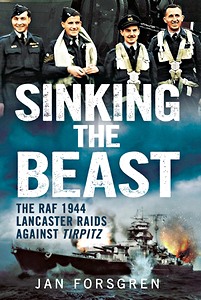
Portada del libro: Sinking the Beast : The RAF 1944 Lancaster Raids Against Tirpitz

Sinking the Beast : The RAF 1944 Lancaster Raids Against Tirpitz

Jan Forsgren | Inglés | tapa dura | 160 pág. | 2014

Portada del libro: Tirpitz - The First Voyage - Rare photographs from Wartime Archives | Images of War

Tirpitz - The First Voyage - Rare photographs from Wartime Archives

Jonathan Sutherland, Diane Canwell | Inglés | tapa blanda | 144 pág. | 2011

Portada del libro: "Bismarck" - A Minute-by-minute Account of the Final Hours of Germany's Greatest Battleship

"Bismarck" - A Minute-by-minute Account of the Final Hours of Germany's Greatest Battleship

Niklas Zetterling, Michael Tamelander | Inglés | tapa dura | 320 pág. | 2009

Portada del libro: Schlachtschiff Bismarck - Die Geschichte des legendären deutschen Schiffes

Schlachtschiff Bismarck - Die Geschichte des legendären deutschen Schiffes

Angus Konstam | Alemán | tapa dura | 160 pág. | 2017