Al comprar mediante los enlaces, apoyas este sitio sin coste adicional para usted. Más información >

Cañones autopropulsados - EE.UU.: libros - historia

¿Un libro sobre cañones autopropulsados? Aquí encontrarás los libros sobre la historia, los tipos y la técnica de cañones autopropulsados de EE.UU..

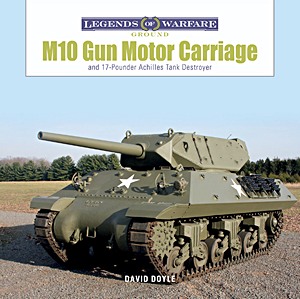
M10 Gun Motor Carriage: and the 17-Pounder Achilles Tank Destroyer (Legends of Warfare)

Based on the M4A2 and M4A3 Sherman tank chassis, and fitted with a 3-inch M7 gun, the M10 was numerically the most important US tank destroyer of WWII. The M10 was built in response to the stunning successes of the German armored Blitzkrieg at the outset of the war in Europe.
Fitted with a turret - unlike most self-propelled artillery of the era - the vehicle was more heavily gunned but more lightly armored than a tank. M10 crews were expected to make the most of their vehicle's speed and agility.

Páginas del libro M10 Gun Motor Carriage: and the 17-Pounder Achilles (1)

Páginas del libro "M10 Gun Motor Carriage: and the 17-Pounder Achilles Tank Destroyer"

The M10 received its baptism of fire in Tunisia in 1943, where it demonstrated its ability to destroy most German Panzers then in service. The British upgraded the design by rearming some of the 1,700 M10s that they received with the superb Ordnance Quick Firing 17-pounder antitank gun.
These vehicles were designated by the British as 17-pounder SP M10 Mark IC/IIC, popularly known as the Achilles.

Detalle del libro

Autor:David Doyle
Presentación:144 páginas, 23.5 x 23.5 x 2.1 cm, tapa dura
Ilustración:260 fotos en b/n y color
Idioma:Inglés
Editorial:Schiffer Publishing Ltd (USA, 2022)
Colección:Legends of Warfare
ISBN:9780764364860
Portada del libro: M10 Gun Motor Carriage: and the 17-Pounder Achilles Tank Destroyer | Legends of Warfare | Schiffer

M10 Gun Motor Carriage: and the 17-Pounder Achilles Tank Destroyer

Idioma: Inglés

M107 / M110 - Family of Self-propelled Artillery 1956 -1991

Este volumen de tapa blanda de 124 páginas está profusamente ilustrado con casi 250 fotografías, muchas de ellas en color, que muestran la historia y el servicio militar estadounidense de este sistema de armas, desde su aparición a principios de la década de 1950 hasta la primera Guerra del Golfo.
Ampliamente utilizados en Vietnam, donde tenían el mayor alcance de cualquier artillería terrestre, los vehículos de las series M107 y M110, junto con el M109, formaron la columna vertebral de la artillería autopropulsada estadounidense durante décadas, incluyendo el apogeo de la Guerra Fría.

Muchas de las imágenes de este volumen son inéditas, incluyendo numerosas fotografías en color tomadas en Vietnam. Las fotos antiguas se complementan con imágenes cuidadosamente seleccionadas de ejemplares conservados, elegidas para ilustrar los detalles de los vehículos. Todas las variantes de los M107 y M110 se presentan en este volumen.

Detalle del libro

Autor:David Doyle
Presentación:127 páginas, 30 x 21 x 1.3 cm, tapa blanda
Ilustración:250 fotos en b/n y color
Idioma:Inglés
Editorial:AFV Modeller (GB, 2022)
ISBN:9781739751302
Portada del libro: M107 / M110 - Family of Self-propelled Artillery 1956 -1991 | AFV Modeller

M107 / M110 - Family of Self-propelled Artillery 1956 -1991

Idioma: Inglés

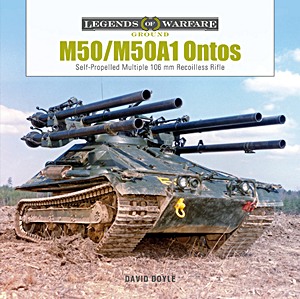
M50 / M50A1 Ontos: Self-Propelled Multiple 106 mm Recoilless Rifle (Legends of Warfare)

Designed to counter the threat of a massed Soviet armored assault, the M50 Ontos showed its merit in the jungles and streets of Vietnam. Ontos grew out of Project Vista, the secret study of possible improvements to NATO defenses. Project Vista identified the need for an inexpensive, heavily armed "something" to thwart waves of Soviet armor.
Armed with six powerful recoilless rifles, the diminutive M50 was given the name "Ontos," an Army mistranslation of Greek for "the Thing."

Initially, the Army felt that the Allis-Chalmers T165E1 (later standardized as the M50) was the thing to fill the recommendation of Project Vista. Ultimately, and after some controversy, the Army lost interest in the vehicle, but the United States Marine Corps believed in the vehicle, and in 1955 the M50 entered production.

While the Corps first used the Ontos in Santo Domingo in 1965, it would rise to fame in Vietnam, where the M50, as well as the modernized M50A1, saw considerable use as antipersonnel weapons and in perimeter defense. On the streets of Hue, Marines made considerable use of the Ontos, blasting open walls and using antipersonnel rounds to create faux smoke screens.
Over 270 photos, many in color, chronicle the development, production, combat use, and details of this famed vehicle and the men who used them.

Detalle del libro

Autor:David Doyle
Presentación:128 páginas, 21.5 x 24 x 2.8 cm, tapa dura
Ilustración:270 fotos en b/n y color
Idioma:Inglés
Editorial:Schiffer Publishing Ltd (USA, 2022)
Colección:Legends of Warfare
ISBN:9780764365126
Portada del libro: M50 / M50A1 Ontos: Self-Propelled Multiple 106 mm Recoilless Rifle | Legends of Warfare | Schiffer

M50 / M50A1 Ontos: Self-Propelled Multiple 106 mm Recoilless Rifle

Idioma: Inglés

M18 Hell-Cat - 76 mm Gun Motor Carriage in World War II (Legends of Warfare)

El M18 se desarrolló en una época en la que Estados Unidos combatía los tanques no con otros tanques, sino con cazacarros especializados. Equipado con un potente motor radial de estilo aeronáutico que le permitía alcanzar hasta 80 km/h y un potente cañón de 76 mm, el M18 Hellcat, fabricado por Buick (o "Hell-Cat" como lo denominaron los publicistas de Buick), proporcionó a las tropas estadounidenses una poderosa respuesta para disparar y huir de los tanques alemanes fuertemente blindados. Se realizaron experimentos adicionales para aumentar su armamento e adaptarlo a otros usos, como el vehículo blindado utilitario M39.

Mediante decenas de imágenes de archivo, muchas de ellas inéditas, y fotografías detalladas de algunos de los mejores ejemplares existentes de estos vehículos, se explora la historia de este emblemático cazacarros. Forma parte de la serie Legends of Warfare.

Detalle del libro

Autor:David Doyle
Presentación:112 páginas, 23.5 x 23.5 x 1.9 cm, tapa dura
Ilustración:160 fotos en b/n y color
Idioma:Inglés
Editorial:Schiffer Publishing Ltd (USA, 2020)
Colección:Legends of Warfare
ISBN:9780764359576
Portada del libro: M18 Hell-Cat - 76 mm Gun Motor Carriage in World War II | Legends of Warfare | Schiffer

M18 Hell-Cat - 76 mm Gun Motor Carriage in World War II

Idioma: Inglés

M36 / M36 B1 Tank Destroyer - Rare Photographs from Wartime Archives (Images of War)

Going into WWII, the prevailing strategy of the US command was that tanks were not to be used to engage enemy tanks in combat. Rather, tanks were to be the armored spearhead to breach enemy positions. Enemy tanks were to be dealt with by specialized weapons, aptly named tank destroyers.

While the 3-inch weapon of the M10 was superior to that found on earlier US tank destroyers, it was still found to be inadequate against the ever-increasing weight of German armor. An even larger gun, the 90 mm M3, was placed in a new, bigger open-topped turret on 100 new hulls purpose built for this, and by remanufacturing M10 A1s, primarily from US-based training units. As the supply of these chassis was depleted, additional vehicles were created by converting Diesel-powered M10s, resulting in the M36B2.

The M36 B1 was built from the ground-up as a tank destroyer, using a hull based on that of the M4 A3 but featuring a standard M36 turret. Examination of rare surviving vehicles indicate that the M36 B1 hulls were manufactured expressly for this purpose, and were not merely M4 A3 hulls that were converted.
While US antitank doctrine changed, rendering all the tank destroyers obsolete post-WWII, many of these vehicles were supplied to other nations, and in fact some survived as combat vehicles into the 21st century.

Detalle del libro

Autor:David Doyle
Presentación:128 páginas, 24.5 x 19 x 1 cm, tapa blanda
Ilustración:175 fotos en b/n y color
Idioma:Inglés
Editorial:Pen & Sword Books Ltd (GB, 2019)
Colección:Images of War
ISBN:9781526748928
Portada del libro: M36 / M36 B1 Tank Destroyer - Rare Photographs from Wartime Archives | Images of War | Pen & Sword

M36 / M36 B1 Tank Destroyer - Rare Photographs from Wartime Archives

Idioma: Inglés

M7 Priest : Rare Photographs from Wartime Archives (Images of War)

El obús autopropulsado M7, apodado "El Sacerdote", fue el ejemplo más exitoso y utilizado de artillería autopropulsada estadounidense durante la Segunda Guerra Mundial. El Ejército de los Estados Unidos continuó utilizándolos durante la Guerra de Corea y posteriormente, incluso prestando servicio a países aliados hasta la década de 1970.
Este vehículo blindado de combate, apodado "El Sacerdote" debido a su estructura similar a un púlpito para el comandante del cañón, entró en acción en el norte de África, Italia, el desembarco del Día D en Normandía y llegó hasta Alemania.

Detalle del libro

Autor:David Doyle
Presentación:144 páginas, 24.5 x 19 cm, tapa blanda
Ilustración:190 fotos en b/n y 20 a color
Idioma:Inglés
Editorial:Pen & Sword Books Ltd (GB, 2019)
Colección:Images of War
ISBN:9781526738851
Portada del libro: M7 Priest : Rare Photographs from Wartime Archives | Images of War | Pen & Sword

M7 Priest : Rare Photographs from Wartime Archives

Idioma: Inglés

M12 Gun Motor Carriage - Rare Photographs from Wartime Archives (Images of War)

Aunque solo se fabricaron 100 ejemplares, el cañón autopropulsado M12 de 155 mm sirvió con distinción como arma de apoyo a la infantería y, en particular, como arma antibúnker durante el asalto estadounidense a la Línea Sigfrido en el invierno de 1944-45.

La capacidad de preparar rápidamente la artillería pesada para el disparo propició el desarrollo del cañón M12 de 155 mm en 1941, basado en el chasis del tanque medio M3. El vehículo de prueba, construido por el Arsenal de Rock Island, fue designado T6.
Para alojar el gran cañón trasero M1917 de 155 mm de fabricación francesa, el motor se reubicó hacia adelante, justo detrás del compartimento del conductor. En la parte trasera del vehículo se instaló una pala hidráulica que se bajaba durante el disparo para anclar el vehículo y contrarrestar el retroceso. Al retraerse, servía de asiento para dos de los seis tripulantes.

La producción se desarrolló entre septiembre de 1942 y marzo de 1943, con un total de cien unidades fabricadas. Si bien algunas se utilizaron en unidades de entrenamiento, la mayoría se almacenaron hasta febrero de 1944, cuando la primera de las 74 unidades se envió a Baldwin Locomotive Works para su mejora, basada en pruebas adicionales y su uso en entrenamiento. Este trabajo continuó hasta mayo de 1944.

Se montaron tres armas excedentes de la Primera Guerra Mundial, ligeramente diferentes entre sí, según su disponibilidad: la M1917, la M1917A1 y la M1918M1. La M1917 era de fabricación francesa, la M1918 de fabricación estadounidense, y la M1917A1 tenía el cañón francés y la recámara estadounidense.

Detalle del libro

Autor:David Doyle
Presentación:152 páginas, 24.5 x 19 x 1.2 cm, tapa blanda
Ilustración:194 fotos en b/n y color
Idioma:Inglés
Editorial:Pen & Sword Books Ltd (GB, 2018)
Colección:Images of War
ISBN:9781526743527
Portada del libro: M12 Gun Motor Carriage - Rare Photographs from Wartime Archives | Images of War | Pen & Sword

M12 Gun Motor Carriage - Rare Photographs from Wartime Archives

Idioma: Inglés

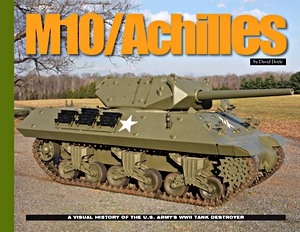
M10 / Achilles - A Visual History of the U.S. Army's WWII Tank Destroyer

In late 1941 the concept of a separate tank destroyer force began to jell. This force would be armed with specialized weapons. While the army's primary antitank weapons of the late 1930s were 37mm towed anti-tank guns, these were soon deemed to be inadequate against enemy armor. Accordingly, the quest for larger weapons began, as did the desire for a self-propelled antitank gun, or Gun Motor Carriage.
The initial efforts, which involved adapting ¾-ton, Dodge trucks to mount antitank weapons (the M6, née WC-55), which were intended as interim and training vehicles. In the same manner, half-tracks were fitted with cannon, yielding the M3 75mm Gun Motor Carriage. But, the quest was on to create a specialized and ideal tank destroyer, utilizing a tank chassis as the basis.

By January of 1942 a prototype was in the works to mount the weapon in an open topped turret on the chassis of the twin GM Diesel-powered M4A2 Sherman Medium tank.
After some months of development a design was finalized for a vehicle sharing the suspension, lower hull, and engine with the M4A2 but with an upper hull made up from thinner, but sloping, armored plate. Initially designated T35E1, when the design was standardized it was redesignated M10. In addition to the 6,700-plus Diesel-powered M10 tank destroyers, a further 1,700 M10A1 vehicles were built, these being driven by Ford GAA gasoline engines.

While the 3-inch weapon of the M10 was superior to that found on earlier U.S. tank destroyers, it was inadequate against the ever-increasing weight of German armor. The British addressed this by rearming some of the 1,700 M10s that they received with the superb Ordnance Quick Firing 17-pounder antitank gun. These vehicles were designated by the British as 17-pdr. SP M10 Mark 1c. After the war the name Achilles was given these vehicles.

Photo coverage includes plentiful period shots and copious amounts of detail photos of the M10, M10A1 and Achilles.

Detalle del libro

Autor:David Doyle
Presentación:128 páginas, 22.5 x 29 cm, tapa blanda
Ilustración:ricamente ilustrado con fotos en b/n y color
Idioma:Inglés
Editorial:Ampersand Publishing Company, Inc. (USA, 2016)
ISBN:9781944367190
Portada del libro: M10 / Achilles - A Visual History of the U.S. Army's WWII Tank Destroyer | Ampersand

M10 / Achilles - A Visual History of the U.S. Army's WWII Tank Destroyer

Idioma: Inglés

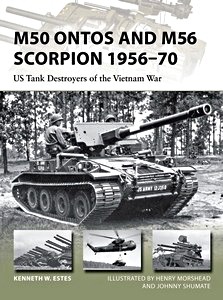
M50 Ontos and M56 Scorpion 1956-70 : US Tank Destroyers of the Vietnam War (Osprey)

Designed in the 1950s, the US Marines' M50 Ontos and the US Army's M56 Scorpion were both intended to be fast, light, air-droppable tank-killers for the Cold War battlefield - an answer to the cumbersome and ineffective World War II-vintage tanks that had taken to the battlefield during the Korean War.

Although they shared the aim of bringing light, mobile and lethal antitank firepower to the infantry the two vehicles varied wildly in design to cater for their unique mission demands. They first saw service in the Lebanon intervention of 1958 but it was in the Vietnam War that they made their name, with the M50 Ontos seeing intense combat action in the Battle of Hue in 1968.

Detailed illustrations and expert analysis provide the reader with a comprehensive history of these deadly antitank vehicles, from early development through to their combat history and the eventual disbandment of the Marine Corps' last antitank battalion with M50A1s in 1971.

Detalle del libro

Autor:Kenneth W Estes
Presentación:48 páginas, 25 x 18.5 x 0.5 cm, tapa blanda
Ilustración:40 fotos en b/n y 7 a color
Idioma:Inglés
Editorial:Osprey Publishing (GB, 2016)
Colección:New Vanguard (240)
ISBN:9781472814739
Portada del libro: M50 Ontos and M56 Scorpion 1956-70 : US Tank Destroyers of the Vietnam War | New Vanguard (240) | Osprey

M50 Ontos and M56 Scorpion 1956-70 : US Tank Destroyers of the Vietnam War

Idioma: Inglés

155-mm Gun Motor Carriage M12 and Cargo Carrier M30 - Technical Manual (TM9-751)

The 155-mm Gun Motor Carriage M12 was a U.S. self-propelled gun developed during the Second World War. Only 100 were built; sixty in 1942 and another forty in 1943.
The M12 was built on the chassis of the M3 Lee tank. It had an armored driver's compartment, but the gun crew were located in an open topped area at the back of the vehicle. An earth spade at the rear was employed to absorb recoil.

During 1943 the vehicles were used for training or put into storage. Before the invasion of France, seventy four M12s were upgraded in preparation for combat operations. They were employed successfully throughout the campaign in North-West Europe. Although designed primarily for indirect fire, during assaults on heavy fortifications the M12s were sometimes employed in a direct-fire role.
Limited storage space meant that only ten projectiles and propellant charges could be carried on the vehicle. Given this, a similar vehicle without the gun was produced as the Cargo Carrier M30. This was designed to transport the gun crew and additional ammunition.
In operational conditions the M12 and M30 would serve in pairs. The M30, which could carry forty rounds of 155-mm ammunition, was armed with a .50-caliber Browning M2 machine gun.

Created in 1944, this technical manual reveals a great deal about the M12's and M30's design and capabilities. Intended as a manual for those charged with operation and maintenance, it details many aspects of the M12's engine, cooling, power, suspension and other systems.
Originally labeled restricted, this manual was declassified long ago and is here reprinted in book form. Please note, this text was not produced in large numbers and this replica may have some pages that are substandard in quality. Care has been taken however to preserve the integrity of the text.

Detalle del libro

Autor:U.S. Army War Department
Presentación:326 páginas, 23 x 15 cm, tapa blanda
Ilustración:ricamente ilustrado con fotos y dibujos
Idioma:Inglés
Editorial:Periscope Film (USA, 2013)
ISBN:9781937684396
Portada del libro: 155-mm Gun Motor Carriage M12 and Cargo Carrier M30 - Technical Manual (TM9-751) | Periscope

155-mm Gun Motor Carriage M12 and Cargo Carrier M30 - Technical Manual (TM9-751)

Idioma: Inglés

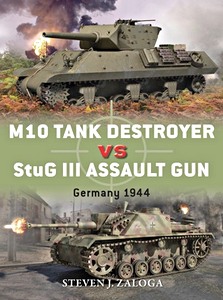
M10 Tank Destroyer vs StuG III Assault Gun - Germany, 1944 (Osprey)

The Allies' M10 Tank Destroyer and the Germans' Sturmgeschütz (StuG) lll were the unsung workhorses of the northwest European battlefields of 1944-45. While their mission was not principally fighting one another, their widespread use ensured their frequent encounters, from the Normandy Bocage, to the rubble-strewn streets of Aachen.
The StuG lll was the quintessential assault gun, a low-slung, heavily armoured, turret-less vehicle intended to provide direct fire support for infantry formations, whilst the M10 3in Gun Motor Carriage was originally developed as a tank destroyer. However, by 1944 the 3in gun proved ineffectual against the most thickly armored German tanks, and was consequently relegated to infantry support too.

Widely deployed in roles their designers had not envisaged, these two armoured fighting vehicles clashed repeatedly during the 11-month campaign, which saw the Allies advance from Normandy to the heart of the Reich. Fully illustrated with specially commissioned artwork, this is the story of their confrontation at the height of World War ll.

Contents: Introduction - Chronology - Design and Development - Technical Specifications - The Combatants - The Strategic Situation - Combat - Statistics and Analysis - Further Reading - Index.

Detalle del libro

Autor:Steven J. Zaloga
Presentación:80 páginas, 24.5 x 19 x 0.7 cm, tapa blanda
Ilustración:ricamente ilustrado con fotos y dibujos (en b/n y color)
Idioma:Inglés
Editorial:Osprey Publishing (GB, 2013)
Colección:Duel (53)
ISBN:9781780960999
Portada del libro: M10 Tank Destroyer vs StuG III Assault Gun - Germany, 1944 | Duel (53) | Osprey

M10 Tank Destroyer vs StuG III Assault Gun - Germany, 1944

Idioma: Inglés

M18 Hellcat 76mm Gun Motor Carriage - Technical Manual (TM9-755)

El M18 Hellcat fue un cazacarros estadounidense utilizado durante la Segunda Guerra Mundial. Armado con un cañón de 76 mm, fue el vehículo blindado de combate sobre orugas más rápido de la guerra, alcanzando una velocidad máxima de hasta 96 km/h. Por ello, Buick lo apodó Hellcat.
La alta velocidad se logró manteniendo el grosor del blindaje al mínimo. Las tripulaciones de los Hellcat aprovecharon la velocidad del vehículo para minimizar la capacidad del enemigo de perforar su delgado blindaje.

El nuevo diseño del M18 incorporaba varias características innovadoras para su mantenimiento. El motor Wright R-975 estaba montado sobre rodillos de acero, lo que permitía a los operarios desconectarlo fácilmente de la transmisión, deslizarlo sobre la cubierta trasera del motor, realizarle el mantenimiento y volver a conectarlo. La transmisión también podía desmontarse fácilmente y deslizarse sobre una placa frontal para facilitar su inspección y reparación.

El M18 contaba con una tripulación de cinco hombres, cuarenta y cinco proyectiles para su cañón principal y una ametralladora Browning M2 montada sobre un soporte de anillo flexible para su uso contra aeronaves e infantería. La única variante del M18 producida en cantidades significativas fue el Vehículo Blindado Utilitario M39, un modelo sin torreta utilizado para el transporte de personal o carga. También podía utilizarse como tractor de artillería. Esta versión estaba armada con una ametralladora M2 montada sobre un soporte flexible.

Creado en 1945, este manual técnico revela mucha información sobre el diseño y las capacidades del Hellcat. Concebido como un manual para quienes se encargaban de su operación y mantenimiento, detalla numerosos aspectos de su motor, sistema de refrigeración, torreta y otros sistemas.
Originalmente clasificado como restringido, este manual fue desclasificado hace mucho tiempo y se reimprime aquí en formato de libro. Se ha tenido especial cuidado en preservar la integridad del texto.

Detalle del libro

Autor:U.S. Army War Department
Presentación:540 páginas, 23 x 15.5 x 3.1 cm, tapa blanda
Ilustración:ricamente ilustrado con fotos y dibujos
Idioma:Inglés
Editorial:Periscope Film (USA, 2013)
ISBN:9781937684464
Portada del libro: M18 Hellcat 76mm Gun Motor Carriage - Technical Manual (TM9-755) | Periscope

M18 Hellcat 76mm Gun Motor Carriage - Technical Manual (TM9-755)

Idioma: Inglés

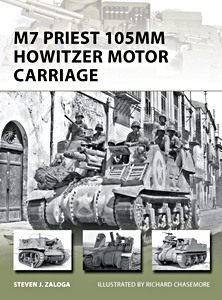
M7 Priest 105mm Howitzer Motor Carriage (Osprey)

Basado en el omnipresente tanque Grant/Sherman, el M7 Priest es el icónico obús autopropulsado aliado. Fue el vehículo de su tipo más fabricado durante la Segunda Guerra Mundial y fue utilizado por las fuerzas estadounidenses, británicas, canadienses y de la Francia Libre. Su debut en combate tuvo lugar con el Octavo Ejército de Montgomery en El Alamein y posteriormente participó en todas las campañas importantes a través de Sicilia, Italia, Normandía y las batallas finales en Alemania.

Además de abarcar todas las variantes del Priest, este libro también analiza sus principales derivados, incluyendo el Sexton británico/canadiense y el M12 155mm GMC estadounidense.

Contenido: Introducción - Diseño y desarrollo - Historial operativo - Variantes - Bibliografía - Índice.

Detalle del libro

Autor:Steven J. Zaloga
Presentación:48 páginas, 24.5 x 18.5 x 0.4 cm, tapa blanda
Ilustración:ricamente ilustrado con fotos y dibujos (en b/n y color)
Idioma:Inglés
Editorial:Osprey Publishing (GB, 2013)
Colección:New Vanguard (201)
ISBN:9781780960234
Portada del libro: M7 Priest 105mm Howitzer Motor Carriage | New Vanguard (201) | Osprey

M7 Priest 105mm Howitzer Motor Carriage

Idioma: Inglés

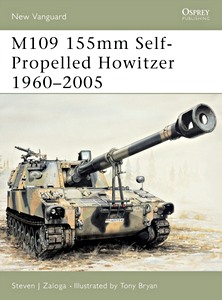
M109 155mm Self-propelled Howitzer 1960-2005 (Osprey)

El obús autopropulsado M109, que entró en servicio a principios de la década de 1960, lleva 34 años en producción y constituye la columna vertebral de las unidades de artillería del Ejército y la Reserva de los Estados Unidos. El M109A6 es el último desarrollo de la serie M109 e incorpora sistemas avanzados de control de tiro que le permiten alcanzar el objetivo con sus primeros proyectiles en menos de 60 segundos tras llegar a la posición de disparo. Esta capacidad de alternar rápidamente entre los modos de movimiento y disparo evita el fuego de contrabatería y garantiza la supervivencia en el campo de batalla.

Este libro describe en detalle un arma impresionante y versátil que ha prestado servicio en todo el mundo, en el sudeste asiático y en las operaciones Escudo del Desierto y Tormenta del Desierto.

Contenido: Introducción - Orígenes de la Guerra Fría - Primer combate: Vietnam - Potencia de fuego de largo alcance - Aumento de la letalidad - Combate en Oriente Medio - Municiones guiadas de precisión - El dilema de la modernización - Suministro de munición - Operación Tormenta del Desierto - Operación Libertad Iraquí - Programas internacionales - Bibliografía - Comentarios sobre las láminas a color - Índice.

Detalle del libro

Autor:Steven J. Zaloga
Presentación:48 páginas, 25 x 18.5 x 0.4 cm, tapa blanda
Ilustración:ricamente ilustrado con fotos y dibujos (en b/n y color)
Idioma:Inglés
Editorial:Osprey Publishing (GB, 2005)
Colección:New Vanguard (86)
ISBN:9781841766317
Portada del libro: M109 155mm Self-propelled Howitzer 1960-2005 | New Vanguard (86) | Osprey

M109 155mm Self-propelled Howitzer 1960-2005

Idioma: Inglés

M18 Hellcat Tank Destroyer 1943-97 (Osprey)

The M18 76mm Gun Motor Carriage was developed for the US Army's Tank Destroyer Command. It was the only tank destroyer deployed during World War II actually based on their requirements for speed and firepower.

This book examines the development of this vehicle, the controversies over the need for high-speed tank destroyers, and its actual performance during World War II. Special emphasis is placed on examining its performance in its intended mission. Coverage also includes derivative vehicles of the M18 such as the M39 armored utility vehicle.

Contents: Introduction - Design and Development - Operation History - Variants - Color plate commentary.

Detalle del libro

Autor:Steven J. Zaloga
Presentación:48 páginas, 25 x 19 x 0.5 cm, tapa blanda
Ilustración:ricamente ilustrado con fotos y dibujos (en b/n y color)
Idioma:Inglés
Editorial:Osprey Publishing (GB, 2004)
Colección:New Vanguard (97)
ISBN:9781841766874
Portada del libro: M18 Hellcat Tank Destroyer 1943-97 | New Vanguard (97) | Osprey

M18 Hellcat Tank Destroyer 1943-97

Idioma: Inglés
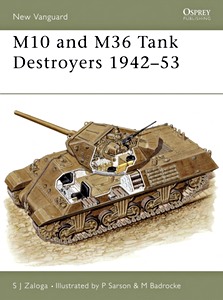
M10 and M36 Tank Destroyers 1942-1953 (Osprey)

The US Army had a unique tactical doctrine during World War II, placing the emphasis for tank fighting on its Tank Destroyer Command whose main early-war vehicle was the M10 3-inch Gun Motor Carriage, based on the reliable M4A2 Sherman tank chassis. This durable and versatile vehicle saw combat service from the North Africa campaign in 1943. By 1944, its gun was not powerful enough and it was rearmed with the new 90 mm gun, becoming the M36 90mm Gun Motor Carriage.

This book details one of the only US armoured vehicles capable of dealing with the Panther and Tiger during the Battle of the Bulge.

Contents: Introduction - Tank destroyer origins - Initial production - Into service - Production changes - Combat in France - Tank destroyers in the Pacific - The M10 in British service - Other Lend-Lease use - Postwar use - Bibliography - Color Plate Commentary - Index.

Detalle del libro

Autor:Steven J. Zaloga
Presentación:48 páginas, 25 x 18 x 0.5 cm, tapa blanda
Ilustración:ricamente ilustrado con fotos y dibujos (en b/n y color)
Idioma:Inglés
Editorial:Osprey Publishing (GB, 2002)
Colección:New Vanguard (57)
ISBN:9781841764696
Portada del libro: M10 and M36 Tank Destroyers 1942-1953 | New Vanguard (57) | Osprey

M10 and M36 Tank Destroyers 1942-1953

Idioma: Inglés

También te puede interesar:

Portada del libro: U.S. Vehicles and Heavy Weapons of the Vietnam War

U.S. Vehicles and Heavy Weapons of the Vietnam War

David Doyle | Inglés | tapa dura | 248 pág. | 2021

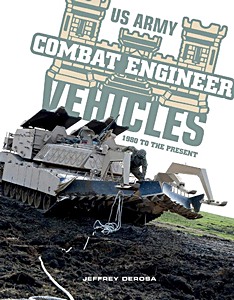
Portada del libro: US Army Combat Engineer Vehicles (1980 to the Present)

US Army Combat Engineer Vehicles (1980 to the Present)

Jeffrey DeRosa | Inglés | tapa dura | 192 pág. | 2021

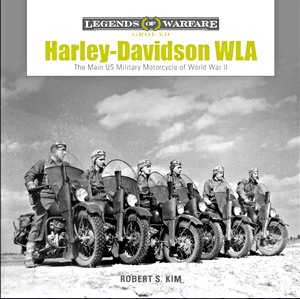
Portada del libro: Harley-Davidson WLA: The Main US Military Motorcycle of World War II | Legends of Warfare

Harley-Davidson WLA: The Main US Military Motorcycle of World War II

Robert S. Kim | Inglés | tapa dura | 112 pág. | 2020

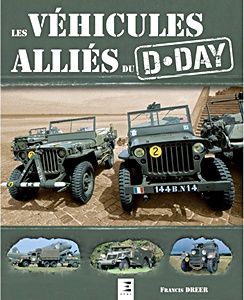
Portada del libro: Les Véhicules Alliés du D-Day

Les Véhicules Alliés du D-Day

Francis Dreer | Francés | tapa dura | 192 pág. | 2019

Portada del libro: U.S. Army Vehicle Markings 1944

U.S. Army Vehicle Markings 1944

Jean Bouchery, Phillippe Charbonnier | Inglés | tapa dura | 160 pág. | 2019

Portada del libro: U.S. Army 1944 - Les marquages des véhicules 1944

U.S. Army 1944 - Les marquages des véhicules 1944

Jean Bouchery, Philippe Charbonnier | Francés | tapa blanda | 192 pág. | 2018

Portada del libro: WW2 Allied Vehicles (1939-1945) | Military Portfolio

WW2 Allied Vehicles (1939-1945)

Inglés | tapa blanda | 140 pág. | 2000