Zamawiając produkty za pośrednictwem linków, wspierasz tę stronę bez ponoszenia dodatkowych kosztów. Więcej informacji >

Pojazdy wojskowe - Austria: książki - historia i modele

Szukasz książki o pojazdach wojskowych z austrii? Znajdziesz tu ilustrowane książki o historii, modelach i technice pojazdów wojskowych.

Austrian Napoleonic Artillery 1792–1815 (Osprey)

The Austrian artillery of the Revolutionary and Napoleonic Wars was a creation of the renowned Lichtenstein system of the early 1750s. This weight system produced a series of weapons of 3-, 6- and 12-pdr. calibre along with 7- and 10-pdr. howitzers.
In the 1780s they were joined by Cavalry artillery guns with their Wurst seats. In 1811 Austria also began the establishment of rocket troops based upon the British invention, whilst their heavy and siege pieces remained the 12 -,18- and 24-pdrs throughout the period.

This book describes the system as well as its operational use during the Napoleonic Wars.

Contents: Introduction - Organisation - The Lichtenstein system - The Cavalry Artillery Guns - Tactics and Massed Batteries - The Rockets - The Siege Guns - Bibliography and Collections - Colour plate commentary - Index.

Szczegóły

Autor:David Hollins
Wydanie:48 strony, 24.5 x 18.5 x 0.5 cm, miękka oprawa
Ilustracje:ilustrowane zdjęciami i rysunkami (czarno-białe i kolorowe)
Język:angielski
Wydawca:Osprey Publishing (GB, 2003)
Seria:New Vanguard (72)
ISBN:9781841764993
Okładka książki: Austrian Napoleonic Artillery 1792–1815 | New Vanguard (72) | Osprey

Austrian Napoleonic Artillery 1792–1815

Język: angielski

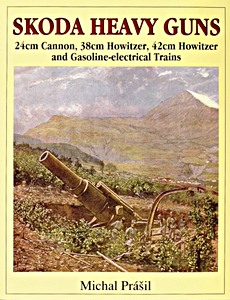
Skoda Heavy Guns - 24 cm Cannon, 38 cm Howitzer, 42 cm Howitzer and Gasoline-electric Trains

Ta książka przedstawia historię Skoda Works, drugiego co do wielkości producenta broni w Europie, oraz jego ciężkiej artylerii: armaty 24 cm, haubicy 38 cm i haubicy 42 cm.
Opisuje również działa, które były przewożone w unikalny sposób za pomocą benzynowo-elektrycznych pociągów Austro-Daimler, zaprojektowanych przez Ferdinanda Porsche.

Szczegóły

Autor:Michael Prasil
Wydanie:144 strony, 28 x 21.5 x 1.1 cm, miękka oprawa
Ilustracje:100+ czarno-białych zdjęć, rysunki
Język:angielski
Wydawca:Schiffer Publishing Ltd (USA, 2004)
ISBN:9780764302886
Okładka książki: Skoda Heavy Guns - 24 cm Cannon, 38 cm Howitzer, 42 cm Howitzer and Gasoline-electric Trains | Schiffer

Skoda Heavy Guns - 24 cm Cannon, 38 cm Howitzer, 42 cm Howitzer and Gasoline-electric Trains

Język: angielski
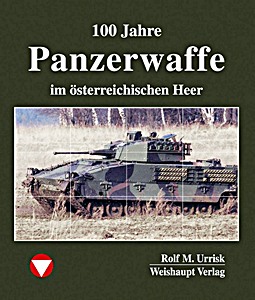
100 Jahre Panzerwaffe im österreichischen Heer

The history of the Austrian Panzerwaffe. A story of political and military mistakes, but also a story of technical masterpieces of Austrian military technology, which produced revolutionary developments (from the world's first wheeled tank to the world's first battle tank to the world's most modern infantry fighting vehicle).

An Austrian fate. It is hard to imagine how history would have turned out differently if those responsible had appreciated the value of these developments from the very beginning. For long periods of time, the inventive spirit of industry was stifled and the army was denied the (vital) equipment and weapons it needed.

This book aims to show the success story of the Austrian Panzerwaffe and domestic military technology. However, it is also intended to give the soldiers and technicians of all ranks who achieved these feats and who established the outstanding reputation of the Austrian Panzerwaffe worldwide the recognition they deserve...

Szczegóły

Autor:Rolf M. Urrisk-Obertynski
Wydanie:352 strony, 27 x 22.5 x 3.2 cm, twarda oprawa
Ilustracje:500+ zdjęcia czarno-białe i kolorowe
Język:niemiecki
Wydawca:Weishaupt Verlag (A, 2006)
ISBN:9783705902381
Okładka książki: 100 Jahre Panzerwaffe im österreichischen Heer | Weishaupt

100 Jahre Panzerwaffe im österreichischen Heer

Język: niemiecki

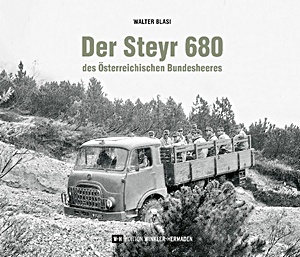
Der Steyr 680 des Österreichischen Bundesheeres

Od końca lat 60. Steyr 680 był głównym pojazdem transportowym austriackiej armii. Służył przede wszystkim do przewozu żołnierzy i zaopatrzenia, oferując miejsce dla kierowcy, pasażera i 18 ośób na pace.
Wersja wojskowa powstała na bazie modeli cywilnych i zastąpiła słabszego Steyra 580 g.

Istniały dwie główne wersje: dwuosiowa i trzyosiowa. Początkowo testowano tylko dwuosiową, lecz porównanie z amerykańskim GMC wykazało potrzebę wprowadzenia wariantu trzyosiowego.
Przez blisko 40 lat Steyr 680 pozostawał w służbie i wraz z Haflingerem oraz Pinzgauerem stał się jednym z najbardziej rozpoznawalnych pojazdów wojskowych Austrii.

Szczegóły

Autor:Walter Blasi
Wydanie:116 strony, 20 x 23.5 x 1.4 cm, twarda oprawa
Ilustracje:135 czarno-białych i kolorowych zdjęć
Język:niemiecki
Wydawca:Edition Winkler-Hermaden (A, 2024)
ISBN:9783951976242
Okładka książki: Der Steyr 680 des Österreichischen Bundesheeres | Edition Winkler-Hermaden

Der Steyr 680 des Österreichischen Bundesheeres

Język: niemiecki

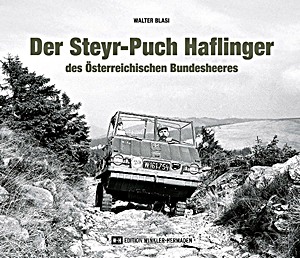
Der Steyr-Puch Haflinger des Österreichischen Bundesheeres

Steyr-Puch Haflinger jest dziś pojazdem kultowym. Jego muzealnym domem jest Muzeum Puch w Grazu, gdzie wystawiane są liczne warianty. Nadal można go zobaczyć na drodze, a dzięki internetowi istnieje globalna społeczność fanów Haflingera.

Walter Blasi opisuje w swojej książce długą drogę tego pojazdu do stania się kluczowym filarem Austriackich Sił Zbrojnych. Podwaliny pod Haflingera położono w 1956 roku, a pierwsze prototypy zbudowano w 1957 roku.
Testy przeprowadzone przez dział testowy w Grazu wzbudziły duże zainteresowanie publiczności. W 1959 roku pojazd wszedł do produkcji seryjnej jako "Haflinger Typ 700 AP".
Nazwa "Haflinger" pochodzi od sprawdzonego konia górskiego sił zbrojnych i została spontanicznie wymyślona podczas pokazu. Od 1958 roku pojazd był testowany w kilku jednostkach wojskowych.
Haflinger był używany przez dowódców, stanowiska dowodzenia i małe zespoły radiowe. Standardowa wersja była czteromiejscowa, radiowa wersja Haflingera była trzymiejscowa.
Pojazd stał się hitem eksportowym w wojsku. 80 procent produkcji eksportowano do 110 krajów. W latach 70. wiele pojazdów eksportowano do Afryki. Spadek popytu został stopniowo zrekompensowany zamówieniami na jego większego brata, Pinzgauera.

Szczegóły

Autor:Walter Blasi
Wydanie:116 strony, 20.5 x 24 x 1.5 cm, twarda oprawa
Ilustracje:bogato ilustrowane, zdjęcia czarno-białe i kolorowe
Język:niemiecki
Wydawca:Edition Winkler-Hermaden (A, 2020)
ISBN:9783950472097
Okładka książki: Der Steyr-Puch Haflinger des Österreichischen Bundesheeres | Edition Winkler-Hermaden

Der Steyr-Puch Haflinger des Österreichischen Bundesheeres

Język: niemiecki

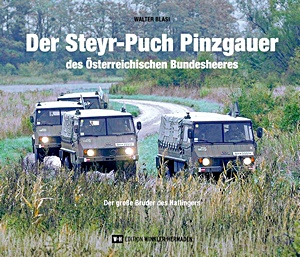
Der Steyr-Puch Pinzgauer des Österreichischen Bundesheeres

Po książce o Haflingerze Walter Blasi przedstawia bogato ilustrowaną dokumentację jego następcy - Steyr-Puch Pinzgauera w armii austriackiej. Uznawany za jeden z najlepszych pojazdów terenowych na świecie, Pinzgauer zdobył międzynarodowe uznanie i status kultowego.
Zapoczątkowanie produkcji seryjnej w Grazu nastąpiło w 1964 r., a pierwsze prototypy testowano w 1965 r.

Powstały dwie główne wersje: 4×4 i 6×6, dostosowane do różnych zadań. Początkowo stosowano silnik benzynowy, później także dieslowski.
Tysiące pojazdów trafiły do armii austriackiej i szwajcarskiej. Po blisko 30 latach i około 24 000 wyprodukowanych egzemplarzy produkcję zakończono w 2000 r. w Grazu.

Szczegóły

Autor:Walter Blasi
Wydanie:120 strony, 21.5 x 24 x 1.5 cm, twarda oprawa
Ilustracje:bogato ilustrowana
Język:niemiecki
Wydawca:Edition Winkler-Hermaden (A, 2022)
ISBN:9783950493764
Okładka książki: Der Steyr-Puch Pinzgauer des Österreichischen Bundesheeres | Edition Winkler-Hermaden

Der Steyr-Puch Pinzgauer des Österreichischen Bundesheeres

Język: niemiecki

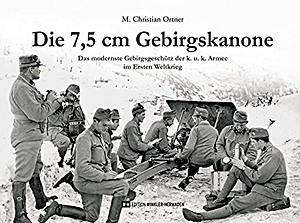
Die 7,5 cm Gebirgskanone - Das modernste Gebirgsgeschütz der k. u. k. Armee im Ersten Weltkrieg

With the 7.5 cm M.15 mountain cannon system Škoda, the Austro-Hungarian Army had the most modern mountain cannon used in the First World War. It replaced the 7 cm M.99 mountain cannon, which was already considered technically outdated when it was introduced.
As early as 1904, the Technical and Administrative Military Committee worked intensively on a successor model for the M.99 system, but the M.8 and M.9 cannons were only interim solutions. Although corresponding test models from the major gun manufacturers Schneider, Krupp and Škoda already existed, a new design was decided upon.

With the M.12 prototype, Škoda ultimately presented a completely equivalent gun. The cannon, eventually designated M.15, fulfilled all expectations and was used on all Austro-Hungarian fronts from 1915 to 1918, especially on the Italian theater of war.
In addition, imperial and royal artillery formations in Turkey and Turkish batteries were also equipped with this modern cannon.

From 1915 to 1918, a total of 2181 barrels and 2023 carriages were produced. The cannon was also delivered to Germany and was still used during the Second World War.
In this book, M. Christian Ortner documents the history of this famous mountain gun in an informative text and with the help of numerous previously unpublished illustrations.

Szczegóły

Autor:M. Christian Ortner
Wydanie:96 strony, 15.5 x 21 x 1.5 cm, twarda oprawa
Ilustracje:bogato ilustrowana
Język:niemiecki
Wydawca:Edition Winkler-Hermaden (A, 2019)
ISBN:9783950472004
Okładka książki: Die 7,5 cm Gebirgskanone - Das modernste Gebirgsgeschütz der k. u. k. Armee im Ersten Weltkrieg | Edition Winkler-Hermaden

Die 7,5 cm Gebirgskanone - Das modernste Gebirgsgeschütz der k. u. k. Armee im Ersten Weltkrieg

Język: niemiecki

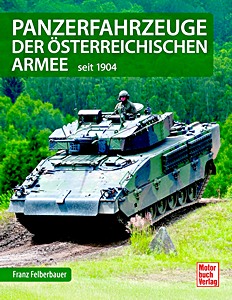
Panzerfahrzeuge der österreichischen Armee - seit 1904

NOWOŚĆ

Siły Zbrojne Austrii dysponują imponującą różnorodnością pojazdów pancernych. Pierwsze modele powstały w latach 1903-1905 w zakładach Austro-Daimler. W latach 30. armia korzystała z włoskich tankietek.
Po II wojnie światowej utworzono nowoczesne oddziały pancerne, początkowo wyposażone w pojazdy amerykańskie i francuskie, m.in. AMX-13. Później wprowadzono konstrukcje krajowe, takie jak niszczyciel czołgów Kürassier. Obecnie głównym czołgiem bojowym armii austriackiej jest niemiecki Leopard 2A4.

W bogato ilustrowanej publikacji historyk wojskowości Franz Felberbauer przedstawia pełny przegląd austriackich pojazdów pancernych - od Steyr ADGZ, Kürassier i Ulan po Pandur, Dingo i Leopard 2A4.
Książka zawiera dane techniczne, tło historyczne oraz liczne unikalne fotografie. Autor brał również udział w pracach rozwojowych nad kilkoma pojazdami.

Szczegóły

Autor:Franz Felberbauer
Wydanie:128 strony, 28.5 x 21 x 1.3 cm, twarda oprawa
Ilustracje:140 czarno-białych i kolorowych zdjęć
Język:niemiecki
Wydawca:Motorbuch Verlag (D, 2025)
ISBN:9783613047631
Okładka książki: Panzerfahrzeuge der österreichischen Armee - seit 1904 | Motorbuch

Panzerfahrzeuge der österreichischen Armee - seit 1904

Język: niemiecki

Inne książki z tej kategorii:

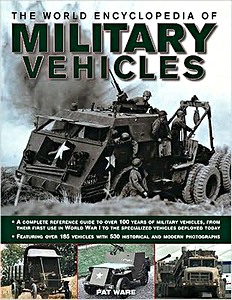
Okładka książki: The World Encyclopedia of Military Vehicles

The World Encyclopedia of Military Vehicles

Pat Ware | angielski | twarda oprawa | 256 str. | 2010

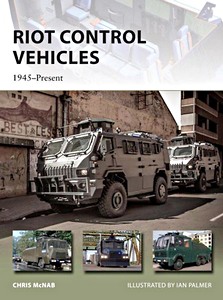
Okładka książki: Riot Control Vehicles 1945-Present | New Vanguard (219)

Riot Control Vehicles 1945-Present

Chris McNab | angielski | miękka oprawa | 48 str. | 2015

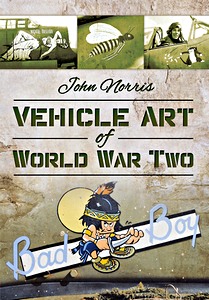
Okładka książki: Vehicle Art of World War Two

Vehicle Art of World War Two

John Norris | angielski | twarda oprawa | 179 str. | 2016

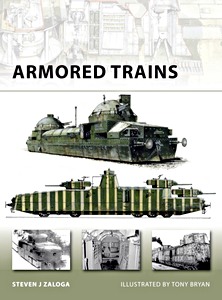
Okładka książki: Armored Trains | New Vanguard (140)

Armored Trains

Steven J. Zaloga | angielski | miękka oprawa | 48 str. | 2008