Zamawiając produkty za pośrednictwem linków, wspierasz tę stronę bez ponoszenia dodatkowych kosztów. Więcej informacji >

Statki towarowe: książki - historia i armatorzy

Szukasz książki o statkach towarowych? Tutaj znajdziesz książki o historii, firmach żeglugowych i budowie coasterów, trampów, chłodniowców, masowców i tankowców.

Looking Back at Traditional Cargo Ships

Covers cargo ships that are termed mid-ships layout, three-quarters aft layout and also those with a split superstructure. The book looks at cargo liners, former cargo liners and tramp ships in service under a wide variety of flags. Some ships date back as far as 1914 and some of the classic designs that appeared through to the early 1980s are also covered.

This is the latest book in the Looking Back......series. There are stunning colour photographs of traditional cargo ships with detailed captions giving information about the ship, its history and location.
For the purpose of this book, a traditional cargo ship is defined as a dry-cargo vessel that has cargo accommodation both forward and aft of its machinery space.

Szczegóły

Autor:Andrew Wiltshire
Wydanie:80 strony, 20 x 25 x 1.1 cm, twarda oprawa
Ilustracje:bogato ilustrowane, kolorowych zdjęć
Język:angielski
Wydawca:Bernard McCall (GB, 2015)
ISBN:9781902953694
Okładka książki: Looking Back at Traditional Cargo Ships | Bernard McCall

Looking Back at Traditional Cargo Ships

Język: angielski

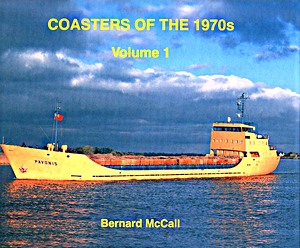
Coasters of the 1970s (Volume 1)

Written by Bernard McCall, this book has 83 colour photographs of coasters built during the 1970s. The photographs date from the 1970s up to the present day and we see some ships in their original guise and others after being sold and/or modernised.
Detailed captions accompanying the photographs tell more about the history of the ship.

Szczegóły

Autor:Bernard McCall
Wydanie:80 strony, 19.5 x 24.5 cm, twarda oprawa
Ilustracje:83 kolorowych zdjęć
Język:angielski
Wydawca: (, 2015)
ISBN:9781902953748
Okładka książki: Coasters of the 1970s (Volume 1) |

Coasters of the 1970s (Volume 1)

Język: angielski

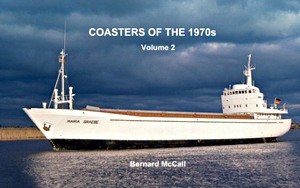
Coasters of the 1970s (Volume 2)

This hardback full-colour album details coasters built in the 70s over 96 pages and with 106 photographs. Some ships remain in their original guise while others are documented throughout their life after being sold and/or modernised.
The colour photographs are accompanied by detailed captions that tell more about the ship and, in some cases, the building yard.

Szczegóły

Autor:Bernard McCall
Wydanie:96 strony, 19.5 x 24.5 cm, twarda oprawa
Ilustracje:106 kolorowych zdjęć
Język:angielski
Wydawca:Bernard McCall (GB, 2016)
ISBN:9781902953793
Okładka książki: Coasters of the 1970s (Volume 2) | Bernard McCall

Coasters of the 1970s (Volume 2)

Język: angielski

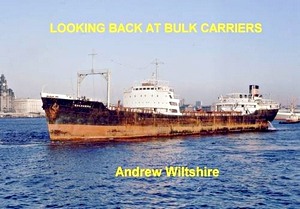
Looking Back at Bulk Carriers

A significant development occurred in 1925 when Swedish owners took delivery of a pair of purpose-built ore carriers. The 1950s witnessed the continued development of the bulk carrier, with larger ships being constructed, often for specific trades such as the carriage of iron ore. The ten years between 1962 and 1972 saw bulk trade expand dramatically. Nowadays the bulk carrier continues to play a vital role worldwide.

Written by Andrew Wiltshire, this book contains 106 colour images of bulk carriers including specialised vessels for the carriage of ore, cement, coal and self-discharge in addition to the many different types of conventional bulkers and ore/oil vessels.

Szczegóły

Autor:Andrew Wiltshire
Wydanie:80 strony, 20 x 24.5 x 1.2 cm, twarda oprawa
Ilustracje:106 kolorowych zdjęć
Język:angielski
Wydawca:Bernard McCall (GB, 2012)
ISBN:9781902953588
Okładka książki: Looking Back at Bulk Carriers | Bernard McCall

Looking Back at Bulk Carriers

Język: angielski

Looking Back at Container Ships

In this latest addition to Andrew Wiltshire's Looking Back series, we take a fifty year journey exploring container ships from around the world. Learn about the ships that have rapidly changed the face of worldwide shipping and global trade today and the consortia formed to operate them.
A chronological look at container ships from the early conversions through to the giants that have entered service in the last few years.

Szczegóły

Autor:Andrew Wiltshire
Wydanie:80 strony, 19.5 x 24.5 x 1.4 cm, twarda oprawa
Ilustracje:ponad 100 fotografii
Język:angielski
Wydawca:Bernard McCall (GB, 2017)
ISBN:9781902953878
Okładka książki: Looking Back at Container Ships | Bernard McCall

Looking Back at Container Ships

Język: angielski

Tramp Ships - An Illustrated History

The tramp ship was the taxi of the seas. With no regular schedules, it voyaged anywhere and everywhere, picking up and dropping off cargoes, mainly bulk cargoes such as coal, grain, timber, china clay and oil. It was the older and slower vessels that tended to find their way into this trade, hence the tag 'tramp', though new tramps were built, often with the owner's eye on chartering to the liner companies.

In this book by the well-known author Roy Fenton, their evolution is described over the course of more than 100 years, from the 1860s, when the steam tramp developed from the screw collier, until it was largely replaced by the specialist bulk carrier in the 1980s.

An introduction looks at the design and building of tramps before going on to describe the machinery, from simple triple-expansion turbines to diesel engines. Their operation and management and the life of the officers and crews is also covered.
The meat of the book is to be found in the 300 wonderfully evocative photographs of individual ships which illustrate the development of the tramp and its trades through the last years of the 19th century, the two world wars, and the postwar years.
Each caption gives the dimensions, the owners and the builder, and outlines the career, with notes on trades and how they changed over a ship's lifetime. Design features are highlighted and notes on machinery included.

Szczegóły

Autor:R. S. Fenton
Wydanie:176 strony, 26.5 x 25 x 1.8 cm, twarda oprawa
Ilustracje:ponad 300 czarno-białych zdjęć
Język:angielski
Wydawca:Seaforth Publishing (GB, 2013)
ISBN:9781848321588
Okładka książki: Tramp Ships - An Illustrated History | Seaforth

Tramp Ships - An Illustrated History

Język: angielski

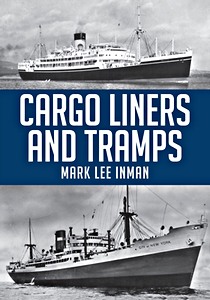
Cargo Liners and Tramps

In the post-war era, there was still a demand for ocean-going travel, not just on the glamorous large liners and mail ships, but also on much smaller ships. Many of these could be just as well appointed and comfortable and doubtless provided an intimacy that may have been missing from the larger and faster ships.
If time was not a vital consideration, and money possibly was, then travel by cargo liner was an ideal option.

The pictures presented here represent souvenirs of an era that air travel and the onset of the fast container ship have totally obliterated. Many of the photographs presented here were acquired between 1961 and 1965 from the major British and European shipping companies, some of whom responded particularly generously. Some Asian and American companies contributed as well.

This material gives an insight into the use of postcards and photographs as a vital part of marketing, promotion and public relations in a world that was soon to disappear. Here, Mark Lee Inman collects some of the most interesting pictures and postcards of this era.

Szczegóły

Autor:Mark Lee Inman
Wydanie:96 strony, 23.5 x 21.5 x 1.5 cm, miękka oprawa
Ilustracje:180 czarno-białych i kolorowych zdjęć
Język:angielski
Wydawca:Amberley Publishing (GB, 2018)
ISBN:9781445673844
Okładka książki: Cargo Liners and Tramps | Amberley

Cargo Liners and Tramps

Język: angielski

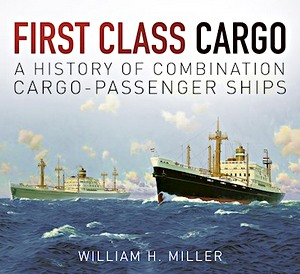
First Class Cargo : A History of Combination Cargo-Passenger Ships

An unusual blend of cargo freight, holiday-making passengers and government officials, the combination cargo-passenger ship is an oddity now all but relegated to the past.
In its heyday, however, royals such as Princess Alice, Countess of Athlone, were known to travel by 'banana boat' to the Caribbean. Ships such as Fyffes Line's Golfito would stop at Trinidad, Barbados and Kingston to load up with bananas, whilst passengers would make the most of the exotic setting.

Carrying between 50 and 100 passengers with anything up to 10,000 tons of cargo, these ships were both working freighters as well as elegant cruise-like ships, renowned for their intimate, yacht-like atmosphere.
William Miller is the author of ninety books on passenger ships and is an acknowledged world expert on the subject. Told with affection, this nostalgic insight into the world of passenger-cargo ships brings to life, in full colour, the magnificent ships and passengers from the golden age of interoceanic travel.

Szczegóły

Autor:William H. Miller
Wydanie:96 strony, 22.5 x 25 cm, miękka oprawa
Ilustracje:100 zdjęć czarno-białych i 56 kolorowych
Język:angielski
Wydawca:The History Press Ltd (GB, 2016)
ISBN:9780750965088
Okładka książki: First Class Cargo : A History of Combination Cargo-Passenger Ships | The History Press

First Class Cargo : A History of Combination Cargo-Passenger Ships

Język: angielski

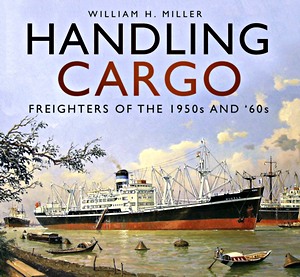
Handling Cargo : Freighters of the 1950s and '60s

Freighters of the 1950s and '60s - with masts, booms and hatches - were the last of their generation. It was the end of an era, just before the massive transition to faster, more efficient containerised shipping on larger and larger vessels.
These were `working ships', but many would be retired prematurely and finish up under flags of convenience, for virtually unknown owners, before going off to the scrappers in the 1970s and '80s.

For some ships, their life's work was cut short and their decommissioning was quick. In "Handling Cargo", William H. Miller remembers the likes of Cunard, Holland America and United States Lines on the North Atlantic, Moore McCormack Lines to South America, Farrell Lines to Africa and P&O out East.

Szczegóły

Autor:William H. Miller
Wydanie:120 strony, 22.5 x 25 x 1.5 cm, miękka oprawa
Ilustracje:96 zdjęć czarno-białych i 80 kolorowych
Język:angielski
Wydawca:The History Press Ltd (GB, 2018)
ISBN:9780750984348
Okładka książki: Handling Cargo : Freighters of the 1950s and '60s | The History Press

Handling Cargo : Freighters of the 1950s and '60s

Język: angielski

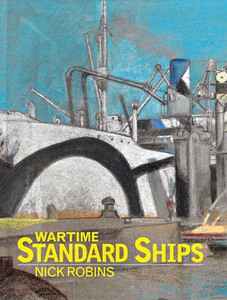
Wartime Standard Ships

In both World Wars there arose a pressing need for merchant tonnage both to supplement existing ships but, more importantly, to replace ships that had been sunk by enemy action, and the key to the Allied strategy in both wars was a massive programme of merchant shipbuilding.
This need gave rise to a series of standard designs with increasing emphasis on prefabrication and a progression towards welded hulls.

This book tells the remarkable story of the design and construction of the many types that not only contributed to their country s war efforts, but were also responsible for a cultural change in world shipbuilding that would lay the foundations for the post-war industry.
The story begins in the First World War with the National type cargo ships which were the first examples of prefabricated construction. The best known of all types of wartime standard ships, of course, were the Liberty ships and their successor, the better equipped Victory ships, both built in the United States. Some 2,700 Liberty ships were built and this incredible achievement undoubtedly saved the Allies from losing the War. In Canada, the Ocean and Park ships made a further major contribution.

Germany and Japan also introduced standard merchant shipbuilding programmes during the Second World War and these are covered in detail. The many different types and designs are all reviewed and their roles explained, while the design criteria, innovative building techniques and the human element of their successful operation is covered.

Szczegóły

Autor:Nick Robins
Wydanie:160 strony, 24.5 x 19 cm, twarda oprawa
Ilustracje:160 zdjęcia i rysunki
Język:angielski
Wydawca:Seaforth Publishing (GB, 2017)
ISBN:9781848323766
Okładka książki: Wartime Standard Ships | Seaforth

Wartime Standard Ships

Język: angielski

Containerschiffe - auf allen Weltmeeren (Typenkompass)

In just a few decades, container ships have not only influenced but also changed the entire transport and logistics processes worldwide. Larger and larger ships have been built at ever shorter intervals. In 1950, the first container ships from the USA sailed the world's oceans.

Strony książki [TK] Containerschiffe - auf allen Weltmeeren (1)

Strony książki "Containerschiffe - auf allen Weltmeeren"

This Typenkompass by Horst W. Laumanns, himself a specialist journalist, editor and historian, traces the development of the ship class and presents selected and special container ships in the tried and tested Typenkompass style. Here, readers will find numerous data and facts about the individual types.

Szczegóły

Autor:Horst W. Laumanns
Wydanie:128 strony, 20.5 x 14 cm, miękka oprawa
Ilustracje:150 czarno-białych i kolorowych zdjęć
Język:niemiecki
Wydawca:Pietsch Verlag (D, 2018)
Seria:Typenkompass
ISBN:9783613508613
Okładka książki: Containerschiffe - auf allen Weltmeeren | Typenkompass | Pietsch

Containerschiffe - auf allen Weltmeeren

Język: niemiecki

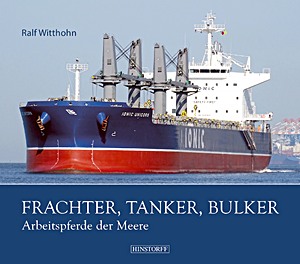
Frachter, Tanker, Bulker: Arbeitspferde der Meere

The wide world of merchant shipping summarized in one book: From Helsinki to Malta, from Istanbul to Las Palmas, from Vancouver to Singapore, the reader looks at the interfaces of international trade and, by reading this work, gains extensive knowledge about current shipping, global shipbuilding, and large and small ports.

Well-founded specialist texts describe the current state of development of the maritime economy, explain the technology and the different uses of various types of ships, from container freighters to car transporters, ferries, bulk carriers and tankers. The activities of shipping companies and the work in the shipyards in Europe and overseas are examined.
In this way, the book author and magazine editor Ralf Witthohn paints a unique, up-to-date, meaningful and critical picture of international shipping in the 21st century.

Szczegóły

Autor:Ralf Witthohn
Wydanie:208 strony, 21.5 x 24.5 x 2.5 cm, twarda oprawa
Ilustracje:bogato ilustrowana
Język:niemiecki
Wydawca:Hinstorff Verlag (D, 2018)
ISBN:9783356022032
Okładka książki: Frachter, Tanker, Bulker: Arbeitspferde der Meere | Hinstorff

Frachter, Tanker, Bulker: Arbeitspferde der Meere

Język: niemiecki

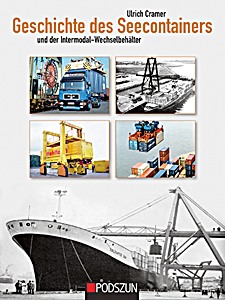
Geschichte des Seecontainers und der Intermodal-Wechselbehälter

The author, Ulrich Cramer, a trained motor vehicle and aircraft engineer, has been working on transport rationalization projects since the early 1960s. First at the vehicle and equipment manufacturer MAFI and from 1971 with his own engineering firm CONTEC. Numerous innovations can be traced back to his engineering work.
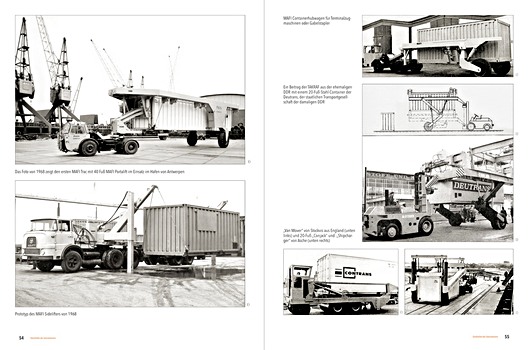
In this book, he describes from his own experience how the beginnings of container transport in the USA in the early 1950s developed into global, trimodal transport to the smallest corner of the world.

Strony książki Geschichte des Seecontainers (1)

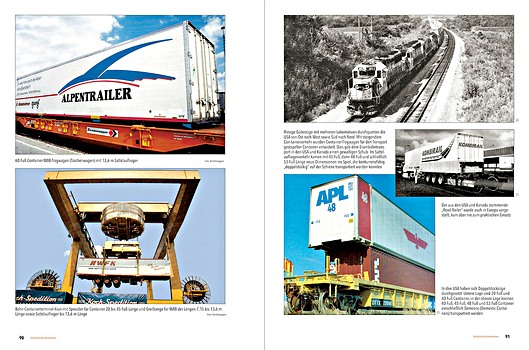
Strony książki "Geschichte des Seecontainers und der Intermodal-Wechselbehälter"

Cramer tells the story from the perspective of a technician. He himself had applied for a patent for the idea of the "MAFI Rolltrailer" in 1966. In 1967, he and MAFI built the first steel containers for the first European container shipping consortium ACL.
When container traffic began in Europe in 1966 and the sea container was still considered a "dead elephant", he and MAFI built the "Portalift", the first "container portal vehicle" from Europe. He played a key role in the steel container quickly gaining its dominant position.

Ulrich Cramer did pioneering work with the construction of the first container factory in China in 1980, which is now the largest container manufacturer in the world, and the construction of the first two 20-foot steel containers for CIMC in 1981. He transferred his technical knowledge of container construction to numerous projects in the field of inland containers and swap bodies, as well as to the development of associated transport and handling equipment.

Strony książki Geschichte des Seecontainers (2)

Szczegóły

Autor:Ulrich Cramer
Wydanie:168 strony, 29 x 21.5 x 1.7 cm, twarda oprawa
Ilustracje:290 czarno-białych i kolorowych zdjęć
Język:niemiecki
Wydawca:Verlag Podszun (D, 2021)
ISBN:9783861339816
Okładka książki: Geschichte des Seecontainers und der Intermodal-Wechselbehälter | Podszun

Geschichte des Seecontainers und der Intermodal-Wechselbehälter

Język: niemiecki

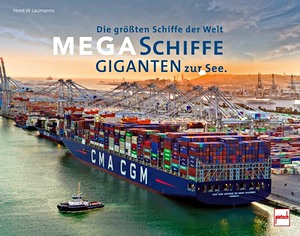
Megaschiffe - Giganten zur See - Die grössten Schiffe der Welt

Ships with 24 000 standard containers - that's what experts were predicting for 2020. Such superlative designs place the highest demands on shipbuilding. The engine of a ship for 14 000 containers alone is as big as two single-family homes and has an output of around 102 000 hp.
But other types of ships are also getting bigger, almost always with the aim of increasing profitability.

Strony książki Megaschiffe - Giganten zur See (1)

Strony książki "Megaschiffe - Giganten zur See - Die grössten Schiffe der Welt"

From cruise ships to container ships to icebreakers and aircraft carriers: The book provides an insight into the world of modern megaships and provides an overview of the largest machines that sail the oceans.

Strony książki Megaschiffe - Giganten zur See (2)

Szczegóły

Autor:Horst W. Laumanns
Wydanie:192 strony, 24 x 30.5 cm, twarda oprawa
Ilustracje:210 czarno-białych i kolorowych zdjęć
Język:niemiecki
Wydawca:Pietsch Verlag (D, 2019)
ISBN:9783613508927
Okładka książki: Megaschiffe - Giganten zur See - Die grössten Schiffe der Welt | Pietsch

Megaschiffe - Giganten zur See - Die grössten Schiffe der Welt

Język: niemiecki

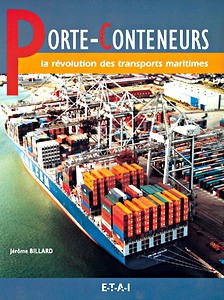
Porte-conteneurs - la révolution des transports maritimes

The docks of the ports, invaded by the various goods freshly unloaded from the cargo ships on stopover, are now only a memory. The warehouses are now desperately empty. The small sailors' bars, the cheerful pharmacies, the sailor's houses, the shipowners' offices, so close to the ships, no longer exist. The dockers no longer go down to the bottom of the holds.
The endless lines of cargo ships docked in the basins, dug in the city centers of the great maritime metropolises, give way to marinas. Today, goods are transported in large iron boxes, with standardized dimensions. The cargo ships, with non-standardized holds, are replaced by impressively large box-carrying ships.

The containerization of maritime transport, which began in the 1970s, is a real revolution, a prelude to what would later be called globalization. It quickly took with it an entire tradition, transformed trades, eliminated others, disrupted naval architecture and the plans of ports, which had to equip themselves at great expense to receive the new container ships. It caused the disappearance of many century-old armaments.

It is this moment in history when everything changed, and its repercussions up to today, that this book aims to tell. "Porte-conteneurs - la révolution des transports maritimes" deals with the most important change experienced by this sector since the arrival on the seas of steam cargo ships, and their generalization at the beginning of the 20th century.

Szczegóły

Autor:Jérôme Billard
Wydanie:192 strony, 31 x 23.5 cm, twarda oprawa
Ilustracje:50 zdjęć czarno-białych i 250 kolorowych
Język:francuski
Wydawca:ETAI (F, 2003)
ISBN:9782726893401
Okładka książki: Porte-conteneurs - la révolution des transports maritimes | ETAI

Porte-conteneurs - la révolution des transports maritimes

Język: francuski

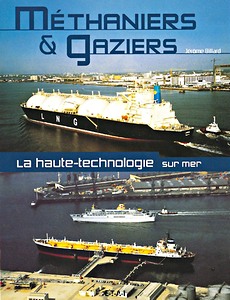
Méthaniers & gaziers - la haute technologie en mer

The history of gas transport by sea, although recent, is incredibly rich. It began after the war thanks to a few pioneers, who were at once outstanding technicians, adventurers, and slightly crazy businessmen.
These exceptional men and women founded empires. The ships followed one another from 1955 to 1980, each one a prototype and becoming the leader in its category. Each time it was put into service, the engineers experienced world firsts.
The transport of gas, as you might have guessed, is no small matter, but a series of bets, each one riskier than the last, but always successful. The crews of these gas carriers, forming a separate band, explored the world, delivering gas to be bottled everywhere. The sector reached its technological peak with the commissioning of large LNG carriers, a specialty of French shipyards, at the end of the 1910s. LNG carriers remain the most delicate and expensive vessels to build.

"Méthaniers & gaziers" tells a maritime saga like few others, where human genius, money, luck, the highest technology and passion are combined. All this with a single goal; to transport all gases, across all oceans, in complete safety. It is a secret, exhilarating, adventurous world, with solid friendships, that this book invites you to discover.

Szczegóły

Autor:Jérôme Billard
Wydanie:192 strony, 31 x 23.5 cm, twarda oprawa
Ilustracje:100 zdjęć czarno-białych i 200 kolorowych
Język:francuski
Wydawca:ETAI (F, 2004)
ISBN:9782726893746
Okładka książki: Méthaniers & gaziers - la haute technologie en mer | ETAI

Méthaniers & gaziers - la haute technologie en mer

Język: francuski

Inne książki z tej kategorii:

Okładka książki: Ferries of Denmark / Danske Faerger

Ferries of Denmark / Danske Faerger

Bruce Peter | angielski | twarda oprawa | 172 str. | 2013

Okładka książki: P&O Ferries

P&O Ferries

Ian Collard | angielski | miękka oprawa | 96 str. | 2022

Okładka książki: Sealink British Ferries

Sealink British Ferries

Ian Collard | angielski | miękka oprawa | 96 str. | 2019

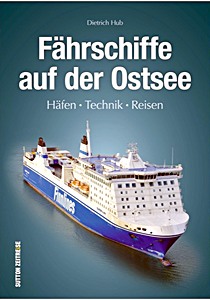
Okładka książki: Fährschiffe auf der Ostsee - Häfen, Technik, Reisen

Fährschiffe auf der Ostsee - Häfen, Technik, Reisen

Dietrich Hub | niemiecki | twarda oprawa | 160 str. | 2020