Wanneer u via onze links bestelt, ondersteunt u deze website zonder extra kosten. Meer informatie >

Scheepvaart - USA: boeken - historie en schepen

Een boek over de Amerikaanse scheepvaart? Ontdek hier boeken over de historie, havens, rederijen, typen en constructie van schepen uit de Verenigde Staten.

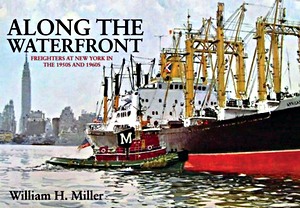
Along the Waterfront - Freighters at New York in the 1950s and 1960s

The 1954 film On the Waterfront brought to life the New York docks of the 1950s, when it was often said that a ship, usually a freighter, arrived or departed every 24 minutes, around the clock.
Now, the Port of New York is handling more cargo than ever before, but all of it containerised.

"Along the Waterfront", a followon to "Along the Hudson" (which looked at passenger ships in the Port of New York), covers the vast and fascinating fleet of freighters that once called at New York, including ships and companies that did not quite make it, such as the Bull Line, Standard Fruit, Torm Lines and the Booth Steamship Company.
In this book, William H. Miller takes the reader on an evocative trip back to the days of the New York docks as they were portrayed in On the Waterfront.

Specificaties

Auteur:William H. Miller
Uitvoering:128 blz, 17 x 24.5 cm, paperback
Illustraties:160 foto's
Taal:Engels
Uitgever:Amberley Publishing (GB, 2016)
ISBN:9781445654089
Omslag van het boek: Along the Waterfront - Freighters at New York in the 1950s and 1960s | Amberley

Along the Waterfront - Freighters at New York in the 1950s and 1960s

Taal: Engels

Commercial Ships of the Great Lakes: A Photo Gallery

Millions of tons of cargo have been transported across the five Great Lakes bringing the products and commodities of the Midwestern states and Canadian provinces to markets worldwide.
Known for its unique commercial operations, Great Lakes shipping has always relied on the old school uses of single screw tugboats, steam propulsion, and incredibly talented engineers and captains who can maneuver their ships in and out of tight quarters and winding rivers. But times are changing on the Great Lakes, and these changes are signaling the end of an era.

This is the story of that grand era of shipping on the Great Lakes. Over 300 sharp black and white historic and current photographs bring us aboard those hard-working ships that opened the interiors of America and Canada to the world.
"Commercial Ships on the Great Lakes" provides a comprehensive look at these great ships and includes everything from the smallest tugs, the barges, the passenger and workboats, to the gigantic ore boats. Also included are ships relegated to the boneyard and others that have been resurrected as museums, fishing boats, and passenger boats.

Specificaties

Auteur:Franz A. VonReidel
Uitvoering:160 blz, 28 x 21.5 x 1.3 cm, harde kaft
Illustraties:350 z/w foto's
Taal:Engels
Uitgever:Iconografix (USA, 2005)
ISBN:9781583881538
Omslag van het boek: Commercial Ships of the Great Lakes: A Photo Gallery | Iconografix

Commercial Ships of the Great Lakes: A Photo Gallery

Taal: Engels

Great Lakes Shipping: Ports & Cargoes Photo Gallery

Over 163 million net tons of cargo are moved each year on the Great Lakes in the holds of a vast fleet of steel ships. View first-hand how cargoes are loaded at the grain terminals of Thunder Bay, the ore docks of Minnesota's north shore, or the sprawling Midwest Energy coal dock in Superior.
See where these giant ships and cargoes go "down below" on the infamous Cuyahoga River, the Ford Plant on Detroit's Rouge River, or inside the heart of the famous U.S. Steel Works in Gary, Indiana.

The photographs in this book bring you a slice of industrial America rarely seen by the general public. These images, contemporary and historic, will take you to all of the primary loading and unloading ports from Lake Superior to Lake Erie.

Specificaties

Auteur:Patrick D. Lapinski
Uitvoering:160 blz, 28 x 21.5 x 1.3 cm, paperback
Illustraties:315 z/w- en kleurenfoto's
Taal:Engels
Uitgever:Iconografix (USA, 2009)
ISBN:9781583882382
Omslag van het boek: Great Lakes Shipping: Ports & Cargoes Photo Gallery | Iconografix

Great Lakes Shipping: Ports & Cargoes Photo Gallery

Taal: Engels

Liberty Factory : The Untold Story of Henry Kaiser's Oregon Shipyards

Churchill famously claimed that the only thing that had really frightened him during the war was the Battle of the Atlantic. Keeping open the lifeline between the US 'arsenal of democracy' and the UK was essential to preparations for the invasion of Europe and in the final analysis this came down to building merchant ships faster than German U-boats could sink them.
Crucial to this achievement was the 'Liberty ship', a simple freighter that could be built rapidly, combined with the untapped industrial potential of the USA that could build them in vast numbers.

Undoubtedly the most important individual in the rapid expansion of US wartime shipyard capacity was Henry Kaiser, a man with no previous shipbuilding experience but an entrepreneur of vision and drive. This book tells the story of how he established huge new yards using novel mass-production techniques in the most surprising location - Oregon, one of the least industrially developed areas of the US and one without an existing pool of skilled labour to draw on.

It was not just the yards that were revolutionary, as the Kaiser companies provided housing, health and welfare benefits that attracted workers from all over the country, including women recruited into an industrial workplace for the first time.
This well-motivated workforce turned the Kaiser yards into the most efficient shipbuilders in the country. In total Kaiser's Oregon yards built over 450 'Liberties' and the follow-on 'Victory ships' - including one built in the record time of 10 days - as well as around 150 tankers, some 50 escort carriers and countless amphibious warfare ships.
Curiously, this truly remarkable achievement, of huge significance to the eventual Allied victory, has been consigned to the footnotes of history, but is fully documented and celebrated for the first time in this book.

Specificaties

Auteur:Peter J Marsh
Uitvoering:192 blz, 26 x 21.5 x 3.2 cm, harde kaft
Illustraties:200 z/w foto's
Taal:Engels
Uitgever:Seaforth Publishing (GB, 2020)
ISBN:9781526783059
Omslag van het boek: Liberty Factory : The Untold Story of Henry Kaiser's Oregon Shipyards | Seaforth

Liberty Factory : The Untold Story of Henry Kaiser's Oregon Shipyards

Taal: Engels

Liberty Ships: America's Merchant Marine Transport in World War II (Legends of Warfare)

Although not a weapon in the traditional sense of the word, arguably no item in the Allied arsenal contributed as much to the defeat of the Axis during WWII as did the Liberty ships. The 2,710 Liberty ships placed into service between 1941 and 1945 provided a vital link in the supply chain not only of US but also Allied forces during WWII.
Although the basic design itself was obsolete even before the first one slid down the builder's ways, it had the advantage of being relatively easy to produce, and simple to operate and maintain. Thus, the vessels were mass-produced by no fewer than eighteen shipyards. Building time, initially 244 days, dropped to forty-two days per ship, although as a publicity stunt the "Robert E. Peary" was launched four days and fifteen and a half hours after the keel was laid.

Specificaties

Auteur:David Doyle
Uitvoering:128 blz, 23 x 23 x 1.8 cm, harde kaft
Illustraties:295 z/w- en kleurenfoto's
Taal:Engels
Uitgever:Schiffer Publishing Ltd (USA, 2020)
Serie:Legends of Warfare
ISBN:9780764359590
Omslag van het boek: Liberty Ships: America's Merchant Marine Transport in World War II | Legends of Warfare | Schiffer

Liberty Ships: America's Merchant Marine Transport in World War II

Taal: Engels

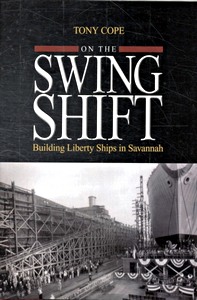
On the Swing Shift - Building Liberty Ships in Savannah

During World War II eighty-eight of the almost three thousand Liberty ships built in America were launched in Savannah, Georgia. Without Liberty ships, the Battle of the Atlantic might have been lost.
Few remember the Liberty ships today; fewer remember the shipyard or that the Southeastern Shipbuilding Corporation was the largest industry ever located there. The land on which this shipyard stood is now derelict. Thousands drive by it every day and have no idea of the great contribution to the war effort that was made on that site.

This social history tells the story of the men and women who built these merchant ships in Savannah. Most came from rural areas and had never seen a ship, much less built one. Their work was dangerous and boring, but many worked double shifts, nights, and seven days a week.
There were 45,000 of them during the four years of the shipyard's existence, and in spite of all of the problems faced, they built ships and built them well.

Cope makes use of more than 120 taped interviews with shipyard workers, merchant seamen, dock workers, and Navy and Coast Guard personnel, as well as letters and official documents, to present an authentic and moving record of the working conditions and lives of those who built the Liberty ships in the shipyards of Savannah.

Specificaties

Auteur:Tony Cope
Uitvoering:288 blz, 23.5 x 16 x 1.3 cm, harde kaft
Illustraties:geïllustreerd
Taal:Engels
Uitgever:Naval Institute Press (USA, 2009)
ISBN:9781591141235
Omslag van het boek: On the Swing Shift - Building Liberty Ships in Savannah | Naval Institute

On the Swing Shift - Building Liberty Ships in Savannah

Taal: Engels

Ships of the Great Lakes: An Inside Look at the World's Largest Inland Fleet

Is working on ships, sailing or tugging through the sea-like waters of the Great Lakes something you've imagined yourself doing? Whether it's your dream job or an area of interest, it is no easy task and takes a full crew to power the 1000-footers, steamers, tugs, Seaway and river class vessels.

Lapinski gets close and personal with ship-life, from the captain to the cook, from the inner workings of the engine department to the intricacies of navigation, from the work it takes to load and unload large masses of material, to keeping the ships in tip-top shape around the clock during the busy shipping season.
A huge variety of ships, a huge variety of jobs, and an even bigger cross section of people, all have helped make the lives of Americans a little easier by bringing in or out the goods through the Great Lakes.

Specificaties

Auteur:Patrick D. Lapinski
Uitvoering:128 blz, 28 x 21.5 x 1 cm, paperback
Illustraties:366 foto's
Taal:Engels
Uitgever:Iconografix (USA, 2011)
ISBN:9781583882801
Omslag van het boek: Ships of the Great Lakes: An Inside Look at the World's Largest Inland Fleet | Iconografix

Ships of the Great Lakes: An Inside Look at the World's Largest Inland Fleet

Taal: Engels

The American Clipper Ship, 1845-1920 - A Comprehensive History, with a Listing of Builders and Their Ships

This work offers a new and comprehensive account of the fastest and most beautiful sailing ships ever built. It explores the quest for speed on the seas from the early 1800s through the fast-paced times of the 1850s spurred on by the California Gold Rush of 1849.

Not only are the career details of such noted ships as the Flying Cloud and Challenge discussed in detail, but they are also put in context with the times in which they operated. Their builders in East Coast states from Maine to Florida are discussed in detail, as are the men, and a woman in one instance, who commanded and manned these ships.

The book documents the roles that owners and shipping agents played, what kinds of cargo the ships carried worldwide and the unusual trades in which they participated.

Specificaties

Auteur:Glenn A. Knoblock
Uitvoering:376 blz, 25.5 x 18 x 2.3 cm, harde kaft
Illustraties:100 illustraties
Taal:Engels
Uitgever:McFarland & Co Inc (USA, 2014)
ISBN:9780786471126
Omslag van het boek: The American Clipper Ship, 1845-1920 - A Comprehensive History, with a Listing of Builders and Their Ships | McFarland

The American Clipper Ship, 1845-1920 - A Comprehensive History, with a Listing of Builders and Their Ships

Taal: Engels

The Masting of American Merchant Sail in the 1850s : An Illustrated Study

This book describes the intricacies of the construction and fabrication more than 150 years ago of masts and yards installed in American merchant vessels, particularly those spars which were "built" or composed of multiple pieces bound together by iron bands. These were referred to as "made" spars as opposed to spars constructed from a single tree. It also contains instructions for developing the shape and proportions of various spars.
Very little information is available on this subject. Generally, the external sizes of individual spars can be found but intimate details are sorely neglected. In addition, the book includes the spacing and location of masts in a ship, and the rake, and it discusses the types of wood that are most desirable in the construction of spars.

Before his retirement in 1972, William L. Crothers worked as a draftsman in the design division of the Philadelphia Navy Yard. He is also the author of books on the construction of American clipper ships American packets and freighters of the 1850s.

Specificaties

Auteur:William L. Crothers
Uitvoering:188 blz, 27.5 x 21.5 x 1.3 cm, paperback
Illustraties:57 tekeningen
Taal:Engels
Uitgever:McFarland & Co Inc (USA, 2014)
ISBN:9780786493999
Omslag van het boek: The Masting of American Merchant Sail in the 1850s : An Illustrated Study | McFarland

The Masting of American Merchant Sail in the 1850s : An Illustrated Study

Taal: Engels

Tugboats of the Great Lakes Photo Gallery

From the early days of commercial navigation on the waterways of the Great Lakes, tugboats have been needed to guide the ships in and out of the newly constructed ports. As the ships progressed from wooden schooners to large steel steamships, the tugboat also grew in size.
This book takes an in-depth look into the ancient practices of Great Lakes ice-breaking, ship assistance, and towing. At the turn of the century, the towing industry changed forever with the consolidation of fleets and the design of the low-profile powerful steam ship-docking tug. This "G-Tug" design has become known all around the world and these same 80-year old tugs are still the primary workhorse in most harbors on the Lakes today.
Many other designs, unique to the fresh waters of the Great Lakes, are profiled in this book. The severe climate of the Great Lakes region is brutal on the equipment and the tugs are built tough, for heavy ice breaking. A new class of powerful Coast Guard ice-breaking tugs came out in the 1940s. Today, many of these "WYTM" class tugs survive in commercial service on the Lakes. The Lakes have always been home to a large fleet of U.S. Army Corps of Engineers tugs. Additionally, U.S. Army auctions have brought many government-class tugs such as LT's, ST's, and DPC's to the Lakes in the hands of private and commercial operators. In the rivers that feed the busy port of Chicago and all throughout New York State on the Erie Canal, a rare species of tug can be found, the famous "canallers", which are also featured in this volume.

Specificaties

Auteur:Franz A. VonReidel
Uitvoering:160 blz, 28 x 21.5 x 1.3 cm, paperback
Illustraties:365 z/w foto's
Taal:Engels
Uitgever:Iconografix (USA, 2007)
ISBN:9781583881927
Omslag van het boek: Tugboats of the Great Lakes | Iconografix

Tugboats of the Great Lakes

Taal: Engels

Andere boeken in deze categorie:

Omslag van het boek: America's Postwar Luxury Liners

America's Postwar Luxury Liners

John A. Fostik | Engels | paperback | 126 blz | 2011

Omslag van het boek: Great American Passenger Ships

Great American Passenger Ships

William H. Miller | Engels | paperback | 96 blz | 2012

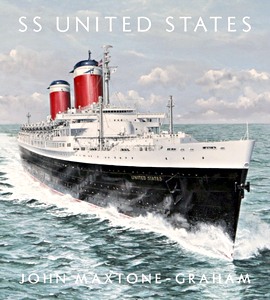
Omslag van het boek: SS United States - Red, white, and blue riband, forever

SS United States - Red, white, and blue riband, forever

John Maxtone-Graham | Engels | harde kaft | 240 blz | 2014