Navegación - EE.UU.: libros - historia y buques

¿Un libro sobre el transporte marítimo estadounidense? Aquí encontrará libros sobre la historia, compañías navieras y construcción de barcos de EE.UU..

¡Recomendaciones de libros independientes! Compras realizadas a través de nuestros enlaces apoyan nuestro trabajo, sin ningún coste adicional para ti. Más información >

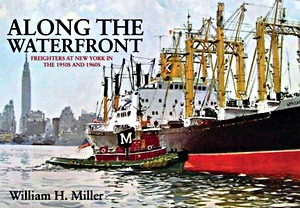
Along the Waterfront - Freighters at New York in the 1950s and 1960s

La película de 1954, "On the Waterfront", dio vida a los muelles de Nueva York de la década de 1950, cuando se decía a menudo que un barco, generalmente un carguero, llegaba o partía cada 24 minutos, las 24 horas del día.
Actualmente, el puerto de Nueva York gestiona más carga que nunca, pero toda ella transportada en contenedores.

"Along the Waterfront", continuación de "Along the Hudson" (que analizaba los barcos de pasajeros en el puerto de Nueva York), abarca la vasta y fascinante flota de cargueros que alguna vez hicieron escala en Nueva York, incluyendo barcos y compañías que no llegaron a tener éxito, como Bull Line, Standard Fruit, Torm Lines y Booth Steamship Company.
En este libro, William H. Miller lleva al lector en un evocador viaje al pasado, a los días de los muelles de Nueva York tal como fueron retratados en "On the Waterfront".

Detalle del libro

Autor:William H. Miller
Presentación:128 páginas, 17 x 24.5 cm, tapa blanda
Ilustración:160 fotos
Idioma:Inglés
Editorial:Amberley Publishing (GB, 2016)
ISBN:9781445654089
Portada del libro: Along the Waterfront - Freighters at New York in the 1950s and 1960s | Amberley

Along the Waterfront - Freighters at New York in the 1950s and 1960s

Idioma: Inglés

Consultar precio y disponibilidad:

Commercial Ships of the Great Lakes: A Photo Gallery

Millones de toneladas de carga han sido transportadas a través de los cinco Grandes Lagos, llevando los productos y materias primas de los estados del Medio Oeste y las provincias canadienses a mercados de todo el mundo.
Conocida por sus singulares operaciones comerciales, la navegación en los Grandes Lagos siempre se ha basado en métodos tradicionales como los remolcadores de una sola hélice, la propulsión a vapor y la increíble habilidad de ingenieros y capitanes para maniobrar sus barcos en espacios reducidos y ríos sinuosos. Pero los tiempos están cambiando en los Grandes Lagos, y estos cambios anuncian el fin de una era.

Esta es la historia de aquella gloriosa época del transporte marítimo en los Grandes Lagos. Más de 300 nítidas fotografías históricas y actuales en blanco y negro nos transportan a bordo de aquellos barcos que, con su arduo trabajo, abrieron el interior de Estados Unidos y Canadá al mundo.
"Commercial Ships on the Great Lakes" ofrece una visión completa de estos magníficos barcos e incluye desde los remolcadores más pequeños, las barcazas, los barcos de pasajeros y de trabajo, hasta los gigantescos barcos de transporte de mineral. También se incluyen barcos desguazados y otros que han sido restaurados como museos, barcos de pesca y barcos de pasajeros.

Detalle del libro

Autor:Franz A. VonReidel
Presentación:160 páginas, 28 x 21.5 x 1.3 cm, tapa dura
Ilustración:350 fotos en b/n
Idioma:Inglés
Editorial:Iconografix (USA, 2005)
ISBN:9781583881538
Portada del libro: Commercial Ships of the Great Lakes: A Photo Gallery | Iconografix

Commercial Ships of the Great Lakes: A Photo Gallery

Idioma: Inglés

Consultar precio y disponibilidad:

Great Lakes Shipping: Ports & Cargoes Photo Gallery

Over 163 million net tons of cargo are moved each year on the Great Lakes in the holds of a vast fleet of ships. View first-hand how cargoes are loaded at the grain terminals of Thunder Bay, the ore docks of Minnesota's north shore, or the sprawling Midwest Energy coal dock in Superior.
See where these giant ships and cargoes go "down below" on the infamous Cuyahoga River, the Ford Plant on Detroit's Rouge River, or inside the heart of the famous U.S. Steel Works in Gary, Indiana.

The photographs in this book bring you a slice of industrial America rarely seen by the general public. These images, contemporary and historic, will take you to all of the primary loading and unloading ports from Lake Superior to Lake Erie.

Detalle del libro

Autor:Patrick D. Lapinski
Presentación:160 páginas, 28 x 21.5 x 1.3 cm, tapa blanda
Ilustración:315 fotos en b/n y color
Idioma:Inglés
Editorial:Iconografix (USA, 2009)
ISBN:9781583882382
Portada del libro: Great Lakes Shipping: Ports & Cargoes Photo Gallery | Iconografix

Great Lakes Shipping: Ports & Cargoes Photo Gallery

Idioma: Inglés

Consultar precio y disponibilidad:

Liberty Factory : The Untold Story of Henry Kaiser's Oregon Shipyards

Churchill afirmó, en una declaración que se hizo famosa, que lo único que realmente le había asustado durante la guerra fue la Batalla del Atlántico. Mantener abierta la línea de suministro entre el «arsenal de la democracia» estadounidense y el Reino Unido era esencial para los preparativos de la invasión de Europa y, en última instancia, esto se reducía a construir buques mercantes más rápido de lo que los submarinos alemanes podían hundirlos.
Fundamental para este logro fue el "buque Liberty", un sencillo carguero que podía construirse rápidamente, combinado con el potencial industrial sin explotar de Estados Unidos que podía fabricarlos en grandes cantidades.

Sin duda, la figura clave en la rápida expansión de la capacidad de los astilleros estadounidenses durante la guerra fue Henry Kaiser, un hombre sin experiencia previa en la construcción naval, pero un emprendedor visionario y con gran iniciativa.

Este libro narra cómo estableció enormes astilleros nuevos utilizando técnicas innovadoras de producción en masa en el lugar más inesperado: Oregón, una de las zonas menos industrializadas de Estados Unidos y sin una reserva de mano de obra cualificada.

No solo los astilleros fueron revolucionarios, ya que las empresas Kaiser proporcionaban vivienda, atención médica y prestaciones sociales que atrajeron a trabajadores de todo el país, incluidas mujeres que se incorporaban por primera vez a un entorno laboral industrial.
Esta fuerza laboral altamente motivada convirtió los astilleros de Kaiser en los constructores navales más eficientes del país. En total, los astilleros de Kaiser en Oregón construyeron más de 450 buques de la clase «Liberty» y los posteriores «Victory», incluyendo uno construido en el tiempo récord de 10 días, así como alrededor de 150 buques cisterna, unos 50 portaaviones de escolta e innumerables buques de guerra anfibios.
Curiosamente, este logro verdaderamente extraordinario, de enorme importancia para la eventual victoria aliada, ha quedado relegado a las notas a pie de página de la historia, pero en este libro se documenta y celebra exhaustivamente por primera vez.

Detalle del libro

Autor:Peter J Marsh
Presentación:192 páginas, 26 x 21.5 x 3.2 cm, tapa dura
Ilustración:200 fotos en b/n
Idioma:Inglés
Editorial:Seaforth Publishing (GB, 2020)
ISBN:9781526783059
Portada del libro: Liberty Factory : The Untold Story of Henry Kaiser's Oregon Shipyards | Seaforth

Liberty Factory : The Untold Story of Henry Kaiser's Oregon Shipyards

Idioma: Inglés

Consultar precio y disponibilidad:

Liberty Ships: America's Merchant Marine Transport in World War II (Legends of Warfare)

Si bien no se trata de un arma en el sentido tradicional de la palabra, podría decirse que ningún otro elemento del arsenal aliado contribuyó tanto a la derrota del Eje durante la Segunda Guerra Mundial como los buques Liberty. Los 2710 buques Liberty que entraron en servicio entre 1941 y 1945 constituyeron un eslabón vital en la cadena de suministro no solo de las fuerzas estadounidenses, sino también de las aliadas durante la Segunda Guerra Mundial.

Aunque el diseño básico ya estaba obsoleto incluso antes de que el primero saliera de la línea de construcción, tenía la ventaja de ser relativamente fácil de producir y sencillo de operar y mantener. Por lo tanto, los buques fueron producidos en masa por no menos de dieciocho astilleros. El tiempo de construcción, inicialmente de 244 días, se redujo a cuarenta y dos días por buque, aunque como estrategia publicitaria el "Robert E. Peary" fue botado cuatro días y quince horas y media después de la colocación de la quilla.

Detalle del libro

Autor:David Doyle
Presentación:128 páginas, 23 x 23 x 1.8 cm, tapa dura
Ilustración:295 fotos en b/n y color
Idioma:Inglés
Editorial:Schiffer Publishing Ltd (USA, 2020)
Colección:Legends of Warfare
ISBN:9780764359590
Portada del libro: Liberty Ships: America's Merchant Marine Transport in World War II | Legends of Warfare | Schiffer

Liberty Ships: America's Merchant Marine Transport in World War II

Idioma: Inglés

Consultar precio y disponibilidad:
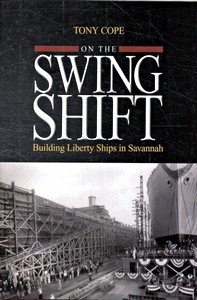
On the Swing Shift - Building Liberty Ships in Savannah

During World War II eighty-eight of the almost three thousand Liberty ships built in America were launched in Savannah, Georgia. Without Liberty ships, the Battle of the Atlantic might have been lost.
Few remember the Liberty ships today; fewer remember the shipyard or that the Southeastern Shipbuilding Corporation was the largest industry ever located there. The land on which this shipyard stood is now derelict. Thousands drive by it every day and have no idea of the great contribution to the war effort that was made on that site.

This social history tells the story of the men and women who built these merchant ships in Savannah. Most came from rural areas and had never seen a ship, much less built one. Their work was dangerous and boring, but many worked double shifts, nights, and seven days a week.
There were 45,000 of them during the four years of the shipyard's existence, and in spite of all of the problems faced, they built ships and built them well.

Cope makes use of more than 120 taped interviews with shipyard workers, merchant seamen, dock workers, and Navy and Coast Guard personnel, as well as letters and official documents, to present an authentic and moving record of the working conditions and lives of those who built the Liberty ships in the shipyards of Savannah.

Detalle del libro

Autor:Tony Cope
Presentación:288 páginas, 23.5 x 16 x 1.3 cm, tapa dura
Ilustración:ilustrado
Idioma:Inglés
Editorial:Naval Institute Press (USA, 2009)
ISBN:9781591141235
Portada del libro: On the Swing Shift - Building Liberty Ships in Savannah | Naval Institute

On the Swing Shift - Building Liberty Ships in Savannah

Idioma: Inglés

Consultar precio y disponibilidad:

Ships of the Great Lakes: An Inside Look at the World's Largest Inland Fleet

Is working on ships, sailing or tugging through the sea-like waters of the Great Lakes something you've imagined yourself doing? Whether it's your dream job or an area of interest, it is no easy task and takes a full crew to power the 1000-footers, steamers, tugs, Seaway and river class vessels.

Lapinski gets close and personal with ship-life, from the captain to the cook, from the inner workings of the engine department to the intricacies of navigation, from the work it takes to load and unload large masses of material, to keeping the ships in tip-top shape around the clock during the busy shipping season.
A huge variety of ships, a huge variety of jobs, and an even bigger cross section of people, all have helped make the lives of Americans a little easier by bringing in or out the goods through the Great Lakes.

Detalle del libro

Autor:Patrick D. Lapinski
Presentación:128 páginas, 28 x 21.5 x 1 cm, tapa blanda
Ilustración:366 fotos
Idioma:Inglés
Editorial:Iconografix (USA, 2011)
ISBN:9781583882801
Portada del libro: Ships of the Great Lakes: An Inside Look at the World's Largest Inland Fleet | Iconografix

Ships of the Great Lakes: An Inside Look at the World's Largest Inland Fleet

Idioma: Inglés

Consultar precio y disponibilidad:

The Masting of American Merchant Sail in the 1850s : An Illustrated Study

This book describes the intricacies of the construction and fabrication more than 150 years ago of masts and yards installed in American merchant vessels, particularly those spars which were "built" or composed of multiple pieces bound together by iron bands. These were referred to as "made" spars as opposed to spars constructed from a single tree. It also contains instructions for developing the shape and proportions of various spars.

Very little information is available on this subject. Generally, the external sizes of individual spars can be found but intimate details are sorely neglected. In addition, the book includes the spacing and location of masts in a ship, and the rake, and it discusses the types of wood that are most desirable in the construction of spars.

Before his retirement in 1972, William L. Crothers worked as a draftsman in the design division of the Philadelphia Navy Yard. He is also the author of books on the construction of American clipper ships American packets and freighters of the 1850s.

Detalle del libro

Autor:William L. Crothers
Presentación:188 páginas, 27.5 x 21.5 x 1.3 cm, tapa blanda
Ilustración:57 dibujos
Idioma:Inglés
Editorial:McFarland & Co Inc (USA, 2014)
ISBN:9780786493999
Portada del libro: The Masting of American Merchant Sail in the 1850s : An Illustrated Study | McFarland

The Masting of American Merchant Sail in the 1850s : An Illustrated Study

Idioma: Inglés

Consultar precio y disponibilidad:

Tugboats of the Great Lakes Photo Gallery

From the early days of commercial navigation on the waterways of the Great Lakes, tugboats have been needed to guide the ships in and out of the newly constructed ports. As the ships progressed from wooden schooners to large steel steamships, the tugboat also grew in size.

This book takes an in-depth look into the ancient practices of Great Lakes ice-breaking, ship assistance, and towing. At the turn of the century, the towing industry changed forever with the consolidation of fleets and the design of the low-profile powerful steam ship-docking tug. This "G-Tug" design has become known all around the world and these same 80-year old tugs are still the primary workhorse in most harbors on the Lakes today.

Many other designs, unique to the fresh waters of the Great Lakes, are profiled in this book. The severe climate of the Great Lakes region is brutal on the equipment and the tugs are built tough, for heavy ice breaking. A new class of powerful Coast Guard ice-breaking tugs came out in the 1940s. Today, many of these "WYTM" class tugs survive in commercial service on the Lakes. The Lakes have always been home to a large fleet of U.S. Army Corps of Engineers tugs. Additionally, U.S. Army auctions have brought many government-class tugs such as LT's, ST's, and DPC's to the Lakes in the hands of private and commercial operators. In the rivers that feed the busy port of Chicago and all throughout New York State on the Erie Canal, a rare species of tug can be found, the famous "canallers", which are also featured in this volume.

Detalle del libro

Autor:Franz A. VonReidel
Presentación:160 páginas, 28 x 21.5 x 1.3 cm, tapa blanda
Ilustración:365 fotos en b/n
Idioma:Inglés
Editorial:Iconografix (USA, 2007)
ISBN:9781583881927
Portada del libro: Tugboats of the Great Lakes | Iconografix

Tugboats of the Great Lakes

Idioma: Inglés

Consultar precio y disponibilidad:
También te puede interesar:

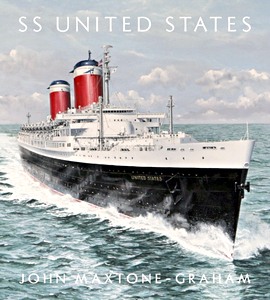
Portada del libro: SS United States - Red, white, and blue riband, forever

SS United States - Red, white, and blue riband, forever

John Maxtone-Graham | Inglés | tapa dura | 240 pág. | 2014

Portada del libro: Great American Passenger Ships

Great American Passenger Ships

William H. Miller | Inglés | tapa blanda | 96 pág. | 2012

Portada del libro: America's Postwar Luxury Liners

America's Postwar Luxury Liners

John A. Fostik | Inglés | tapa blanda | 126 pág. | 2011