By purchasing through the links, you support this site at no extra cost to you. Learn more >

Warships - Netherlands: Illustrated History Books & Guides

Explore the best illustrated books on the warships of the Royal Netherlands Navy. Discover the history, models and evolution of warships from Netherlands.

Dutch Navies of the 80 Years' War 1568-1648 (Osprey)

The tiny new state of the United Provinces of the Netherlands won its independence from the mighty Spanish empire by fighting and winning the Eighty Years' War, from 1568 and 1648. In this long conflict, warfare on water played a much bigger role in determining the ultimate victor.

On the high seas the fleet carved out a new empire, growing national income to such levels that it could continue the costly war for independence. Yet it was in coastal and inland waters that the most decisive battles were fought.
Arguably the most decisive Spanish siege (Leiden, 1574) was broken by a fleet sailing to the rescue across flooded polders, and the battle of Nieuwpoort in 1600, the largest successful invasion fleet before World War II, was one of the most decisive battle in western history.

Using detailed full colour artwork, this book shows how the Dutch navies fought worldwide in their war of independence, from Brazil to Indonesia, and from the Low Countries to Angola.

Product details

Author:Bouko de Groot
Details:48 pages, 9.7 x 7.3 x 0.24 in (24.5 x 18.5 x 0.6 cm), paperback
Illustrations:extensively illustrated
Language:English
Publisher:Osprey Publishing (GB, 2018)
Series:New Vanguard (263)
ISBN:9781472831651
Book cover: Dutch Navies of the 80 Years' War 1568-1648 | New Vanguard (263) | Osprey

Dutch Navies of the 80 Years' War 1568-1648

Language: English

Java Sea 1942 : Japan's conquest of the Netherlands East Indies (Osprey)

The battle of the Java Sea, fought in February 1942, was the first major surface engagement of the Pacific War and one of the few naval battles of the entire war fought to a decisive victory. It was the culminating point of the Japanese drive to occupy the Netherlands East Indies (NEI) and, to defend the territory, the Allies assembled a striking force comprised of Dutch, American, British and even an Australian ship, all under the command of a resolute Dutch admiral.
On 27 February 1942, the Allied striking force set course to intercept the Japanese invasion force in the Java Sea.

In one of the few such times during the whole of World War II a protracted surface engagement was fought unmolested by airpower. For over seven hours, the Allied force attempted to attack the Japanese invasion force, finally breaking off in the early evening.
Some three hours later, the Allied force, now reduced to just four remaining cruisers and two destroyers, attempted another attack on the invasion convoy during which Japanese torpedoes scored heavily, sinking two Dutch cruisers and bringing the battle to a conclusion.
Over the next two days, as the Allies attempted to flee, five more ships were sunk. From that point on, Allied naval power was eliminated from Southeast Asia.

In this illustrated title, Mark Stille tells the full story of the battle of the Java Sea, explaining how and why the Japanese achieved such a resounding victory, and delving into the tremendous impact of the battle on the course of the Pacific War.

Product details

Author:Mark Stille
Details:96 pages, 9.8 x 7.3 x 0.2 in (25 x 18.5 x 0.5 cm), paperback
Illustrations:honderden photos and drawings
Language:English
Publisher:Osprey Publishing (GB, 2019)
Series:Campaign
ISBN:9781472831613
Book cover: Java Sea 1942 : Japan's conquest of the Netherlands East Indies | Campaign | Osprey

Java Sea 1942 : Japan's conquest of the Netherlands East Indies

Language: English

Warships of the Anglo-Dutch Wars 1652-74 (Osprey)

Three times during the 17th century, England and Holland went to war as part of an ongoing struggle for economic and naval supremacy. Primarily fought in the cold waters of the North Sea and the English Channel, the wars proved revolutionary in their impact upon warship design, armament, and naval tactics. During this time, the warship evolved into the true ship-of-the-line that would dominate naval warfare until the advent of steam power.

This book traces the development of these warships in the context of the three Anglo-Dutch wars.

Product details

Author:Angus Konstam
Details:48 pages, 9.7 x 7.3 x 0.2 in (24.5 x 18.5 x 0.5 cm), paperback
Illustrations:photos and drawings (in b&w and color)
Language:English
Publisher:Osprey Publishing (GB, 2011)
Series:New Vanguard (183)
ISBN:9781849084109
Book cover: Warships of the Anglo-Dutch Wars 1652-74 | New Vanguard (183) | Osprey

Warships of the Anglo-Dutch Wars 1652-74

Language: English

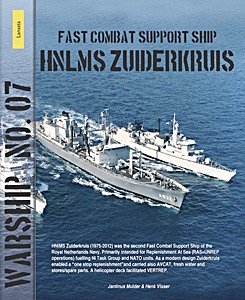
Fast Combat Support Ship HNLMS Zuiderkruis

HNLMS "Zuiderkruis" (1975-2012) was the second Fast Combat Support Ship of the Royal Netherlands Navy. She was mainly designed for Replenishment at Sea, providing fuel and supplies to naval task groups and NATO forces.

As a modern ship, "Zuiderkruis" allowed "one-stop replenishment." In addition to fuel, she carried aviation fuel (AVCAT), fresh water and spare parts. A helicopter deck supported vertical replenishment operations.

This book describes the history, construction and operational service of this Dutch naval vessel.

Product details

Author:Jantinus Mulder
Details:64 pages, 10.8 x 8.9 x 0.2 in (27.5 x 22.5 x 0.5 cm), paperback
Illustrations:extensively illustrated
Language:English
Publisher:Lanasta (NL, 2016)
Series:Warship (7)
ISBN:9789086161973
Book cover: Fast Combat Support Ship HNLMS Zuiderkruis | Warship (7) | Lanasta

Fast Combat Support Ship HNLMS Zuiderkruis

Language: English

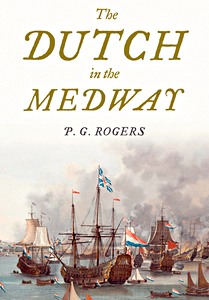
The Dutch in the Medway

The daring raid on the Medway in June 1667, when the Dutch navigated the treacherous shoals and sandbanks of the Thames estuary and the Medway in order to attack King Charles's ships laid up below Chatham, was one of the worst defeats in the Royal Navys history, and a serious blow to the pride of the English crown.
Perhaps the greatest humiliation was the removal by the Dutch of the flagship Royal Charles, towed down river after the raid and taken back to Holland. Her stern piece resides in the Rijksmuseum in Amsterdam to this day.

The raid, intended to bring to an end English procrastination at the peace negotiations in Breda, was to cause simmering resentment and lead eventually to the Third Dutch War. As Pepys wrote in his diary on 29 July 1667, Thus in all things, in wisdom, courage, force, knowledge of our own streams, and success, the Dutch have the best of us, and do end the war with victory on their side.

P G Rogers account of the raid, and its significance within the Second Anglo-Dutch War between Britain and the United Provinces of the Netherlands, is vividly told and he sheds much interesting light on the English navy of Pepys's day.
His particular knowledge of the Medway and the topography of Gillingham and Chatham also enables him to describe the manoeuvres at a level of detail that has not been replicated. This edition of a classic work will delight a whole new generation of readers.

Product details

Author:P.G. Rogers
Details:216 pages, 8.5 x 5.5 in (21.5 x 14 cm), hardback
Illustrations:8 drawings in color
Language:English
Publisher:Pen & Sword Books Ltd (GB, 2017)
ISBN:9781473895683
Book cover: The Dutch in the Medway | Pen & Sword

The Dutch in the Medway

Language: English

The Royal Netherlands Navy of World War II (Osprey)

In the late 19th and early 20th century, a combination of coastal defence for the homeland and fleet defence for the East Indies became the established naval strategy for the Royal Dutch Navy and set the template for the world wars.
Battleships were too expensive to build and maintain, so after World War I, there was significant investment in submarine development and construction. A handful of modern light cruisers and a new class of destroyers were also constructed during the interwar years to serve as a small Fleet-in-Being in the East Indies, as well as to support the actions of the navy's submarines.
The light cruiser HNLMS De Ruyter and the Java-class light cruisers were the most powerful units of the new fleet whilst the backbone of the destroyer fleet was the Admiralen-class and the Tromp-class of destroyer leaders.

Beginning in December 1941, the Dutch Navy played a very active role in the defence of the East Indies against the Japanese during World War II. The Battle of the Java Sea at the end of February 1942 crushed Dutch naval power in the East Indies, sinking the cruisers Java and De Ruyter and killing Admiral Karel Doorman.
However, several Dutch surface warships and submarines continued the fight against the Axis powers alongside the Allies until the end of World War II, including a pair of British-built destroyers, Van Galen and Tjerk Hiddes.

This beautifully illustrated book from a leading scholar on Dutch military history provides a comprehensive guide to the Royal Netherlands Navy of the World War II period, complete with detailed cutaways and battleplates of the fleet in action.

Product details

Author:Ryan K. Noppen
Details:48 pages, 9.7 x 7.3 x 0.47 in (24.5 x 18.5 x 1.2 cm), paperback
Illustrations:40 b&w photos, 8 pages in color
Language:English
Publisher:Osprey Publishing (GB, 2020)
Series:New Vanguard
ISBN:9781472841919
Book cover: The Royal Netherlands Navy of World War II | New Vanguard | Osprey

The Royal Netherlands Navy of World War II

Language: English

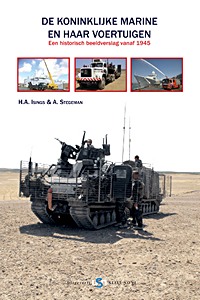
De Koninklijke Marine en haar voertuigen - Een historisch beeldverslag vanaf 1945

This book guides the reader through the vehicles of the Royal Netherlands Navy. Featuring over 1.700 photos, it describes 800 vehicles that served in the Royal Navy, the Netherlands Marine Corps, the Marine Brigade, and the Naval Aviation Service. It provides a complete overview of these vehicles and their roles.

Product details

Author:Harry Isings, Ad Stegeman
Details:520 pages, 11.8 x 8.7 in (30 x 22 cm), hardback
Illustrations:about 1700 b&w and color photos
Language:Dutch
Publisher:Uitgeverij Stili Novi (NL, 2019)
ISBN:9789491076077
Book cover: De Koninklijke Marine en haar voertuigen - Een historisch beeldverslag vanaf 1945 | Stili Novi

De Koninklijke Marine en haar voertuigen - Een historisch beeldverslag vanaf 1945

Language: Dutch

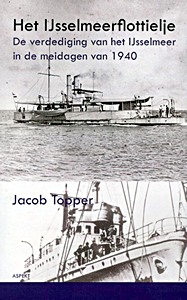
Het IJsselmeerflottielje - de verdediging van het IJsselmeer in de meidagen van 1940

With initially only eight requisitioned motor tugs, the Dutch Royal Navy had to prevent German troops from landing on the North Holland IJsselmeer coast from the eastern IJsselmeer ports in October 1939. After the German invasion of Norway on 9 April 1940, the force was expanded with several gunboats and a torpedo boat. During the war, the command structure was also changed.

After the announcement of the capitulation, there was great confusion among the captains. Due to orders and counter-orders, only one ship managed to divert to England. The other naval vessels were sunk by their own crews in the IJsselmeer to prevent them from falling into German hands.

Based on many authentic reports, including the original German attack plan for the crossing of the IJsselmeer, the author has painted a vivid picture of the events on and around the IJsselmeer.
Retired Adjutant Jacob Topper is deputy curator at the Kornwerderzand Casemates Museum and has been working as a volunteer for this museum for over twenty years.

Product details

Author:Jacob Topper
Details:146 pages, 8.5 x 5.5 in (21.5 x 14 cm), paperback
Illustrations:illustrated
Language:Dutch
Publisher:Aspekt BV (NL, 2012)
ISBN:9789461531223
Book cover: Het IJsselmeerflottielje - de verdediging van het IJsselmeer in de meidagen van 1940 | Aspekt

Het IJsselmeerflottielje - de verdediging van het IJsselmeer in de meidagen van 1940

Language: Dutch

Related Titles:

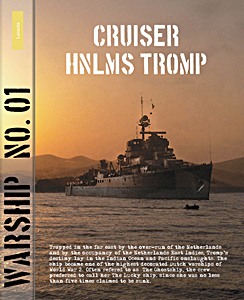
Book cover: Cruiser HNLMS Tromp | Warship (1)

Cruiser HNLMS Tromp

Jantinus Mulder | English | paperback | 48 p. | 2012

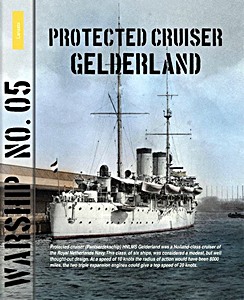
Book cover: Protected cruiser Gelderland | Warship (5)

Protected cruiser Gelderland

Jantinus Mulder | English | paperback | 48 p. | 2014